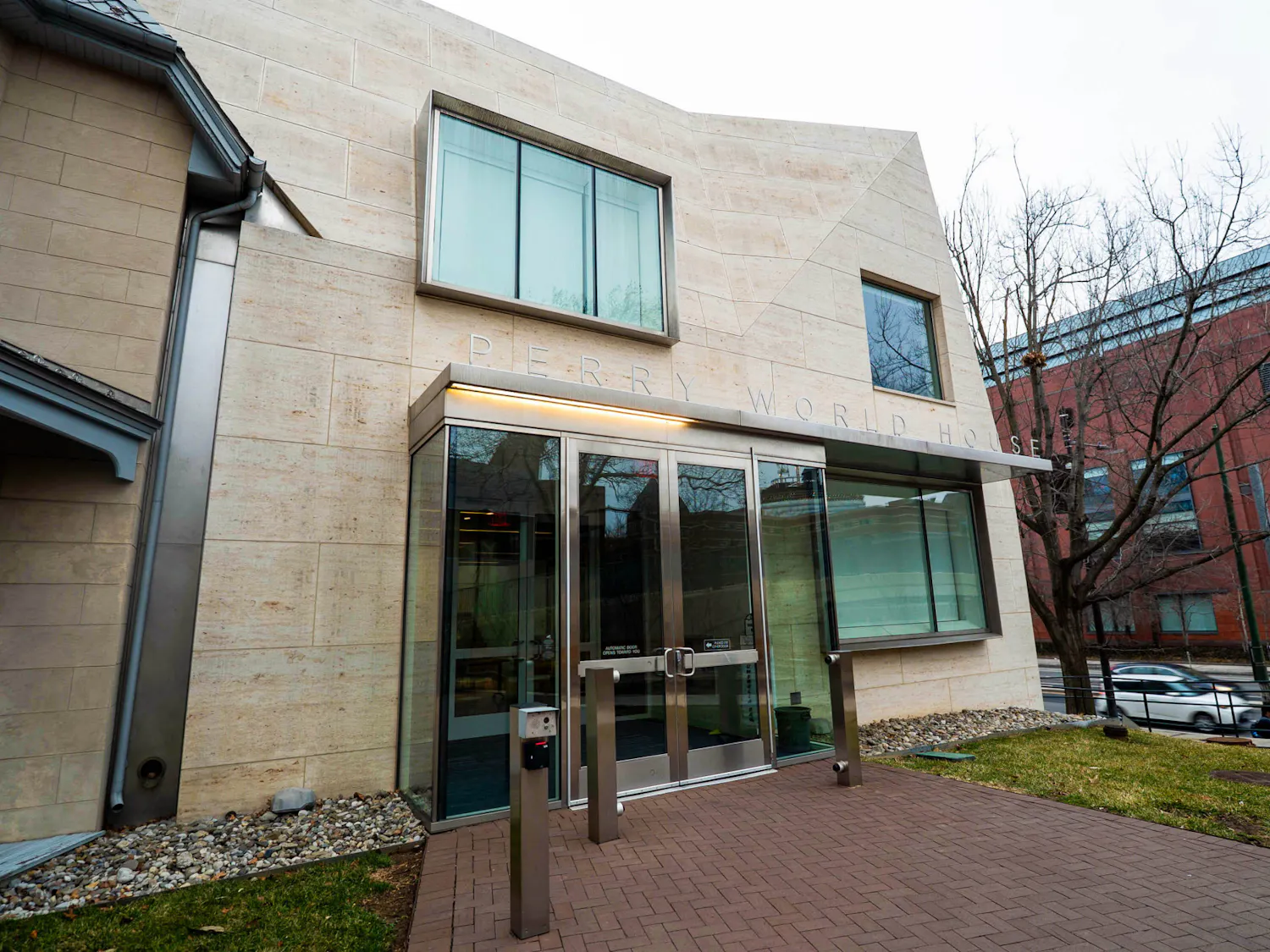
An antitrust lawsuit accusing Penn and 31 other institutions of colluding to inflate tuition costs through the early decision admissions process will move forward, a federal judge ruled this month.
In an Aug. 7 filing, United States District Judge Angel Kelley denied the universities’ motion to dismiss, finding that the plaintiffs had presented sufficient claims that the schools engaged in an unlawful horizontal agreement to suppress competition. The original complaint, filed last August, alleged that the institutions leveraged early decision to fix the cost of attendance.
A request for comment was left with a University spokesperson.
In the ruling, Kelley wrote that the plaintiffs “pleaded sufficient facts to show direct evidence” of an agreement between the universities that would violate the Sherman Act — a federal act written to prevent corporations from engaging in monopolistic behavior.
She added that the plaintiffs — former students from Vassar College, Washington University in St. Louis, and Wesleyan University — raised a “reasonable expectation that discovery will reveal the full contours of an agreement for the remaining School Defendants.”
Kelley wrote that the non-school defendants — the Consortium on Financing Higher Education, the Common Application Inc., and Scoir Inc. — could be dismissed from the suit.
The lawsuit originally argued that organizations including the Consortium on Financing Higher Education helped share information such as lists of accepted students and financial aid information between the defendant universities.
Penn is also one of five universities yet to settle a separate $2 billion price-fixing lawsuit. The case was set to go to trial in November before a federal judge ruled on Monday that Penn and its codefendants could appeal the class certification and the validity of the plaintiffs’ expert witness.
RELATED:
Litigation drags on in $2 billion price-fixing lawsuit against Penn
Higher education coalition sues Trump administration over student visa limit
The initial 2022 lawsuit alleged that the elite universities named in the case, as members of the 568 Presidents Group — an organization of American universities and colleges — exchanged “methodology” and “principles” for calculating financial aid.
Penn left the group in 2020, citing the University’s need for more flexibility in offering financial aid awards to students.
Since then, Penn’s financial aid policies have expanded. In November 2024, the University announced that it would no longer consider the value of the primary family home in determining financial aid eligibility, a departure from the methodology used by the 568 Group.
That same year, Penn announced the Quaker Commitment, which expanded financial aid to allow families earning up to $200,000 with typical assets to receive full tuition scholarships.
RELATED:
Litigation drags on in $2 billion price-fixing lawsuit against Penn
Higher education coalition sues Trump administration over student visa limit
Senior reporter Lavanya Mani covers legal affairs and can be reached at mani@thedp.com. At Penn, she studies comparative literature. Follow her on X @LavanyaMani_.