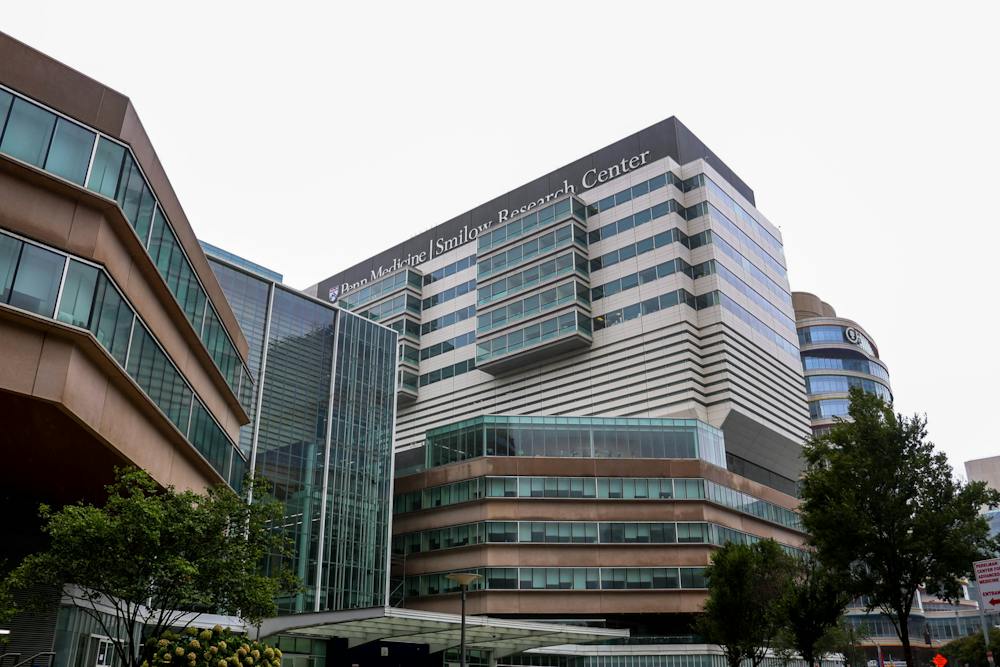
Penn Medicine researchers received a $26 million grant from the National Institutes of Health to investigate early signs of brain disease.
The team — comprised of researchers from Penn and the University of Miami — will use the funding to study participants with a gene mutation associated with amyotrophic lateral sclerosis and frontotemporal dementia. These are both progressive neurological conditions associated with the C9orf72 gene, and researchers hope to uncover possible interventions by investigating symptom markers.
In an interview, Perelman School of Medicine professor Corey McMillan, who is leading the study with University of Miami professor of neurology and public health sciences Michael Benatar, explained that he wanted to combine his expertise in FTD with Benatar’s knowledge of ALS. The former, he said, is a “cognitive and behavioral disorder” while the latter is a “neuromuscular, motor disorder.”
“We’ve been talking for years about the need to work together and reduce the silos of the field,” he said. “The idea was for us to come together as a dual perspective from FTD and ALS in order to accomplish this.”
To achieve that goal, each of the study’s 13 sites will be staffed by a neuromuscular neurologist and either a cognitive neurologist or a psychiatrist.
McMillan added that the team is using “multimodal approaches,” including biofluid analysis and MRI imaging.
“It’s critical that we have a large team of different perspectives from the FTD-ALS spectrum, and then also different perspectives across the many different domains of science that we’re bringing together,” he explained.
The study’s focus on early identification is particularly important because intervention in the earliest stages is more likely to have the “largest impacts on the disease biology,” according to McMillan.
“We know that the biology starts happening probably a decade or more before clinical symptoms are evident, so there's a window that we think that we can stop the disease process in time before the disease manifests itself as ALS or FTD,” he added.
In a Sept. 22 release, Benatar wrote that one of the biggest barriers to developing effective treatments for the conditions is that “we may be intervening too late, after the diseases have progressed too far.”
The study builds on Benatar’s previous research into SOD1 — a different gene associated with about 2% of ALS cases — which found that a certain blood marker increases about a year before symptoms appear. Using that marker, his team hopes to intervene before carriers become symptomatic and possibly delay disease onset and progress.
For McMillan, a successful outcome in this study would mean that researchers are able to identify a biomarker — or combination thereof — that predicts whether a person is likely to develop ALS or FTD.
“If we’re able to do that, then I think we’re ready to move forward with a real genetic trial to try to prevent the disease,” he concluded.