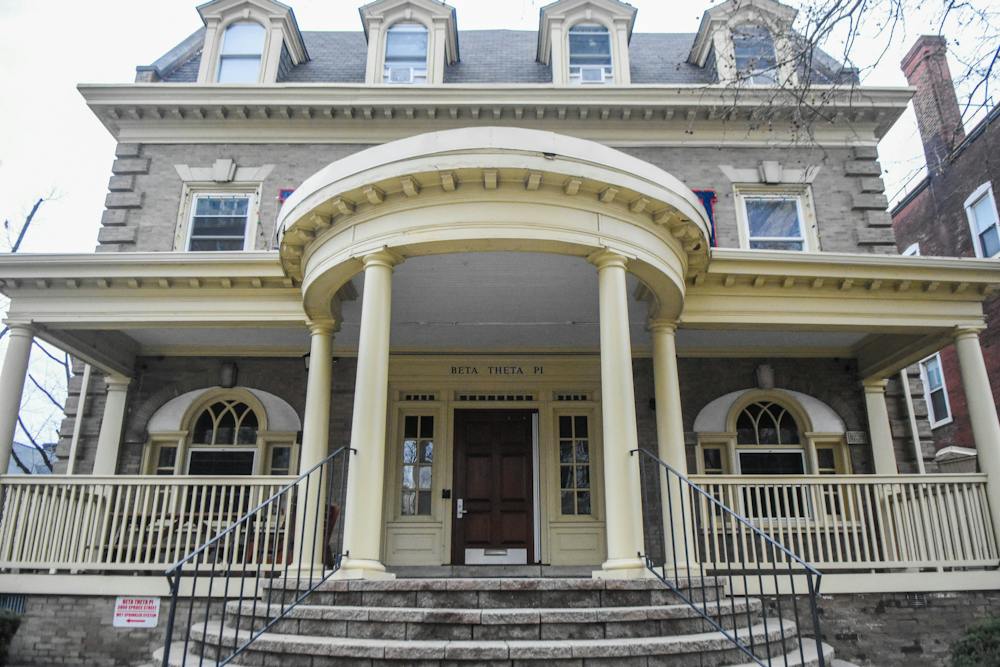
In the wake of New York prosecutors reopening the investigation into an alleged gang rape at Cornell, thousands of college community members are asking themselves how such violence could have been seemingly swept under the rug for two years. I am not writing this to highlight Cornell’s mistreatment of the victim’s allegations or whether the punishment was just, but rather to address a culture creating perpetrators of violence and complicity that plagues college campuses across the country.
Greek life is often seen as a cornerstone of the college experience. From pop culture to on-campus tours, there’s no question that American universities appear inseparable from their ties with fraternities and sororities. However, it is also not far-fetched, and somewhat normalized, to hear of sexual misconduct happening within these spaces as well. A 2007 study found fraternity members are three times more likely to rape compared to their nonaffiliated counterparts. This might seem shocking to some, but at the time this was the third in a series of consecutive studies, and since then there have been countless more. For example, one study found sorority members were four times as likely to be victims of sexual violence compared to nonmembers, a statistic tour guides sure aren’t telling parents.
A social space that’s marketed toward young men and women as the epitome of college life and community is in actuality facilitating an environment where sexual violence, intertwined with the misuse of substances, is the norm. Before these same young men and women can reach the parties, they must first go through the grueling stage of pledging.
Hazing, another key aspect inseparable from greek life, is defined by the University as, “any intentional, knowing, reckless, or willful act or situation that recklessly or intentionally endangers the mental or physical health or safety of a student.” Over the past five years, two sororities and three fraternities have been caught by the University for violating the Anti-Hazing Policy. These incidents reportedly range from physical and nonconsensual punishment, belittlement and humiliation, forced intake of substances, and potentially even animal abuse (though the hazing report doesn’t specify exactly the lengths of said abuse).
Five out of roughly 40 greek life organizations doesn’t seem bad, right? I would agree, except for the fact that the majority of students on campus have heard first-person accounts or even witnessed various other forms of hazing. Penn’s Anti-Hazing Policy just provides the legal framework for the University to address this issue; it does nothing to stop the cultural convention greek life perpetuates. In turn, hazing just gets pushed further underground and becomes more secretive, making the penalty of speaking out even more severe for unknowing, impressionable pledges. The harder the University punishes the organization, the harder they will intimidate and punish their own members.
The “Cornell 7” investigation that is capturing global headlines is just one story among the multitude of sexually violent acts perpetrated under the guise of greek life. While doing the research for this piece, I found myself asking: Why is this still allowed to happen? This discourse of whether or not greek life should exist has been taking place for the better part of three decades and only a handful of institutions have banned it. So, how can these universities that claim to care for their student body still support an obviously damaging lifestyle?
Gallup, along with the National Panhellenic Conference, conducted a survey of 10,000 alumni and found that 54% of those involved in greek life had donated to their alma mater, whereas only 10% of nonaffiliated alumni can say the same. Simply put, universities and colleges are not going to stop organizations that are proven to remain financially loyal to them. By keeping greek life on campus, these institutions guarantee long-term donations and they are choosing to guarantee that over the well-being of their student body. This archaic culture has got to go. Along with justice for all the victims of this institutionally sanctioned violence, I also hope students nationally see the violence greek life has bred and rid their campus of this leech.
LAWSON DOUGLAS is a College junior studying English and philosophy from Denver. His email is lawdo@sas.upenn.edu.