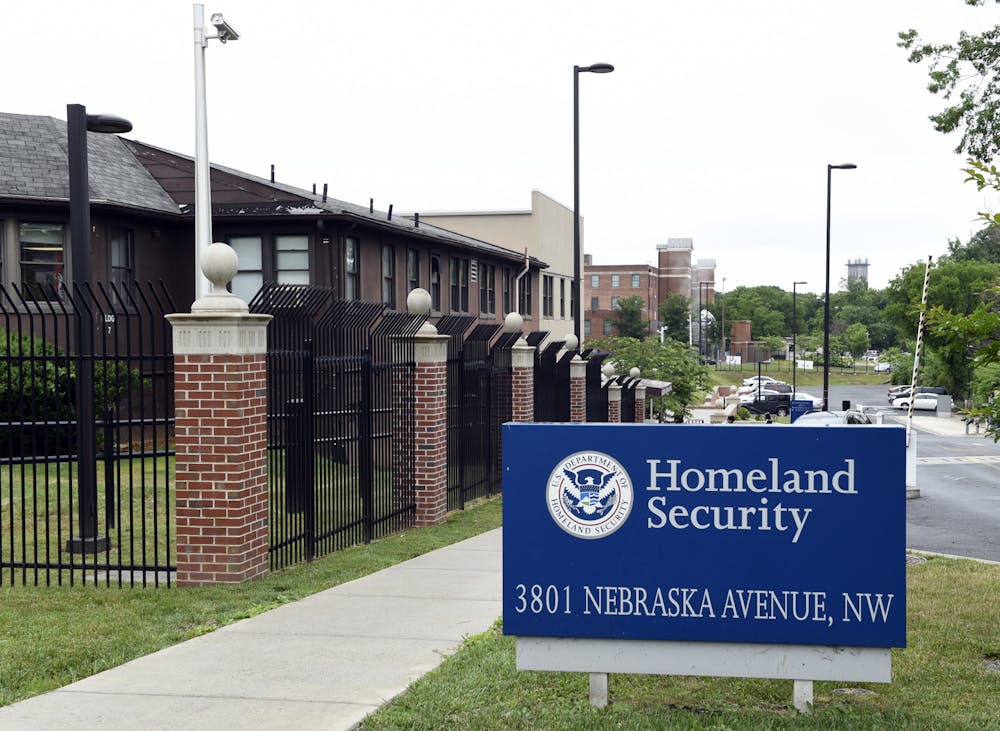
A coalition of higher education associations has sued the federal government over a new rule limiting how long international students can remain in the United States.
The Department of Homeland Security rule — scheduled to take effect on Sept. 15 — replaces the longstanding “Duration of Status” framework with fixed admission periods for F-1 students, J-1 exchange visitors, and their dependents. The Presidents’ Alliance on Higher Education and Immigration has argued that shortening the period would have a “catastrophic” effect on higher education.
Under the current system, international students — including those at Penn — can stay in the country until they complete their program. According to the lawsuit, the proposal received an “avalanche” of “near-universal opposition” at the time of the announcement.
In October 2025, Penn sent a letter to the Department of Homeland Security outlining “unnecessary negative consequences” associated with the fixed timeline proposal.
The filing specifically cites criticism that the implementation of fixed terms “is incompatible with the realities of the American system of educating international students,” given that many students enroll in programs longer than four years.
“This anticipated decrease in the overall population of F and J nonimmigrants, which commenters warned would be significant, would have profound and irreparable consequences for students, campuses, communities, and the Nation as a whole,” the suit continued. International students would be forced to choose between extreme uncertainty and forgoing educational opportunity in the United States.”
In a statement to The Daily Pennsylvanian, Penn International Student and Scholar Services Director Rudie Altamirano wrote that the center is “closely monitoring both the litigation and any subsequent guidance from the federal government,” adding that it would be “premature” to “speculate on how the court may rule.”
Altamirano encouraged students to “rely on official ISSS communications and government sources rather than make immigration or academic decisions based solely on preliminary reports or assumptions about the litigation.”
RELATED:
Penn assesses potential impact of Trump plan to cap student visa lengths
Penn issues guidance after federal court blocks Trump freeze on immigration benefits
“Individuals with questions about their specific circumstances should contact ISSS directly, since the implications may vary depending on their immigration status and academic or employment situation,” he wrote.
RELATED:
Penn assesses potential impact of Trump plan to cap student visa lengths
Penn issues guidance after federal court blocks Trump freeze on immigration benefits
Senior reporter Lavanya Mani covers legal affairs and can be reached at mani@thedp.com. At Penn, she studies comparative literature. Follow her on X @LavanyaMani_.