

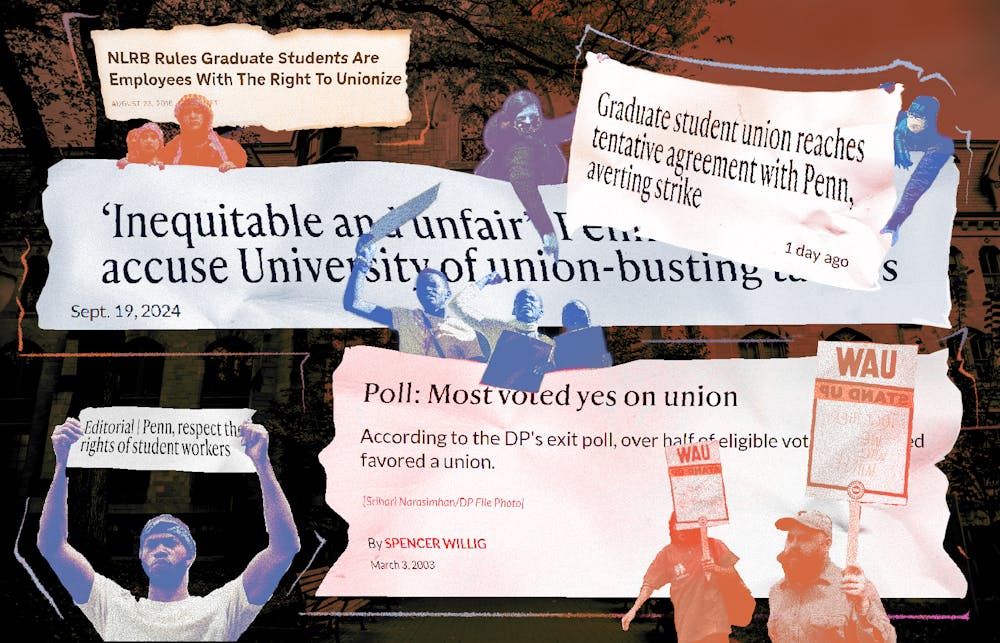
Late into Monday night, Penn’s graduate student workers entered the final hours of negotiations with the University administration, working to reach compromises on several unresolved demands. Minutes before the Feb. 17 strike deadline, the two parties reached a tentative agreement. Penn made compromises on the key issues of compensation, health insurance, and union security, sparing the University from a strike that would have severely disrupted daily activities across our campus. This victory for Graduate Employees Together — University of Pennsylvania is a victory for all of us. In their tireless efforts to achieve the contract they deserve, GET-UP showed us the power of solidarity and collective bargaining.
This agreement didn’t come easily. It follows 17 months of bargaining, 46 meetings, and hundreds of proposals exchanged between GET-UP and the University. At the end of it all, we are thrilled that our fellow students have secured the benefits necessary to make such essential contributions to our campus. But this agreement does not erase Penn’s initial attempts to quell GET-UP’s activism, nor its troubling history of union-busting.
GET-UP first held a vote to unionize in 2003, and The Daily Pennsylvanian reported that 60% of voters favored forming a union. But soon after, Penn filed an appeal with the National Labor Relations Board, arguing that the election never should have been authorized, and indefinitely sealing the results until a decision could be made. In 2004, a newly majority-Republican NLRB ruled that graduate students were not to be considered employees. Through this litigation, Penn had effectively subdued graduate student unionization.
The movement remained dormant for a decade until the NLRB decision was reversed in 2016. Graduate student workers reignited the fight for union recognition, but Penn made every attempt to delay a vote. Administrators even sent emails to graduate students discouraging them from voting in favor of unionization. Graduate students finally won their right to unionize in 2024, a year after Penn refused to recognize them voluntarily.
In recent months, Penn administration has attempted to intimidate graduate students as they fight for a contract. The Office of the Provost’s FAQ page warned that striking may affect graduate students’ academic standing, federal aid, or even visa status for international graduate students. These statements were ripped right from the anti-union playbook, working to convince graduate student workers that it would be in their best interest not to organize.
The University also emphasized that in the event of a strike, undergraduates would be expected to attend class, even if that meant crossing a picket line. The vice provost’s Teaching Continuity Plan also encouraged faculty to take over the responsibilities of teaching assistants during a work stoppage. Some departments even attempted to recruit undergraduate students as strikebreakers. While Penn eventually made the right call, they tried to subdue a strike in many ways besides simply meeting GET-UP’s demands.
These anti-union tactics are not unique to GET-UP’s struggle. Over the past decade, the University has consistently fought against the collective bargaining efforts of its employees. In 2021, Penn Museum workers filed to form a union, claiming they had been subjected to unsafe working conditions and unfair wages. In response, Penn sent out a slew of emails to museum staff encouraging them to vote against the union. In 2023, Penn Medicine launched a similar campaign against the unionization of its residents and fellows. Around the same time, the University also worked to delay a union election for resident advisors.
Now, almost three years later, we can finally applaud the fact that our University has met the demands of its employees and is taking steps toward a more equitable campus. Still, Penn is not the reason we got this outcome. That credit belongs to all those in the Penn community who spearheaded a campaign of collective action unlike anything the University has seen in years. Faculty and staff extended unwavering support to GET-UP, with hundreds pledging not to take up the responsibilities of striking graduate students in the event of a work stoppage. Undergraduate students signed an open letter to administration, urging them to agree to a fair contract. The support even extended citywide, with local politicians authoring statements of support urging Penn to meet GET-UP’s demands.
We hope this agreement marks a new chapter in Penn’s engagement with and in response to campus unions. At the same time, we encourage our entire community to remember what led to this historic moment. Remember the many protests and actions led by graduate student workers. Remember Penn’s strong attempts to silence them and their stronger pushbacks. While it might have been the University that made the final call in this decision, it was all of the members of our community that forced its hand.
Editorials represent the majority view of members of The Daily Pennsylvanian Editorial Board who meet regularly to discuss issues relevant to the Penn community. This body is led by Editorial Board Chair Jack Lakis and is entirely separate from the newsroom. Questions or comments should be directed to letters@thedp.com.


