Penn can be a lonely place.
The design of our community — both physical and social — forces people to either overextend themselves in the name of social acceptance or risk not finding a community at all. Everyone at Penn has someone they see often and wave to, someone whose name they may or may not know. You spend your first week in PennCORP and congratulations — you’ve earned yourself someone to smile at every day for two semesters until it all just stops one day. Penn’s culture, shaped by preprofessionalism and social media, encourages shallow, performative connections that create a false sense of community and ultimately contribute to widespread loneliness.
The social expectations we place on ourselves at this “work hard, play hard” school limit our ability to create meaningful relationships as we get caught up in the pursuit of social validation. As we chase productivity and our next summer internship, exploring friendships can feel frivolous unless it serves a purpose beyond simply developing relationships. And when every interaction is framed as a future opportunity, what incentive is there to be vulnerable and seek out people who maybe aren’t your ticket to that Goldman Sachs summer internship?
In 2023, Vivek Murthy, then United States surgeon general, toured college campuses across the country to speak about his “5-for-5 Connection Challenge” which encouraged students to take five actions for five consecutive days to express gratitude, offer someone help, or ask for help. Along his visits, Murthy spoke with students, noting he heard from students who would say, “I feel like nobody really knows me for who I am. I feel like I can’t be myself.” These feelings are overwhelmingly common — studies show that many young adults crave closeness but doubt that their peers feel the same, preventing them from moving forward. News flash: We all do.
With LinkedIn and Instagram being almost necessary social applications at Penn and in the age of sharing everything about your life online, is there even a point in talking to someone if you can know everything about them at the click of a button? Our social media activity has, in many ways, become the extent of our social lives. Following each other, liking posts, or reacting to someone’s new job update creates a false sense of closeness among peers. We can’t let this continue.
We need to resist this culture of loneliness and social performance by investing in real friendships rather than settling for mere acquaintances. While building a network is important, there is more to relationships than just how you can use them to get what you want. The desire to have acquaintances or to keep people at such a distance mirrors the feeling of having followers online. We have this desire to be well known, but is there an equal reciprocal desire to know others as well?
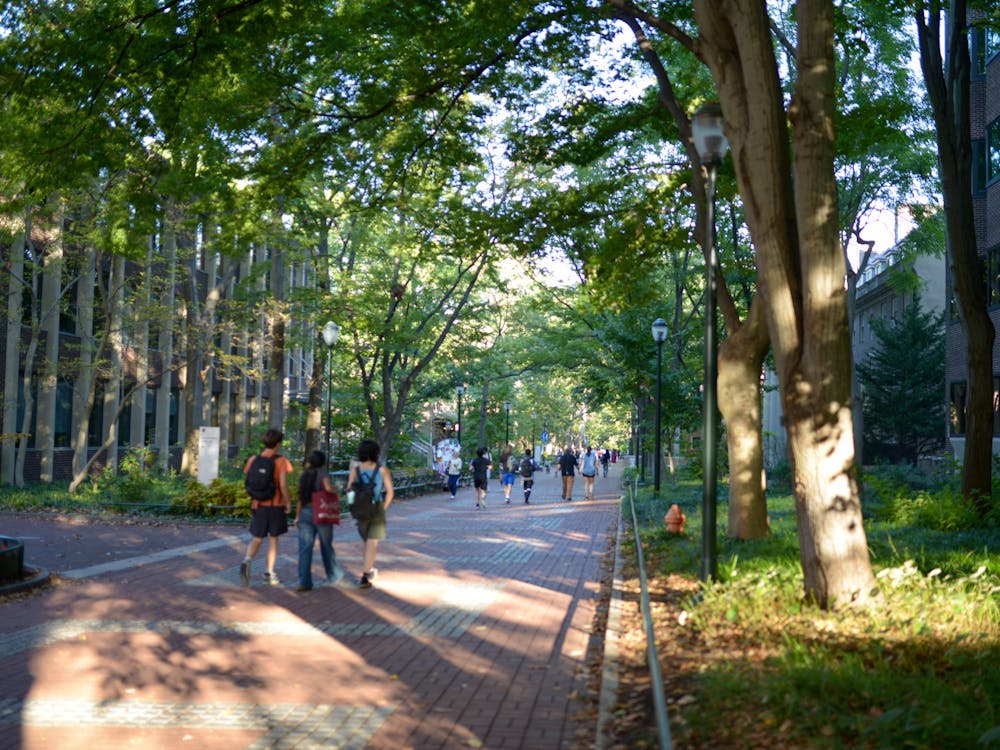
We avoid the work of developing new friendships because it is easier and more convenient for our busy schedules. Penn didn’t create this culture on its own, its students did. And we reinforce it every time we choose convenience. These Locust Walk waves and online connections are constant interactions that do nothing to create real community.
This semester, I challenge you not to make another acquaintance, but to start developing a real friendship. Reach out and get to know someone new. It doesn’t always have to be a networking opportunity or a date. If you think someone is cool, open yourself to friendship and pursue it intentionally. Build a community for yourself. Yes, it can be hard and intimidating, but the only way to dismantle the social systems that make it so daunting is to start doing it.
SEE MORE FROM MARIE DILLARD:
2026 is being called the “analog year.” Using paper products for journaling and planning is on the rise and screen time limits have become popular. But analog habits aren’t the solution to our loneliness epidemic. If we crave real-life experiences, we must do the relational work and stop waiting for the fairytale moment when friends or partners magically fall into our laps. Real life doesn’t reward passivity — it demands participation.
MARIE DILLARD is a College sophomore studying history and urban studies from Englewood, N.J. Her email is mdilla@sas.upenn.edu.

Marie Dillard is a College sophomore studying history and urban studies from Englewood, N.J. Her column focuses on student culture and identity. She currently serves as a Deputy Opinion Editor and can be reached at mdilla@sas.upenn.edu.