Penn’s Center for the Study of Contemporary China hosted an event on the evolution of the United States’ attitudes toward China.
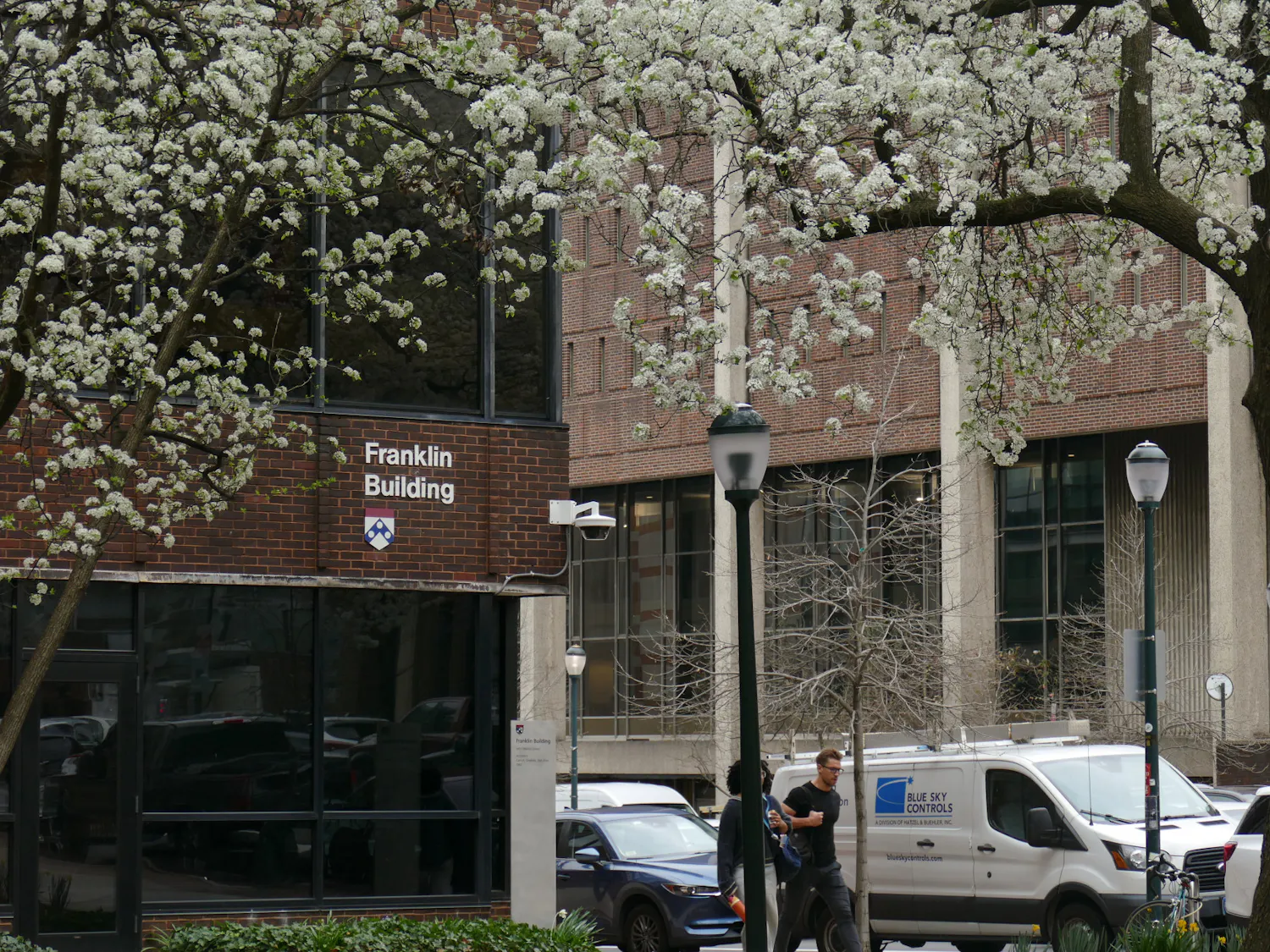
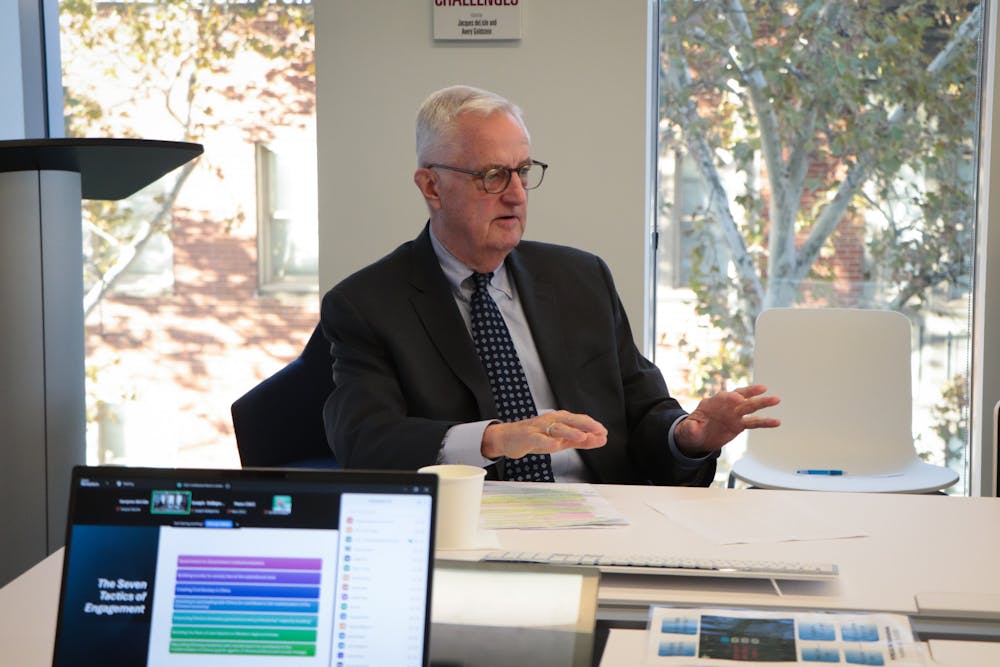
The Oct. 23 event featured David Shambaugh, a professor at The George Washington University and a scholar on contemporary China, and was held at the Perelman Center for Political Science and Economics. Shambaugh discussed his new book — “Breaking the Engagement: How China Won & Lost America” — which examines the development and disintegration of the United States’ engagement strategy with China.
Jacques deLisle, a professor at the University of Pennsylvania Carey Law School and the director of the CSCC, introduced Shambaugh to the audience, noting his extensive expertise on China.
“We’ve been really remiss in not having him up here earlier,” deLisle said during the event.
DeLisle also spoke to The Daily Pennsylvanian about the value of Shambaugh’s presentation as part of the CSCC’s speaker series.
“He’s someone who has been in and around U.S.-China relations for decades, so he has a wealth of personal experience and anecdotes that a lot of people who are either younger or farther removed from the policy process don’t have,” deLisle told the DP.
During his talk, Shambaugh focused on how American perceptions and expectations affect U.S.-China relations. He described his latest work as the “bookend companion” and “opposite of” his earlier book, “Beautiful Imperialist,” which centered on Chinese perceptions of the United States.
Shambaugh explained that “perceptions underlie policy,” and characterized the relationship between the two countries as a “love-hate cycle” with “fluctuations” and a lack of “equilibrium.”
RELATED:
PWH, Center for the Study of Contemporary China host policy roundtable on China-Taiwan relations
Perry World House hosts former Vice Chancellor of Germany for Climate Week discussion
“It’s been anything but a steady relationship,” he continued. “We both love each other, and we both hate each other.”
A central question Shambaugh sought to answer was why the United States’ policy of engagement with China — that was built upon four decades of cooperation between the two nations — gave way to “comprehensive competition” that can be characterized by “frictions and systemic disengagement.”
To answer this question, Shambaugh explained the United States’ four main strategies of engagement with China: to “liberalize” China politically and socially, “help China modernize,” internationally “integrate and socialize” China, and exchange people in multiple professions.
“When China’s policies and behavior conformed with American expectations, the two could cooperate and generally had non-conflictual relations,” Shambaugh said. “But when China did not conform with American expectations, frictions followed.”
Shambaugh emphasized that the deeper the two countries engaged, the more contentious their relationship became — contrary to typical assumptions of liberalism.
He primarily ascribed this phenomenon to the United States’ attempts to “liberalize China,” which he characterized as a “paternalistic missionary impulse” to shape the country dating back to the 19th century.
In the context of recent U.S.-China relations, Shambaugh discussed different schools of thought on debates over policy toward China. He defined the nations’ relationship today as one of “indefinite, comprehensive, competitive rivalry.”
Shambaugh also explained his own perspective on the relationship between the two countries.
“My own preference for the United States’ policy is to go on the offense and assertively compete with China in various spheres,” Shambaugh said, “but to manage the competition so as to establish a relationship of what I call competitive coexistence.”
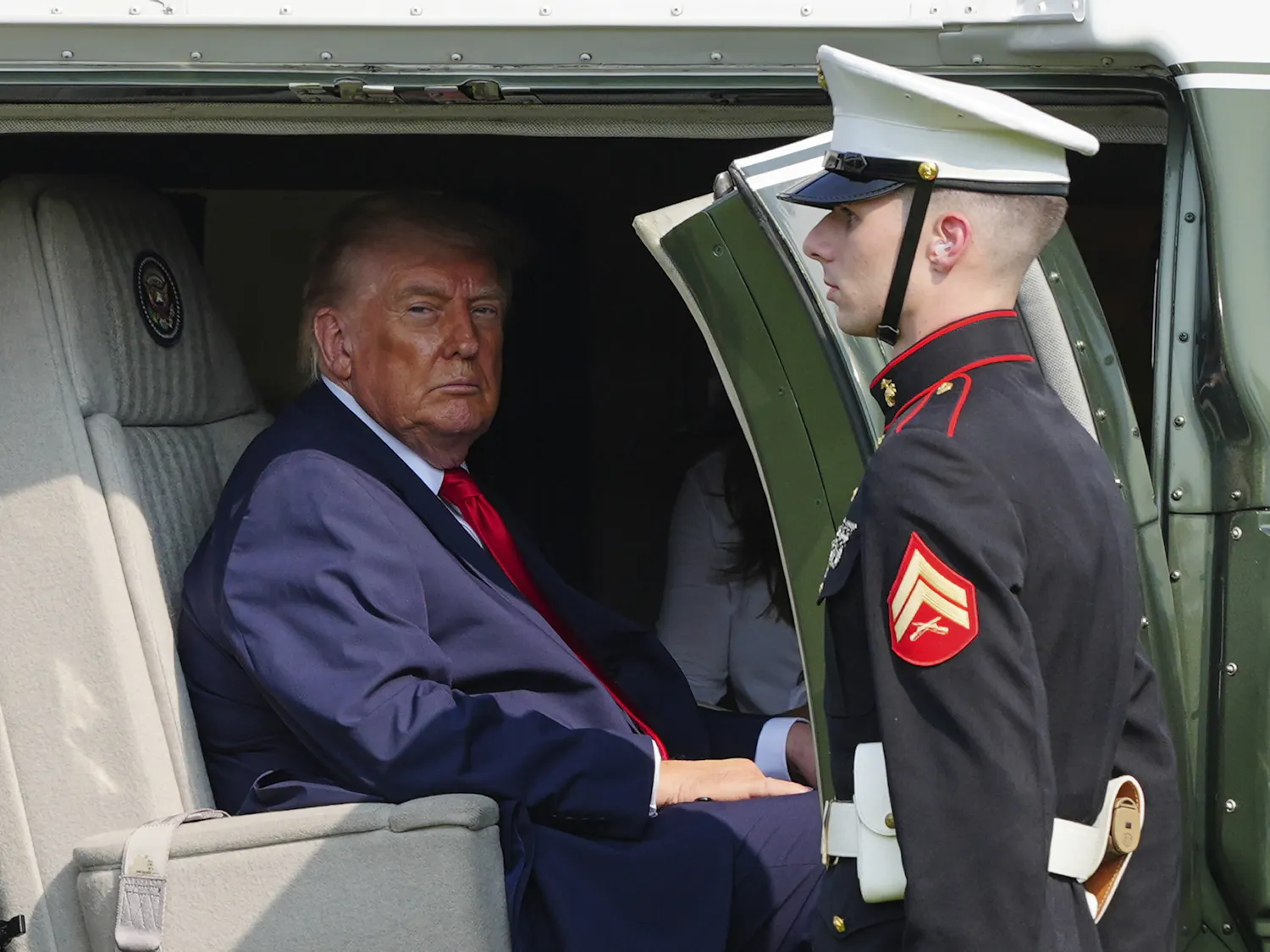
Shambaugh added that 1968 Wharton graduate and President Donald Trump’s second administration has made U.S.-China relations uncertain, because it “doesn’t listen to expertise.”
He explained that Trump may visit China next year and attempt to shift U.S. policy “back to some form of engagement.” Shambaugh also predicted such a change “would not succeed” because of the “counter-China coalition” — which he signaled includes members of the Republican Party and Trump’s administration.
RELATED:
PWH, Center for the Study of Contemporary China host policy roundtable on China-Taiwan relations
Perry World House hosts former Vice Chancellor of Germany for Climate Week discussion
Staff reporter James Wan covers academic affairs and can be reached at wan@thedp.com. At Penn, he studies communication and computer science. Follow him on X @JamesWan__.