

A planned debate between conservative political commentator Steven Crowder and Penn professor Jonathan Zimmerman has been canceled, a University spokesperson confirmed to The Daily Pennsylvanian.
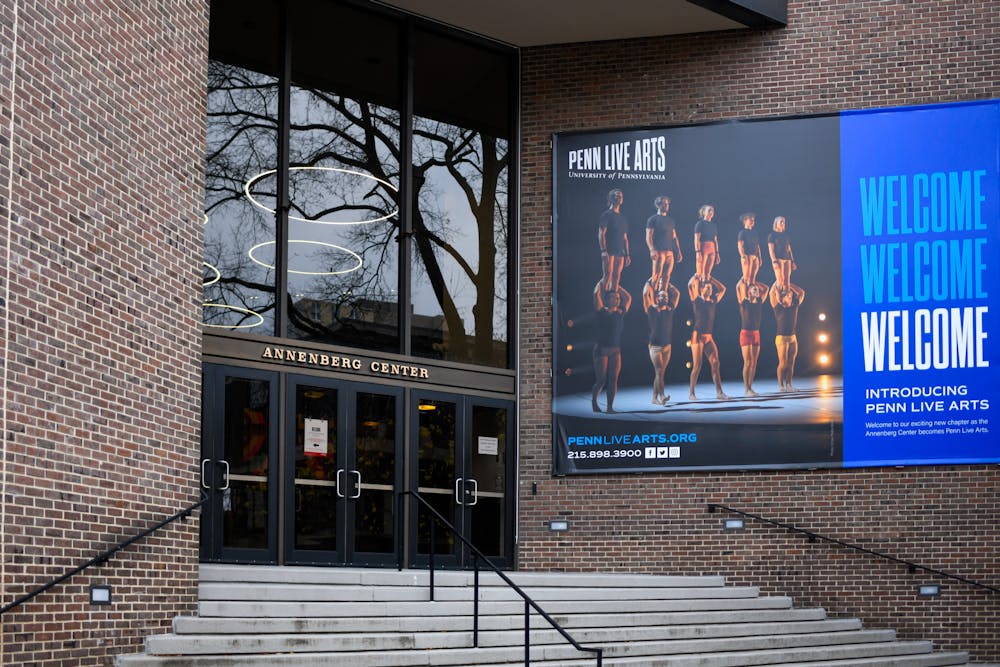
The event — part of Crowder’s “Change My Mind” series — was originally scheduled for Friday at the Annenberg Center for the Performing Arts. According to the Penn spokesperson, Crowder’s team backed out of the arrangements following a dispute with Penn Live Arts.
“The event’s producers chose not to proceed with the venue rental contract, citing disagreements with standard university policies and security protocols,” they wrote.
In an email sent to Zimmerman and obtained by the DP, Crowder’s producer wrote that they were “unable to proceed with the event as scheduled” due to “the inability to livestream” and “added security hurdles.”
“We’ve just heard from Penn Live Arts and have been informed that we would not be able to livestream due to ‘safety’ concerns,” they wrote. “However, the on site security team has also informed our personal security that we would not be able to undertake many of our routine safety measures which makes us seriously doubt their reasoning.”
College senior and former Penn College Republicans president Mia Antonacci — who was slated to moderate the event — confirmed in a statement to the DP that the event would not be held as planned.
Requests for comment were left with Penn Live Arts and Crowder’s team.
In a video uploaded to YouTube on Monday, Crowder said that he would bring his own livestreaming equipment and security.
RELATED:
Pennsylvania Gov. Josh Shapiro to address Penn Carey Law graduates at 2026 Commencement
Conservative pundit Ben Shapiro in talks to appear at Wharton MBA club event
“UPenn, if you are watching or listening, there is no world in which we go and we don’t stream this live,” Crowder said. “Period. With no edits. With no suggestions afterward.”
He also expressed concern about the security costs for the event, noting that Penn was “demanding” his team use official security despite not providing “a cost estimate.”
“If we show up and we can’t livestream and we don’t have an estimate for security, what do you think happens if we want to upload it the following week?” Crowder said in the video. “Then that security estimate could come in, couldn’t it? Could be half a million dollars, could be more.”
According to one Penn Live Arts staff member — who told the DP in March about safety concerns regarding the debate and was granted anonymity due to fear of retaliation — the event had not been confirmed at that time because of unresolved security costs.
The staff member said that confirmation for rental events like the Crowder debate needed to occur at least 72 hours in advance.
Zimmerman was notified about the debate’s cancellation on Tuesday afternoon, just hours before the confirmation deadline.
He told the DP that he was understanding of the University’s actions and believed the administration was “acting in good faith.”
“I don’t think that the people who run this University are evil people. I understand their concerns that, with a livestream, there would be some sort of flash mob,” he said. “But I think this is a bad decision.”
Zimmerman questioned Penn’s logic regarding safety, calling its reasons for blocking the livestream “counterintuitive.”
“If it’s being livestreamed, there’s less incentive to go down to Annenberg,” he said. “I think it’s just as plausible that saying you can’t livestream would actually create precisely the sort of flash mob or chaos that they’re worried about.”
Tickets — which were free and open to the public — had already been available through Crowder’s website for several days. Crowder announced the event on April 1 after Zimmerman appeared on his podcast, and a spokesperson for his team wrote to the DP on April 4 that the debate was “confirmed.”
The debate was intended to center on free speech, according to Crowder. In an interview with the DP, Zimmerman reaffirmed his commitment to “dialogue across difference” but said that “we have to ask ourselves whether we really want that or not.”
“I want it, and I’m trying to live it, but do we want it?” Zimmerman said. “I think one way to read this entire episode is that actually we don’t.”
He added that Penn’s decision “actually empowers Crowder.” From his perspective, “as a Democrat,” he said that “events like this help us understand why our opponents keep winning.”
Prior to the event’s cancellation, Crowder’s spokesperson wrote to the DP that the debate would be different from past iterations of “Change My Mind.”
“This event marks the first time in nearly a decade of the Change My Mind format that a university professor has agreed to debate him live on stage making it a genuinely historic moment for the series,” the spokesperson wrote.
Zimmerman connected the issue to ongoing conversations about the draft Guidelines on Open Expression, which include provisions on protection of speech and event registration.
“At this particular moment, I think this episode actually highlights the problems with the proposed rules about open expression, which actually limit expression,” Zimmerman said.
Crowder has also cast himself as a proponent of free speech and has previously brought his “Change My Mind” segment to other college campuses, where he has debated students. His history of controversial statements has previously raised concerns among members of Penn Live Arts’ staff.
Although the debate is no longer taking place at Penn, Crowder’s producer offered Zimmerman the opportunity to hold the debate elsewhere.
“I think it will allow Crowder to take a kind of victory lap in which he says, ‘You see? These elitist, insulated libs are afraid to talk to me,’” Zimmerman told the DP. “I’ll be happy to have a conversation with him.”
RELATED:
Pennsylvania Gov. Josh Shapiro to address Penn Carey Law graduates at 2026 Commencement
Conservative pundit Ben Shapiro in talks to appear at Wharton MBA club event
Senior reporter James Wan leads administration reporting and can be reached at wan@thedp.com. At Penn, he studies communication and computer science. Follow him on X @JamesWan__.


