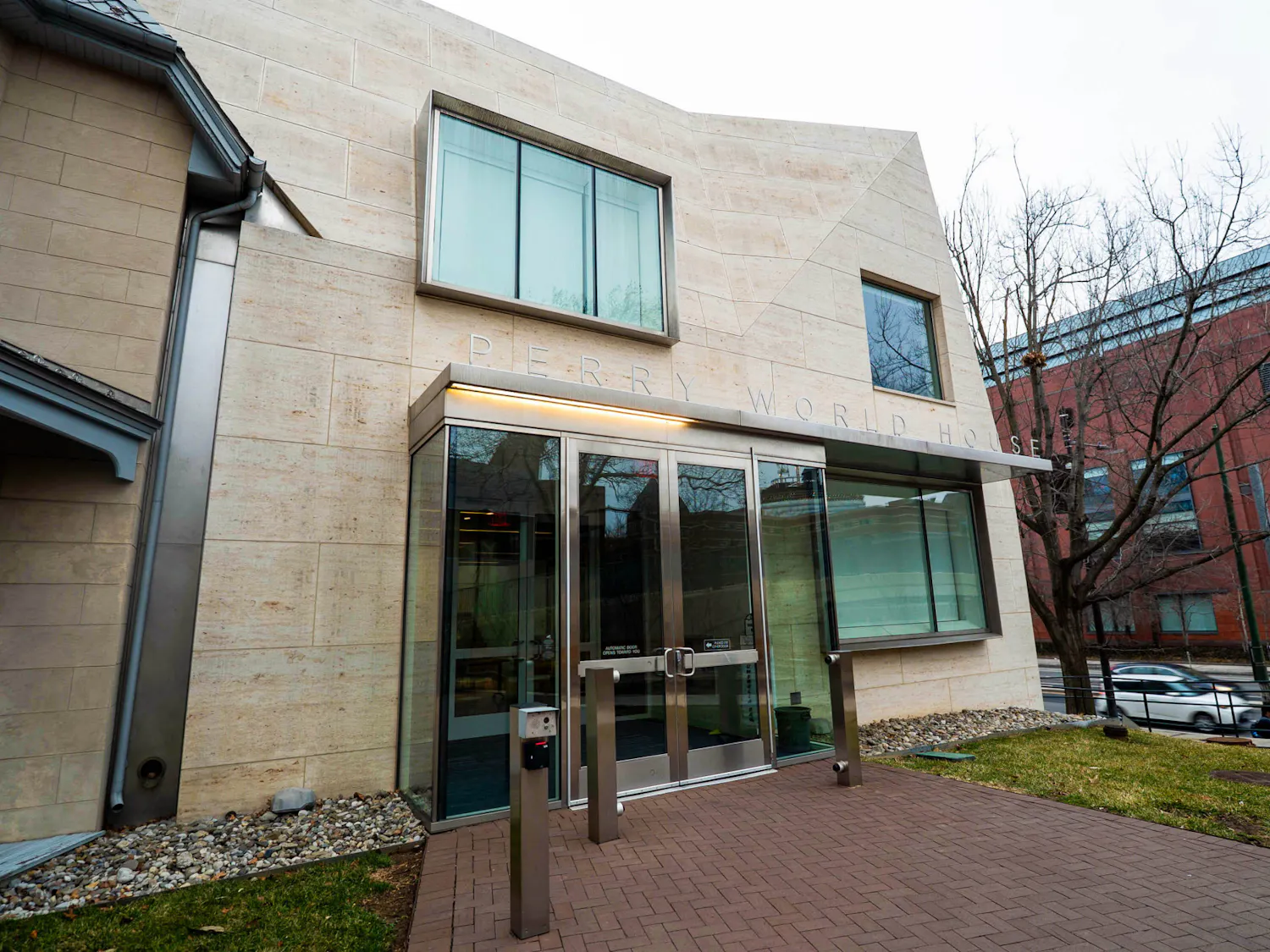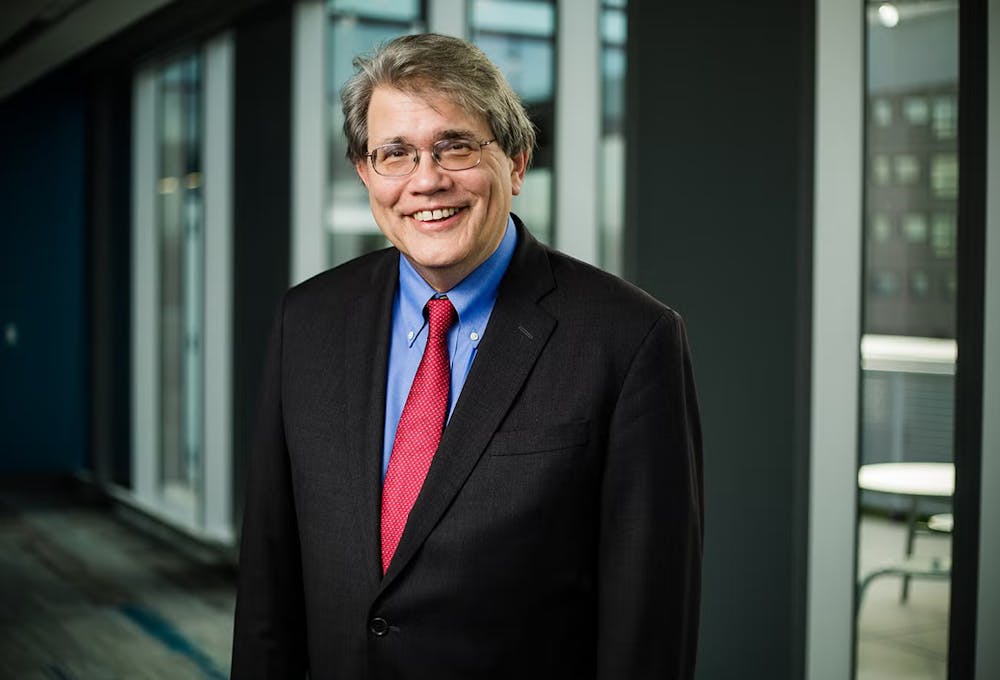
Provost John Jackson Jr. and the University’s Faculty Senate Tri-Chairs have tapped Wharton School professor Phil Nichols to head Penn’s Committee on Open Expression.
Nichols will serve as the chair of the committee — a body tasked with overseeing matters involving open expression on campus — for the next three years. As the University seeks feedback on the new guidelines, Nichols sat down with The Daily Pennsylvanian to discuss his new role and the committee’s place in the review process.
“Penn needs to develop an approach to issues that involve speech and expression and assembly,” Nichols said.
Nichols — who specializes in legal studies and business ethics — explained that he “didn’t even think of this role” until he was asked to serve.
He added that his decision to accept the position reflected his sense of responsibility to the University.
“What I like to think that everyone holds as their North Star is the mission of our University,” he said. “Everybody has a stake in Penn — and if we’re able to, we should help.”
The draft Guidelines on Open Expression — released on March 31 after nearly two years of internal review — outline a framework intended to protect “freedom of thought, inquiry, speech, and lawful assembly” across campus.
The proposed policies will govern demonstrations, protests, guest speakers, and digital expression at Penn. The document specifies that conduct may violate the guidelines if it “unreasonably” interferes with “regular activities of others,” threatens safety, or involves unauthorized structures such as encampments.
RELATED:
Penn’s draft Guidelines on Open Expression stir debate on campus
Five key takeaways from Penn’s open expression guidelines draft
Faculty Senate Chair and history professor Kathleen Brown said Nichols’ appointment comes at a critical moment in the University’s review of its open expression policies.
“I am very pleased that Phil Nichols is willing to take on the role of chairing COE at this moment when COE’s input will be so important to the community’s response to the draft Open Expression guidelines,” Brown wrote to the DP.
According to the draft, “The Chair of the Committee shall be a faculty member selected jointly by the Provost and the Faculty Senate Tri-Chairs. The chair’s term shall be three years.”
The committee’s responsibilities will include reviewing Penn’s open expression policies “every 10 years, or as needed” and working to support open expression across the University’s schools and centers.
Nichols emphasized that the committee’s work will take shape alongside feedback from the Penn community and added that he plans to approach the role by being “very open to everyone else.”
“The mission of our University is multifaceted, and that adds to the complexity of what our community has to do right now,” he added.
Penn will seek feedback on the draft over the course of this semester. Community members are able to submit feedback through an online form before May 18 and are invited to attend an in-person or virtual community listening session this month.
He added that while there might be “different perspectives,” he believed the collaboration would result in a “wonderful, fine working relationship.”
The revised guidelines also establish a new Executive Director of Open Expression who will oversee enforcement and manage the Open Expression Observer Program — a group of faculty, staff, and administrators tasked with monitoring events and referring potential violations.
Under this structure, the Committee on Open Expression will not be responsible for directly addressing potential violations and will instead serve in an advisory and oversight capacity.
Nichols clarified that while the committee is “not staffing the listening sessions, nor are we doing the technical work on the online feedback,” the body will play a role in how the guidelines are interpreted and applied across campus.
“One of the joyful tasks of the committee is to create bridges and to strengthen bonds and communication across our community,” Nichols said. “It would be naive to say that these are not controversial things over the last year and a half. Hopefully, the passion that people feel about issues today doesn’t interfere with the fact that we’re all in this together, that we all have a role, and we all contribute to the mission of our University.”
RELATED:
Penn’s draft Guidelines on Open Expression stir debate on campus
Five key takeaways from Penn’s open expression guidelines draft
Senior reporter Ananya Karthik covers central administration and can be reached at karthik@thedp.com. At Penn, she studies communication and economics. Follow her on X @ananyaakarthik.