Commemorating the quincentennial of Christopher Columbus' arrival in the New World, English Professor Emeritus Jerre Mangione has published his latest book about the history of Italian Americans. La Storia, Five Centuries of the Italian American Experience is a comprehensive account of the history of Italian Americans from Columbus' time up until the present, Mangione said earlier this month. He said that the book is an effort to counter stereotypes of and discrimination against Italian Americans that he has both witnessed and experienced. Mangione said his works come from living the Italian-American experience first hand. He grew up in Rochester, N.Y., the eldest son of Sicilian parents. He said he had always felt the tension between the pressure toward "Americanization" taught in the school system, and the intense ethnicity at home. "All students should know something about the major ethnic groups in this country," he said. "[The Americanization process] ignores ethnicity and leads to an identity crisis in the lives of many ethnic Americans." He added that he has been aware of prejudice against ethnic minority groups on a personal level and that he tries to debunk these with his books. In the 1930s, during an interview for a job at a prominent business firm, the interviewer proceeded to tear up his brother's application when he saw that his name was Sicilian. Mangione said Sicilians have always carried a stigma of being unscrupulous and against the civil order. The media also has alot to do with the growth of negative Italian-American stereotypes, according to Mangione. Blockbuster movies such as The Godfather and the book by Mario Puzo on which it is based has been a major contributor to society's view of Italian Americans as being all connected in some way to the criminal underworld of the Mafiosi. "Ironically, some of this type of image has been created by Italian Americans themselves," Mangione said. He added that Mario Puzo knew nothing about the mafia when he wrote his influencial series. And said jokingly that he never fulfilled a whim of writing a play about aging mafia members called "The Geritol Gang." La Storia will counteract this image by depicting Italian Americans as honest and hard working, Mangione said. Rose Carrano, Harper Collins Publishing spokesperson said La Storia is educational. "I learned so much from reading this book, about the whole Italian history in this country," Carrano said. "So much in the fields of art and architecture, to start, has been greatly influenced by Italian Americans." "[Most institutions of higher education] haven't done enough to arouse curiosity in students about their background," Mangione said. "Students seem to think that they've dropped from Heaven with no sense of the past." He attributes this situation to the "melting pot syndrome" in which immigrants are taught to lose their ties to their homeland in favor of a purely American lifestyle. Mangione has written several books dealing with the role of Italian Americans, the most notable of which is Mount Allegro, a book which documents his own childhood experience. The work prompted the area in which he grew up to rename their neighborhood after Mangione's characterization. Mangione said this year has proved to be a landmark in his literary career. He is being honored by the U.S. Library of Congress on November 15 for his lifetime accomplishments as a "distinguished Italian American writer and chronicler." Earlier this year Mangione said he received several other awards, including the New York State Christopher Columbus 1992 Award.
The Daily Pennsylvanian is an independent, student-run newspaper. Please consider making a donation to support the coverage that shapes the University. Your generosity ensures a future of strong journalism at Penn.
DonateMore Like This

A history of the Penn presidency
By
Aidan Shaughnessy
·
8 hours ago

No — AI will not wipe out humanity by 2030, Penn experts say
By
Addison Saji
·
8 hours ago

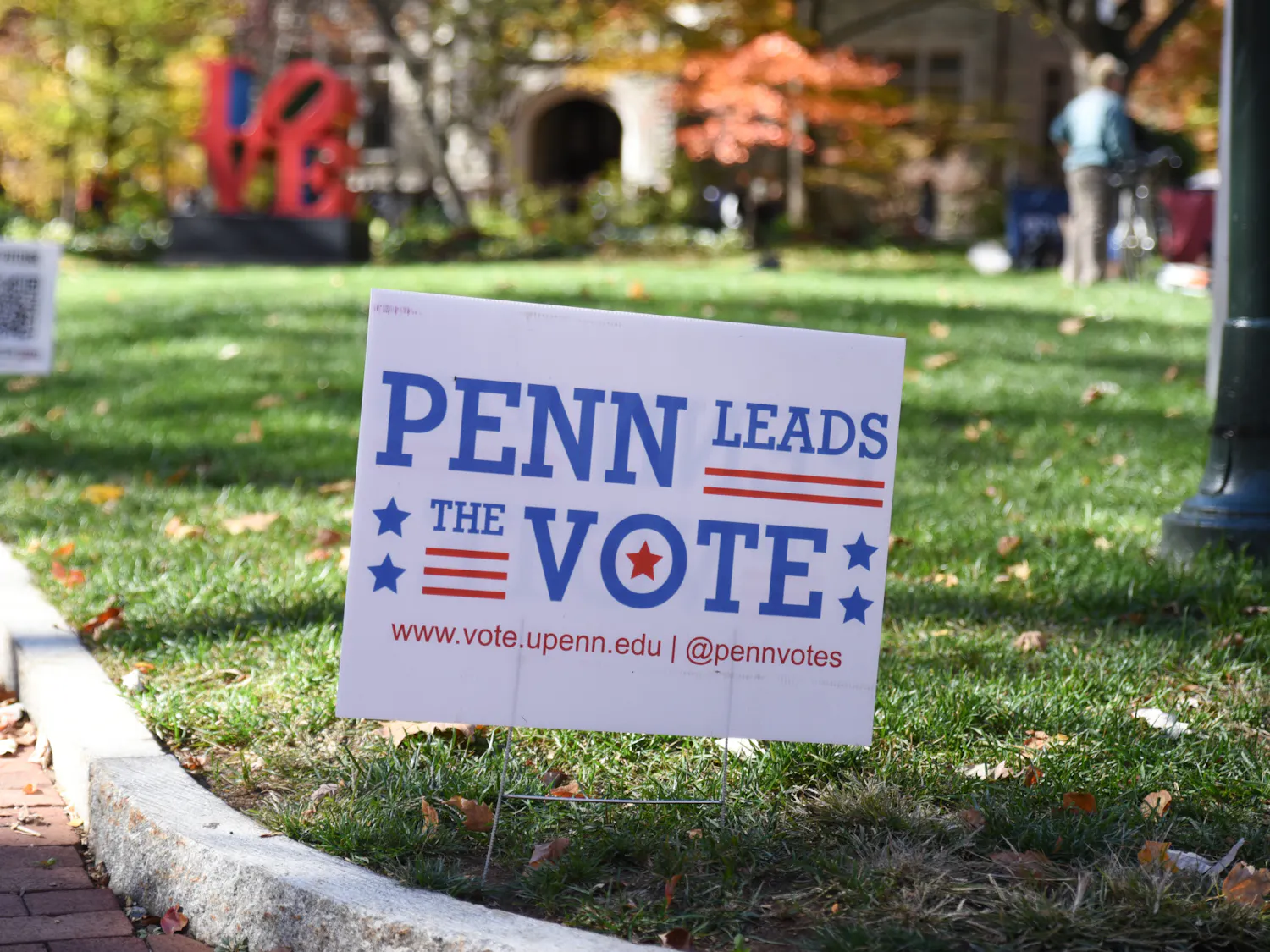
Penn student groups promote voter registration on Locust Walk
By
Mara Flores
·
8 hours ago