Members of the Penn community criticized the University’s draft Guidelines on Open Expression on Thursday at the first of two listening sessions on the proposal.
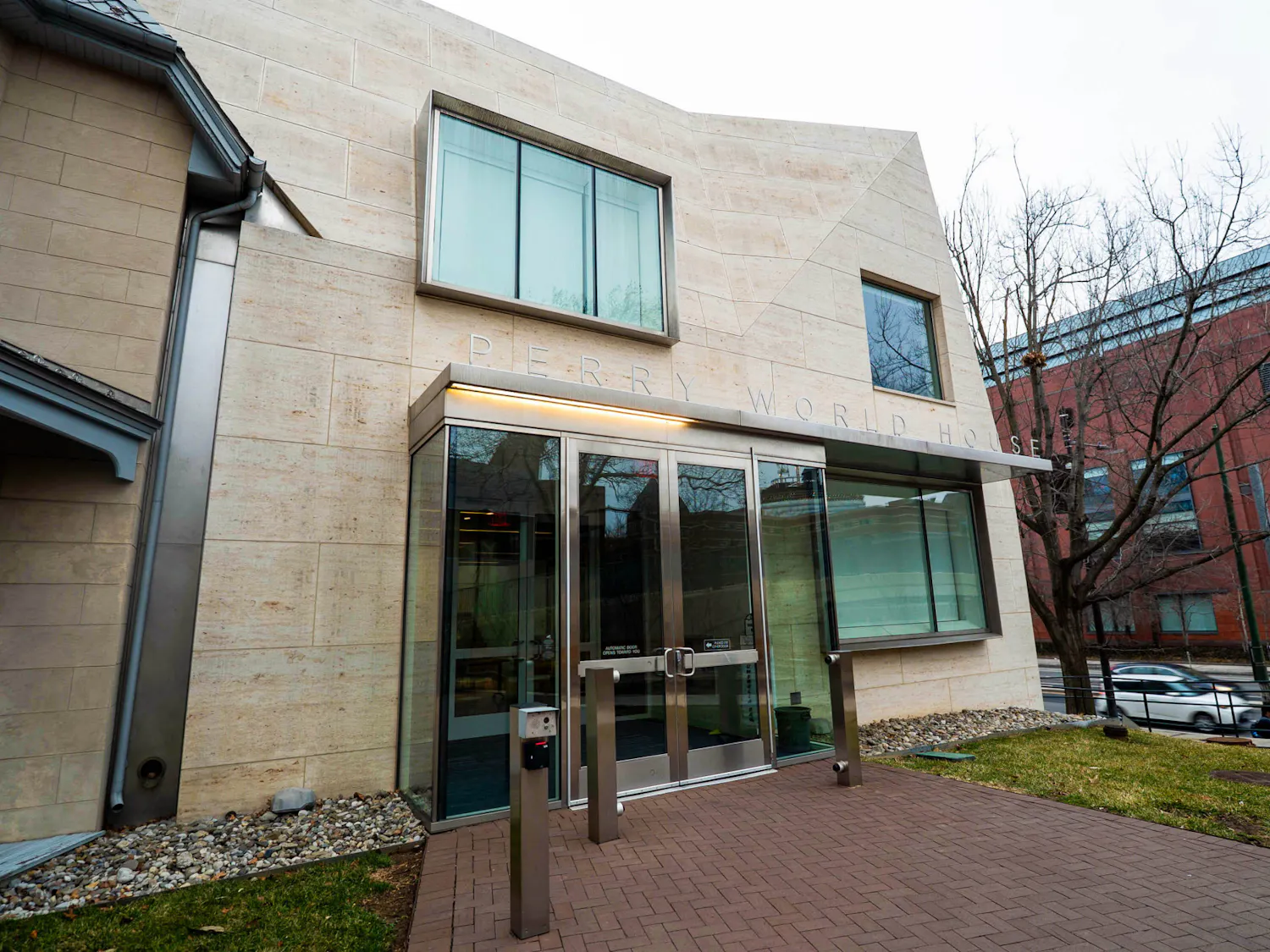
The April 23 session was held at Perry World House and was moderated by University of Pennsylvania Carey Law School professor and former Faculty Senate Chair Eric Feldman. The session comes after Penn released its first draft of revised open expression guidelines last month.
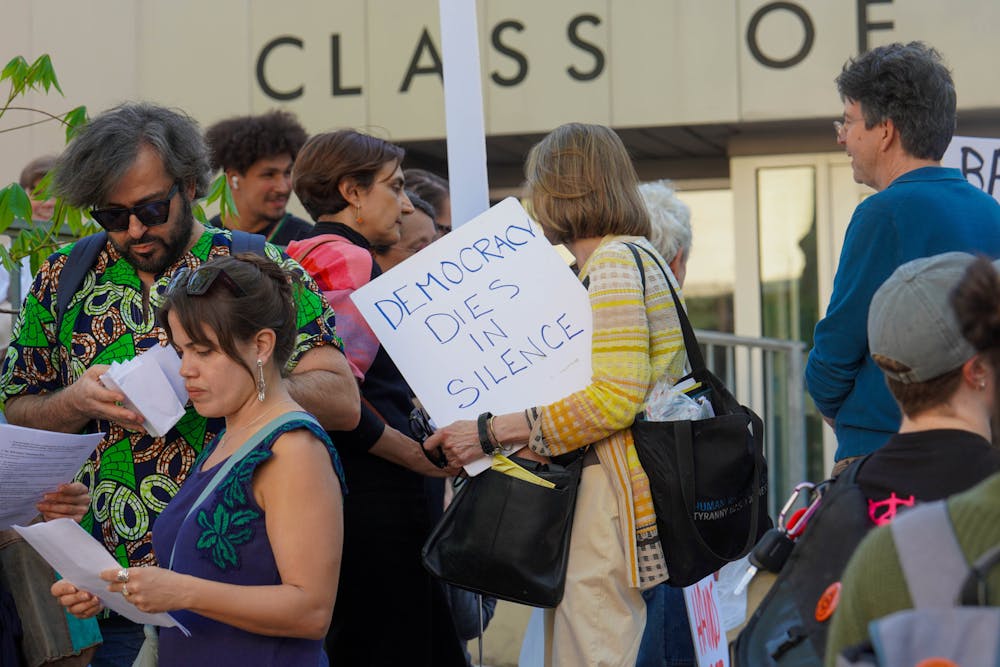
Outside the event, Penn’s chapter of the American Association of University Professors gathered nearly 25 people in opposition to the University’s most recent draft.
“It’s totally unacceptable that students, faculty, and staff are not being given a real, meaningful voice in approving these guidelines,” Mathematics professor and AAUP-Penn Communications Secretary Phil Gressman told The Daily Pennsylvanian before the session began. “A listening session is nice, but it’s not the same as actually following the process, which is in writing and should have been followed.”
Second-year Perelman School of Medicine Ph.D. candidate Maya English, a member of Graduate Employees Together — University of Pennsylvania, called the guidelines “extremely vague” at the demonstration. She argued that the University has attempted to “muddy the waters” of what “is and isn’t appropriate.”
The demonstrators moved inside PWH’s forum once the event began.
Feldman opened the session by explaining that the discussion was a “rare opportunity” for the Penn community to come together and provide feedback on the guidelines. He told attendees that he had “zero authority” over the final draft and that comments would be shared with the University administrators as part of the revision process.
Attendees were informed that two note-takers would document both the substance and tone of remarks, emphasizing the importance of “not just what was said, but how it was said.”
RELATED:
Penn’s new open expression guidelines centralize power with administrators, committee members say
Penn’s draft Guidelines on Open Expression stir debate on campus
Recording devices were not permitted, and cameras were disabled to encourage participants to openly share their views.
Throughout the session, many speakers expressed dissatisfaction with the draft guidelines. Several attendees described the document as “unsalvageable” in its current form.
Multiple participants said that the proposal requires a fundamental revision rather than incremental changes, arguing that the draft was written through an “illegitimate” process.
Attendees also pointed to the absence of senior University leadership at the session — such as Penn President Larry Jameson and Provost John Jackson Jr. Much of the discussion centered on concerns about administrative authority under the proposed guidelines.
One faculty member raised questions about changes to the Committee on Open Expression and its role under the draft, particularly about its advisory function and reporting structure.
Others outlined concerns about the draft’s language, with a graduate student citing the University’s motto — “Laws without morals are useless” — to emphasize how the guidelines have “a lot of rules,” but not “a lot of soul.”
Speakers also discussed how the guidelines may affect protests on campus. Multiple attendees questioned how expectations of advance notice for demonstrations would function in practice.
“Protests happen organically,” one faculty member said.
While several attendees discussed a “chilling effect” on speech at Penn in recent years, some also warned that the new guidelines could spark intense backlash once finalized in September.
“I see faculty who are mobilized and galvanized,” one graduate student said. “I don’t think they’re going to take this lying down.”
Transparency in the feedback process emerged as a recurring theme. Several speakers said that comments from the listening sessions should be accessible to the larger Penn community rather than shared only with administrators.
“What about the community that’s only been given 22 days to review these guidelines?” one faculty member questioned.
Several students noted that the listening sessions had received very little “advertising” and said that the Thursday session — which took place at 4 p.m. — conflicted with class schedules of many of their peers.
During the session, Feldman commented that “a lot of folks have noted the timing” as “unsatisfactory.” He indicated his willingness to “arrange opportunities” for further feedback.
Penn will continue collecting feedback through May before presenting a final version of the guidelines to the University Council later this fall.
RELATED:
Penn’s new open expression guidelines centralize power with administrators, committee members say
Penn’s draft Guidelines on Open Expression stir debate on campus
Senior reporter James Wan leads administration reporting and can be reached at wan@thedp.com. At Penn, he studies communication and computer science. Follow him on X @JamesWan__.
Staff reporter Luke Petersen covers politics and can be reached at petersen@thedp.com. At Penn, he studies philosophy, politics, and economics. Follow him on X @LukePetersen06.
Senior reporter Ananya Karthik covers central administration and can be reached at karthik@thedp.com. At Penn, she studies communication and economics. Follow her on X @ananyaakarthik.