Last month, Penn published a revised draft of the Guidelines on Open Expression with a revamped committee leading the charge.
Under the new proposals, the Committee on Open Expression has fewer members, a new role under the provost, and is no longer responsible for mediating alleged violations of the Guidelines. As the University prepares to gather input on its draft through listening sessions this week, students and faculty raised concerns about the revised role and structure of the Committee.
Temporary guidelines and the 2024-25 committee
In May 2024, the committee — a group of Penn community members tasked with reviewing open expression cases — called for a review of Penn’s guidelines. On the heels of the 16-day Gaza Solidarity Encampment on College Green — which was disbanded by police and resulted in the arrest of 33 protestors — members of the committee wrote in a statement to The Daily Pennsylvanian that they “believe the infrastructure of open expression at Penn needs strengthening consistent with the law.”
At the time, the committee claimed it would work with the Faculty Senate and University Council to review the guidelines — but instead, Penn implemented the temporary guidelines and announced that a faculty-led task force would evaluate the standards.
The Wharton School professor Eric Orts, a committee member from 2022 to 2025, told the DP that the temporary guidelines were “basically just decided by the University” because “they felt that this was kind of an emergency situation.”
Fourth-year physics Ph.D. candidate Will Chan, who previously served as the president of the Pan-Asian Graduate Student Association, received an invitation to join the 2024-25 committee for a one-year term in July 2024.
The University officially announced the charge of the newly formed Task Force on Open Expression in August 2024. Chaired by Executive Vice Dean of Perelman School of Medicine Lisa Bellini — who was also the chair of the COE at the time — and SNF Paideia Program Faculty Director Sigal Ben-Porath, the Task Force consisted of 12 individuals, including faculty, students, and one staff member.
RELATED:
Wharton professor to lead Penn’s new Committee on Open Expression
Five key takeaways from Penn’s open expression guidelines draft
The committee met seven times from September 2024 to February 2025, including “meetings focused on building out the principles and recommendations from the TFOE into a revised draft of the Guidelines on Open Expression,” according to the group’s year-end report in May 2025.
Chan said that the committee and the Task Force went through a “back-and-forth process” while drafting the revised guidelines. He added that the committee provided its “visions” while the Task Force indicated “what they felt was appropriate and not appropriate.”
“We didn’t all see eye to eye,” Chan said.
Ultimately, the committee anonymously voted 9-1 to approve a draft of the Task Force’s recommendations in February 2025.
The Task Force continued the revision process afterward, but Chan noted that the committee did not meet again.
“It felt like the vote was the conclusion of the work,” he said. “There wasn’t a follow-up saying, ‘People have asked for these changes.’”
During the 2024-25 academic year, “a small number of individuals reached out to the COE chair for guidance but did not wish to advance their concerns further for full committee review,” according to the University Council report.
Chan confirmed that the committee did not discuss any mediation of open expression violations at its meetings.
“While that may be true that no students had come to the committee, it also begs the question: Are we functioning well as a University in terms of open expression?” he asked.
“It was very disappointing to go through all that work, and we didn’t hear anything,” Orts stated. “Then finally, to be presented with this new draft that obviously had been prepared internally to the administration but without consulting anyone who is on the faculty.”
Chan said that, under the “draconian” temporary guidelines, demonstrations and events were conflated in a “false equivalence” — echoing concerns raised by other Penn community members.
“Events, sure, they should be registered. Demonstrations, protests, vigils — those are not events,” Chan said. “They will be spontaneous very often. They will not happen in ideal scenarios and ideal circumstances. They are meant to be disruptive.”
He noted that, in the new draft, there was ambiguity between the two that “was not in the final draft submitted by the COE.” According to Chan, protest registration is “not necessary” but Penn has “leverage in shutting down” demonstrations.
A “quick” 2025-26 turnaround
In response to a request for comment on the formation of the 2025-26 committee, a spokesperson for the Provost’s Office directed the DP to a University Council website, which published updated information this month.
Orts wrote in a statement to the DP that he had first been invited to rejoin the committee for 2025-26 in “late summer 2025,” but was apprehensive about doing so with multiple versions of the guidelines in effect. At the time, Orts was told that the administration would release the updated guidelines “soon.”
He was contacted again in December about rejoining the committee — and despite signaling that he would not return, he received an email in March notifying him of his appointment. Four days later, he resigned.
Other members of the 2025-26 committee were also invited to join in March. College junior Ben Woods — the Undergraduate Assembly’s academic initiatives director — confirmed his appointment last month in a statement to the DP.
According to a report from the Faculty Senate’s office, its executive committee voted on “a roster of eight faculty members” to the 2025-26 committee during March and April. The report states that “one candidate resigned from committee membership” and was replaced by another faculty member during the voting period.
Communication professor Jessa Lingel — a member of the Faculty Senate Executive Committee and the president of Penn’s chapter of the American Association of University Professors — told the DP that the Faculty Senate has continually sought “clarity” from the administration regarding open expression.
“We have raised the issue of the open expression guidelines every time there’s a representative from leadership, whether that’s Provost John Jackson or President Larry Jameson,” Lingel said. “They’ve never really been able to provide explanations as to why this process is so divergent.”
Orts commented on the “quick” nature of the new and upcoming revisions to the guidelines.
“It’s the end of the semester, but they want to be done by this summer,” Orts said. “Where’s the time students have to take?”
Chan echoed this sentiment, stating that the community listening sessions are “particularly poorly timed” and “not in favor of getting student input.” He felt that past open expression listening sessions were merely “a chance for people in the University administration to give their opinions.”
A spokesperson for the Provost’s Office declined the DP’s request for comment, writing that “we will let the community input be the community input.”
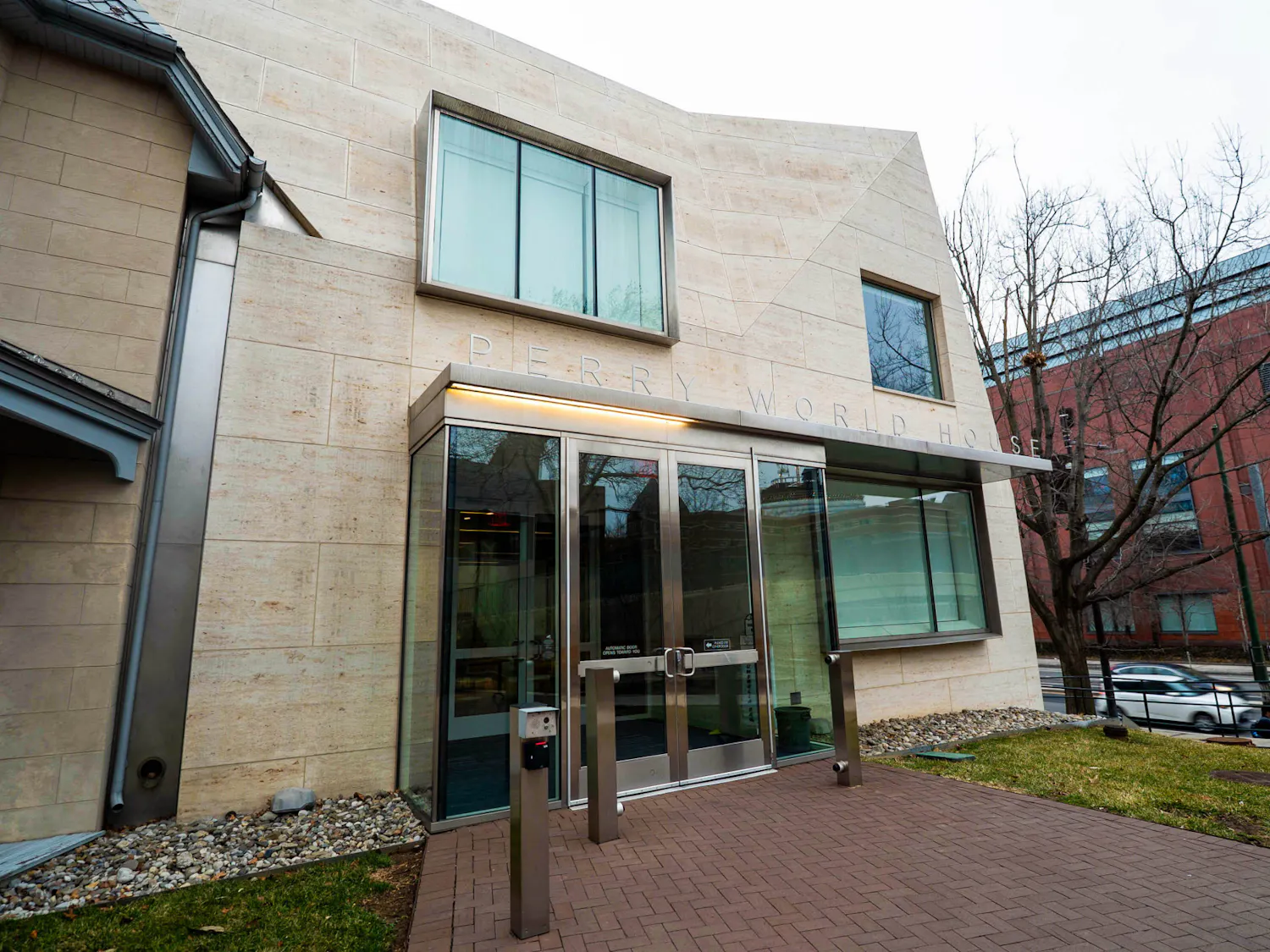
The sessions — one at Perry World House on Thursday at 4 p.m. and another virtually on Friday at 12 p.m. — are set to be moderated by University of Pennsylvania Carey Law School professor and Past Chair of the Faculty Senate Eric Feldman.
“My role is to ensure that Penn students, faculty, staff, and postdoctoral trainees have an opportunity to express their views on the proposed revisions to the Guidelines on Open Expression, and to ensure that those views are clearly and accurately conveyed to Penn’s senior administration,” Feldman wrote in a statement to the DP.
“The listening sessions will emphasize anonymous feedback and privacy and acknowledgement of transparency concerns and distrust stemming from the review process and timeline to-date,” according to the Faculty Senate’s April 15 report.
Wharton professor and committee chair Phil Nichols wrote in a statement to the DP that Penn “should develop its support for and understanding of the meaning of open expression as a community” and that “one important role for the Committee is participating in this critically important community exercise.”
“The real work begins once the members of our community – students, staff, faculty, and all – have had a chance to provide input through the two listening events, on Thursday and Friday, or through the confidential online portal,” Nichols added.
Changes to the committee and shared governance
When the Committee on Open Expression called for a review of the guidelines in May 2024, Orts told the DP that there was a “general sense” that the structure and authority of the committee needed to be reformed.
At the time, he explained that the committee’s role was “only advisory” under the Vice Provost for University Life and noted that some believe “this committee should have more power than that and should be able to tell the VPUL what to do.”
Instead, the updated draft places the committee — previously “semi-independent from the Provost and the administration” — in an even smaller role.
“The administration is taking over control,” Orts said. “It’s a purely advisory body to the administration.”
Previously, the committee was an independent committee of the University Council and operated in an advisory role under the VPUL, as clarified by interpretive guidelines adopted in 2023.
Orts told the DP that the committee previously agreed to move away from the University Council — which he called “highly dysfunctional” — to fall under the Faculty Senate.
“But now the new [draft] says the Senate and the Provost,” Orts said. “That’s a much different thing because then you’re not independent anymore.”
Orts expressed his belief that the draft guidelines show “that the administration is afraid of having some independent body.”
Lingel also voiced concern about the administration’s influence over open expression.
“I’m concerned that these guidelines concentrate so much power in the Provost’s office rather than in some sort of entity that has more representation across different campus stakeholders and much more transparency,” Lingel told the DP.
The new Executive Director of Open Expression, for example, reports to the Provost with “a dotted line report to the Faculty Senate Tri-Chairs.” Under the draft guidelines, the Provost also names staff and students to the committee after being given “advice and recommendations” by respective constituent bodies.
The process for faculty is described differently, involving nominations by the Faculty Senate Executive Committee — though the Provost “may request alternative individual nominations” and ultimately must approve committee members.
“It gives this air of the Provost reserving the right to swap out anyone that they don’t particularly want to have on the committee,” Chan said.
Woods told the DP that he is concerned there is “no guarantee that any sort of protections won’t just be thrust to the side when it is expedient” — such as the implementation of the temporary guidelines.
“On that front, it seems to me that any promises or any wins that are made on these new guidelines are kind of meaningless,” Woods said. “I hope that we get more absolute, ironclad speech protections for students and that we get some kind of institutional guarantee not to encroach on expression.”
Senior reporter James Wan leads administration reporting and can be reached at wan@thedp.com. At Penn, he studies communication and computer science. Follow him on X @JamesWan__.
Senior reporter Kathryn Ye covers central administration and can be reached at ye@thedp.com. At Penn, she studies biochemistry and philosophy. Follow her on X @Kathryn__Ye.