SAM SHERMAN is a College junior from Marblehead, Mass. His email is samsherman6@gmail.com.
SAM SHERMAN is a College junior from Marblehead, Mass. His email is samsherman6@gmail.com.
Here at Penn, it’s all too easy to get caught up in our immediate to-do list. In 2016, our campus will be caught up in our foremost national duty: electing the 45th President of the United States.
Just as we have gendered expectations for ourselves, we also have gendered expectations for others. If we as women think we should be focusing on cardio, we expect men to focus on muscle training.

What those who decry —(with religious zeal, I might add —) Indiana’s RFRA seem to ignore is that these issues involve a balancing of rights.

When the federal government passed the Religious Freedom Restoration Act in 1993, the LGBT rights movement had hardly begun.
In the age of instant mass media and ever-expanding tort liability, for Penn to adopt a “live and let live” approach to students’ risky behavior just isn’t a rational choice. To avoid the monetary losses which might result from parental lawsuits or bad press born of Greek antics, it is simply in Penn’s best interests as an institution not to be tolerant of violations of policies it couldn’t really change if it wanted to.

In the age of instant mass media and ever-expanding tort liability, for Penn to adopt a “live and let live” approach to students’ risky behavior just isn’t a rational choice. To avoid the monetary losses which might result from parental lawsuits or bad press born of Greek antics, it is simply in Penn’s best interests as an institution not to be tolerant of violations of policies it couldn’t really change if it wanted to.

Here at Penn, it’s all too easy to get caught up in our immediate to-do list. In 2016, our campus will be caught up in our foremost national duty: electing the 45th President of the United States.

Just as we have gendered expectations for ourselves, we also have gendered expectations for others. If we as women think we should be focusing on cardio, we expect men to focus on muscle training.

SHAWN KELLEY is an LPS junior from San Diego. His email address is skelley@sas.upenn.edu.

A Year In-Review: Having Already Built A Better Government This past year, we were excited to lead a campus that was named the the best college nationwide by USA Today and of course No.

We need to question whether living with those who are like you is useful. Of course, it’s nice to live with a community of those with whom you self-identity. But we also must ask whether this contributes to a groupthink culture, and homogenizes discourse.

A college education has become more attainable for those who seek it, but comparatively little has been done to make this education relevant to the newer, wider clientele.

Penn is one of the most prestigious universities in the world, and we’re proud of that — especially considering that women literally run Penn. The University president, the Undergraduate Assembly president and our senior class president are all women.
SEAN MCGEEHAN is a College junior from Philadelphia. His email address is seanmcgeehan@verizon.net.

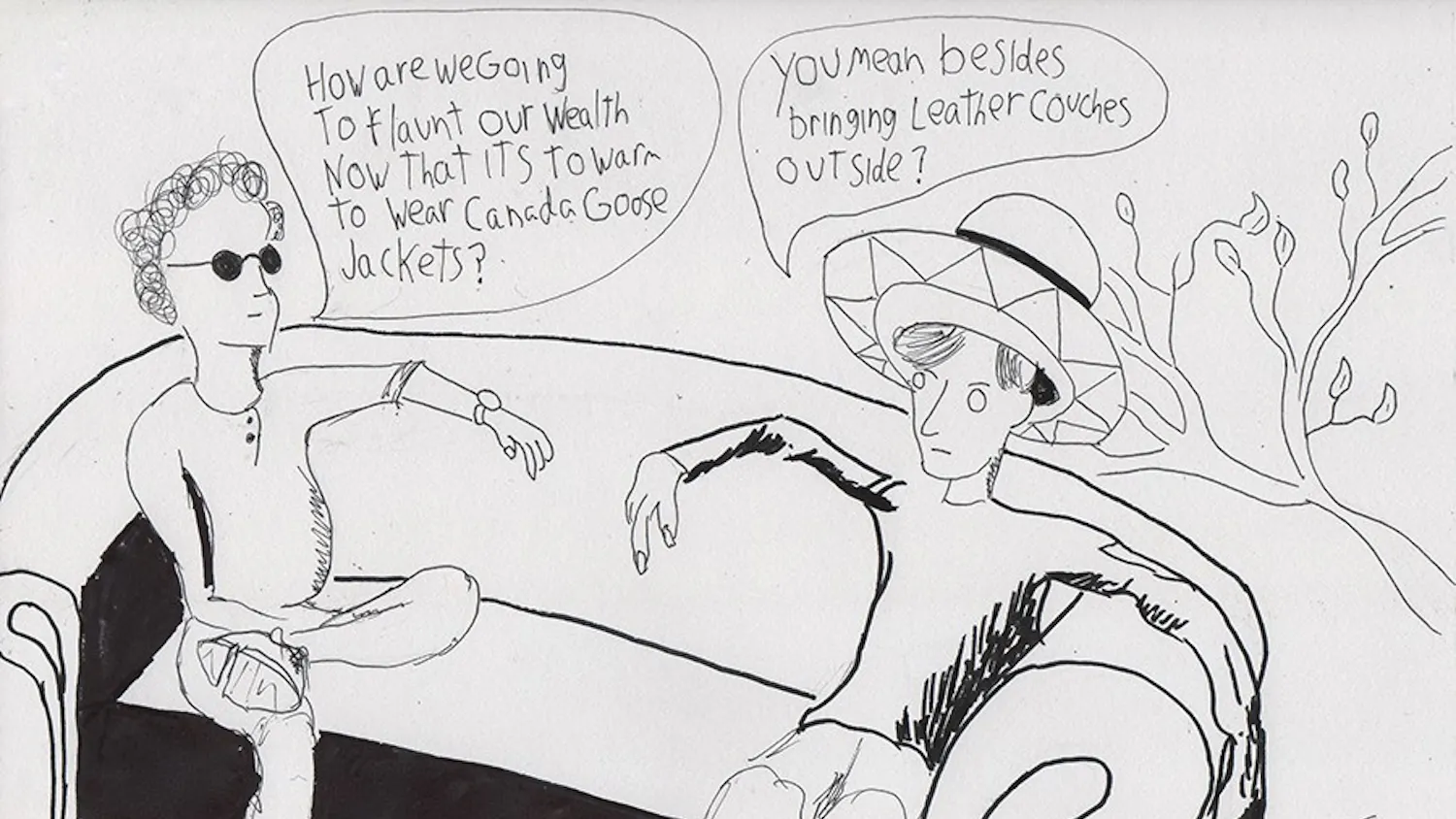
I’m the first to prattle about my love for Penn, but there’s a glorification of wealth that permeates this campus.

NICK MONCY is a College junior from North Miami, Fla. His email address is nickmoncy@sas.upenn.edu.

Just over a month ago, the undergraduates voted whether Penn should divest from fossil fuels, and an overwhelming 87.8 percent of participants voted yes.

In the context of psychological research on identity development, the concept of gendered race is relatively new. Gender and race are also not the only aspects of identity that overlap. Issues of ethnicity, class and sexuality among others all significantly affect the way one acts and is perceived.

SAM SHERMAN is a College junior from Marblehead, Mass. His email address is samsherman6@gmail.com.
My understanding of events in Iraq, Syria, Saudi Arabia and elsewhere may determine who I vote for in the next presidential election. And yet, though I understand that the politics of that region are often defined by conflict between groups with deep-seated theological disagreements, I find myself unable to summarize what the nature of those disagreements are in any but the most simplistic terms.


Even if some of the supernatural properties of religion do not stand the test of science, does this mean that we are right to reject religion without further ado? This is where Dawkins, and many of his peers, makes a mistake by assuming that scientific truth must necessarily guide all spheres of life.

ANNEKA DECARO is a College freshman from Houston. Her email address is annekaxiv@gmail.com.
 Solutions by The State News