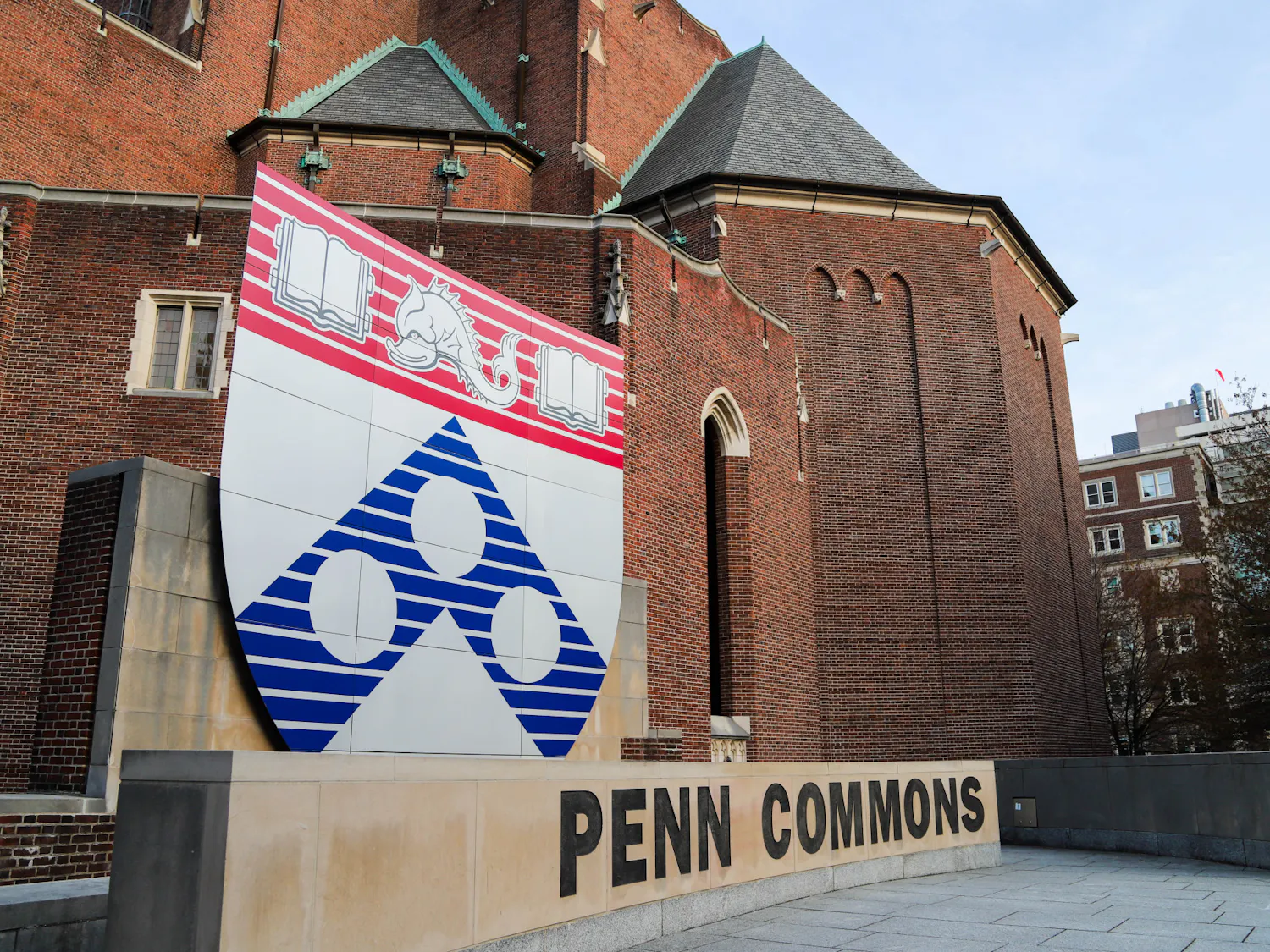
Campus groups hosted the fourth annual Paint Penn Purple event to raise awareness for domestic violence on Thursday.
The Oct. 15 programming — organized by Penn Violence Prevention, Penn Women’s Center, and the LGBT Center — encouraged students to wear purple in representation of the anti-domestic violence movement. The event is an extension of Philadelphia’s city-wide observance of “Paint Philly Purple,” which is held during National Domestic Violence Awareness Month each year.
The three organizations spent the day tabling on Locust Walk, offering passers-by merchandise and educational resources.
Julie Hastings — PVP’s associate director of Prevention, Education, and Programming — explained that the event is the organization’s “way to connect with the citywide event and raise awareness for relationship health on our campus.”
Elizabeth Pride, senior project manager at Philadelphia Public Health’s Office of Domestic Violence Strategies, explained that Paint Philly Purple is a “low-barrier way to get more people involved in Domestic Violence Awareness Month.”
She emphasized the importance of campus awareness, saying that “college students are within the age bracket that most experience domestic violence.”
There are many things that students can do to support domestic violence awareness in addition to wearing purple, according to Women’s Center Associate Director Catharine Sciolla-Schechter.
She highlighted other programming offered at Penn — including trauma-informed yoga at Pottruck and a workshop on how to support a survivor.
Hastings explained that the yoga sessions, hosted in collaboration with Penn Campus Recreation and the Women’s Center, are a way for students to “have a mindful moment amidst the chaos.”
The workshop, she added, can “help people feel more confident and comfortable supporting a friend when they’ve had an experience of interpersonal violence.”
“What we want to do is expand the knowledge for folks to understand that relationship violence can also look more subtle,” Hastings explained. “There is a common misunderstanding that a relationship is either healthy or it’s toxic or unhealthy. When in reality, a lot of relationships exist on a spectrum.”
Sciolla-Schechter noted that peer education in particular has been shown to be “one of the most successful ways that we can mitigate” domestic violence.
“Statistically, survivors are most likely to tell a friend first before contacting resources, and we also know based on studies that how the first person you tell responds can set the tone for the rest of your healing journey, and is really critically important,” she said.
Pride added that showing support for survivors of domestic violence can take many forms.
“Sometimes survivors just want someone to talk to and to listen to them, and other times they need support in a more material way,” Pride said. “Whether that’s having someone to help them navigate systems or to help them collect evidence.”
College senior Ashley Kim, who serves as a program assistant at the Women’s Center, emphasized the importance of advocating for domestic violence awareness beyond the month of October.
“I don’t think that this is the only time we should do this advocacy, but particularly because of what’s going on nationally, people are paying attention to it,” she said.
Sciolla-Schechter explained that all of the Women’s Center’s work “is founded in gender justice and gender equity,” adding that the goal “obviously can’t exist in a world where the rates of interpersonal violence are so high.”
“We can’t only talk about these issues when it’s a particular month. We can’t only talk about these issues when it’s on the headlines,” Kim added. “We have to constantly talk about these issues, and so we have to ride off the momentum of what’s going on and continue that work throughout the school year — even when national media isn’t hyper-focused on this issue.”