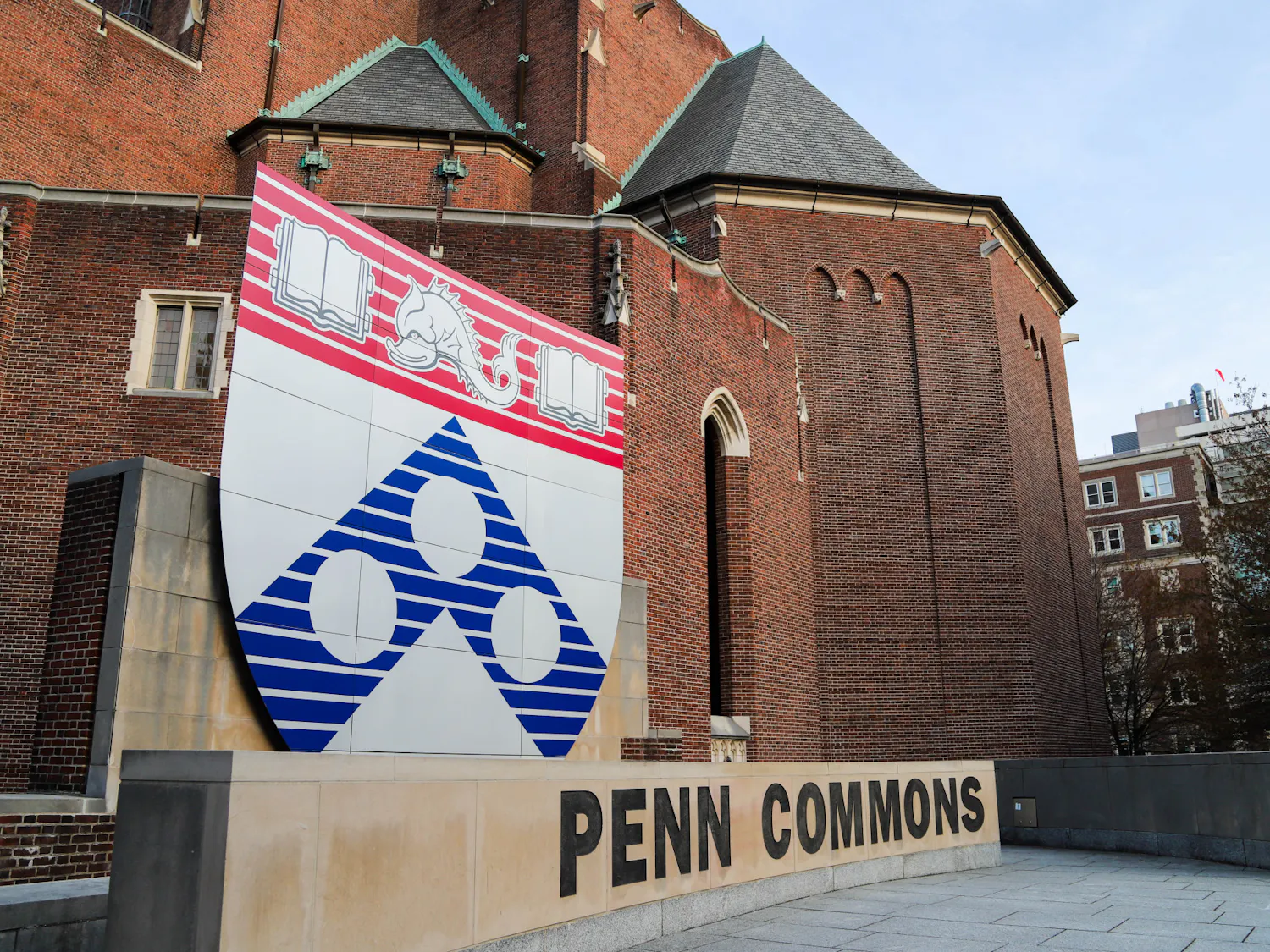
Penn President Larry Jameson has repeatedly touted the University’s commitment to becoming a “national model of excellence” in preventing campus sexual violence. But many of Penn’s policies and resources fall short of those offered by peer institutions, according to a Daily Pennsylvanian analysis.
Last month, a former Cornell University student filed a civil lawsuit alleging she was drugged and sexually assaulted by seven members of Cornell’s Chi Phi fraternity in October 2024. The university’s response has drawn widespread accusations that Cornell administrators mishandled the case.
The suit has incited national conversations about how sexual violence is handled on college campuses, bringing institutional policies — including those in place at Penn — under renewed scrutiny.
In a 2024 survey, 16.7% of Penn undergraduates identifying as women and 6.1% identifying as men reported experiencing nonconsensual sexual contact during their time on campus.
The same report found that of the 7.5% of undergraduate women who reported experiencing nonconsensual penetration, over three-quarters chose not to contact a program or resource on campus about the experience. Respondents frequently stated that they “could handle it” themselves and “did not think it was serious enough” to merit contacting a third party.
Only half of all respondents reported that they felt as though it was “very or extremely likely that campus officials would take the report seriously.”
Penn’s Title IX office, which oversees sexual misconduct complaints, was recently consolidated under a new Center for Civil Rights this June. At a Sept. 9 University Council meeting, students raised concerns about a lack of transparency surrounding the office and its implications for survivor protections.
In response to a request for comment, a University spokesperson referred the DP to Penn’s publicly available crime reporting and sexual misconduct resources. The spokesperson declined to comment further.
RELATED:
Penn establishes consolidated Center for Civil Rights
Jameson pledges expanded Title IX capacity at Penn in wake of Cornell gang rape lawsuit
During an Oct. 14 meeting of the University Council, Jameson skirted around the Cornell incident but pledged to expand education and awareness efforts and to increase Title IX capacity. In an open forum following his remarks, student leaders lodged criticisms over the efficacy of the University’s approach to sexual violence on Penn’s campus.
A review by the DP found that Penn’s sexual misconduct resources, faculty training requirements, and around-the-clock student support differ from those of its Ivy League peers.
Reporting requirements
Most Penn professors, teaching assistants, and academic advisors are not required to make an official report when a student tells them about sexual misconduct they have experienced.
That responsibility falls to a designated group of “Required Reporters” — employees who work in offices not explicitly identified as confidential. Under Penn’s current policies, these employees are the only ones mandated to report disclosures to the Office of the Associate Vice President for Equity & Title IX.
At Penn, the list of offices and individuals required to make official reports includes the Division of Human Resources; deans, vice deans, associate deans, or assistant deans in each of the 12 schools; vice, associate, or assistant provosts; and the Division of Recreation and Intercollegiate Athletics.
The University’s approach to reporting sexual misconduct has narrowed over the past decade. In 2016, the DP reported that Penn’s Office of General Counsel concluded that all faculty were responsible for reporting sexual violence. Three years later, Penn consolidated its sexual misconduct rules into one policy under one intake office.
According to a Penn Violence Prevention webpage, the reporting process changed again on Aug. 14, 2020 — the day new federal Title IX regulations took effect. In 2026, the American Association of University Professors argued that instructors will struggle to “share their knowledge and research with students if they are unable to ensure privacy.”
In contrast, Harvard University, Columbia University, and Princeton University obligate nearly all faculty to report sexual misconduct.
At Harvard, all faculty and staff — including proctors, tutors, course staff, resident deans, and student employees — are “required to promptly share” incidents of sexual harassment or other sexual misconduct with a Title IX Resource Coordinator “unless otherwise designated as a confidential resource.”
Columbia faculty and staff also have a responsibility under University policy to report gender-based misconduct involving undergraduate and graduate students “immediately.” Princeton has the same obligation for all nonconfidential employees.
Like Penn, Cornell and Brown University limit required reporters. Cornell’s list includes deans, athletic staff, and faculty and staff advisors, while Brown designates department chairs, directors of undergraduate studies, coaches, and deans as mandated reporters. Brown also strongly encourages other faculty, staff, and students to “confer with the individual harmed” before making a disclosure.
Faculty and student training
Unlike some peer institutions, Penn does not require all faculty to complete sexual misconduct training.
The University’s training module, titled “Preventing and Addressing Sexual Misconduct at Penn,” is offered to faculty and staff and was previously described as a refresher that “can be revisited in its entirety or referred to as needed.” According to the sexual misconduct policy, faculty who sit on hearing panels for misconduct cases are required to complete training.
Under the Jeanne Clery Disclosure of Campus Security Policy and Campus Crime Statistics Act, all colleges must provide prevention and awareness programs on sexual violence to new employees and students.
Penn Violence Prevention runs much of the University’s programming for students.
During New Student Orientation, PVP’s hourlong “Consent Circles” sessions equip incoming first-year students with tools to discuss and practice consent while learning about the resources available at Penn. The online program “Thrive at Penn” also covers consent and sexual misconduct resources, and is accessible on Canvas for all incoming students.
According to PVP’s webpage, all fraternity and sorority members must complete sexual violence prevention education both as new members and annually with their chapter. Chapters at Penn that fail to meet this requirement may be subject to sanctions and fines.
At many of Penn’s peer universities, training is mandatory and often recurring for all students and employees. Harvard has required all faculty, staff, and students to complete an online Title IX training since 2018. Columbia also requires new employees to complete an online course on their reporting duties, though like Penn, new students are only required to complete a 60-minute antidiscrimination training once.
According to Princeton’s policy, faculty, staff, and second-year graduate students must complete a 45-minute program within 30 days of hiring and renew it every three years. Cornell implements the same requirement for faculty, staff, and student employees, but mandates renewal annually.
Incoming undergraduate and graduate students at Princeton are also given “mandatory” sexual violence prevention training, with additional required training for certain leadership roles on campus, such as residential college advisors.
Columbia and Cornell are unique in that New York law requires employers in the state to provide sexual harassment prevention training every year.
While Cornell also requires training for students, the school has recognized shortcomings in its online course. In March, a task force formed over the University’s alleged 2024 assault recommended in-person programming at new student orientation and sexual-health content in first-year advising classes, which were implemented this fall.
Confidential support
At Columbia, Princeton, Harvard, and Brown, students can reach a 24/7 confidential hotline dedicated to sexual and relationship violence. At Penn, there is no such resource.
The only 24/7 confidential option named in the University’s sexual misconduct policy is Special Services, a Division of Public Safety department that supports community members who have experienced any type of crime, not just sexual misconduct. The line does, however, provide transportation and accompaniment to the Philadelphia Sexual Assault Response Center.
Outside the policy, Penn widely advertises the HELP Line, a 24/7 line answered by DPS professionals trained in mental health referrals. Originally launched in 2014 as a mental health resource, the line’s stated purpose is simply for information and referrals.
Penn’s other confidential support offices for survivors are available during business hours, including PVP and the Penn Women’s Center on Locust Walk, which provides confidential crisis and counseling.
Student Health and Counseling — which houses a confidential Sexual Trauma Treatment and Outreach and Prevention team — offers an after-hours counselor line, but serves general mental health needs rather than sexual violence specifically.
At other universities, 24/7 lines are often run by offices dedicated to sexual violence. In many cases, they are kept separate from the institution’s Title IX office.
Columbia’s Sexual Violence Response, a department of Columbia Health, has advocates available 24/7. Princeton similarly operates a Sexual Harassment/Assault Advising, Resources and Education office, which is independent of its Title IX office.
Harvard’s team, also called SHARE, runs an around-the-clock confidential hotline, as does Brown’s BWell Health Promotion office. Cornell offers a 24/7 confidential line at Cornell Health and an off-campus advocacy center hotline.
Reporting at Penn is primarily done through the CCR’s main form, which requires a PennKey upon submission, or by calling 215-P-COMPLY. The line covers all policy or legal violations, from misuse of funds to sexual misconduct. It takes reports but provides no counseling or advocacy services.
Through 215-P-COMPLY’s online portal, anonymous reports can be submitted via a confidential password that allows for communication with the Title IX office without revealing personal information. Princeton and Brown also route anonymous reports through general compliance hotlines.
Harvard, Columbia, and Cornell, on the other hand, accept anonymous reports through online forms dedicated to Title IX concerns.
Senior reporter Aidan Shaughnessy covers student life and can be reached at shaughnessy@thedp.com. At Penn, he studies philosophy, politics, and economics. Follow him on X @aidannsh.