For Penn undergraduates eyeing medical school, the path to becoming a physician increasingly runs through the research lab.
A 2025 survey of first-year medical students found that over half of matriculants conducted research in college. At Penn, undergraduates say navigating those opportunities can bring both scientific discovery and a pressure to keep up with peers.
College sophomore Dan Marin, a member of the Roy and Diana Vagelos Program in the Molecular Life Sciences, is familiar with the expectation that aspiring physicians need research experience before applying to medical school. The four-year program combines scientific coursework with mentored research and provides stipends for laboratory work during two summers.
“I know some of my peers definitely see it as a box you have to check,” Marin said in an interview. “Without it, you can’t have a solid chance at some medical schools.”
Doris Tabassum, a pre-health advisor for Penn’s Career Services office, agreed that research often becomes one of several items students feel they need to complete before submitting an application.
“They have these five or six items in their mind, research being one of them,” Tabassum said in an interview.
Experience in the lab, however, is not a formal medical school requirement.
“Part of being in an undergraduate environment is to explore your interests,” Tabassum added. Research can help students develop “critical thinking, problem-solving, and resilience.”
Marin said the motive behind participating in research shows up in how students spend their time.
“You can see the difference between people who really like research and the people who are doing it for medical school,” he said. “The people who are doing it due to genuine interest go into the lab more often than they’re expected to. They write and analyze their data in their off time.”
Marin hopes to continue his research throughout his undergraduate career, seeing it as a way to understand how medical treatments are developed.
“When you go to the hospital, you don’t really think about the people researching, but it’s really important to learn what’s really going on behind what you’re treating,” he said. “I genuinely feel this is an important part of becoming a doctor.”
Beyond individual motivations, some students say Penn’s pre-professional culture shapes how they approach research.
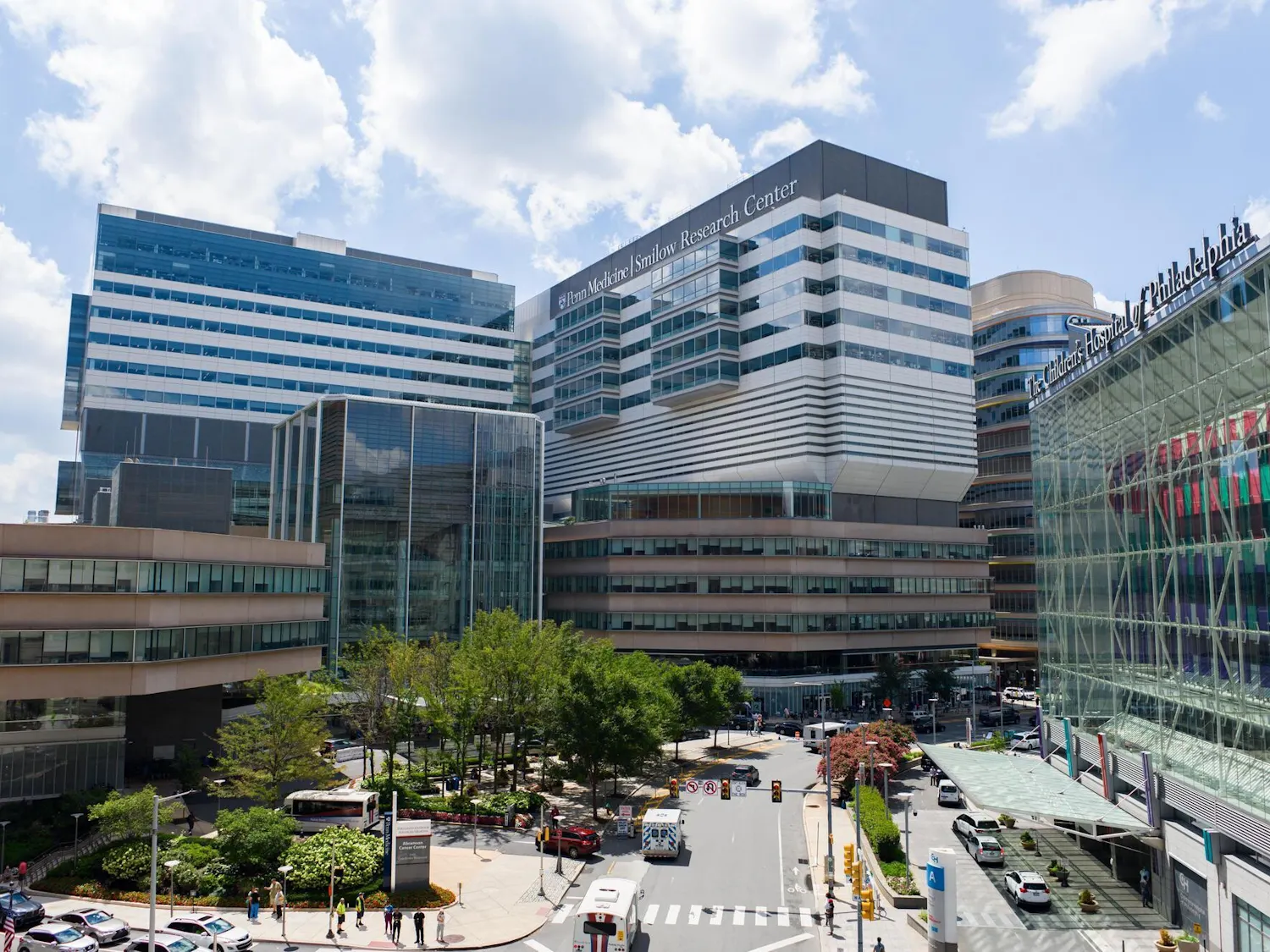
College senior Ezra Dubowitz received funding through the Center for Undergraduate Research and Fellowships to support his undergraduate project. He joined a microbiology lab at Penn Medicine after cold-emailing professors as a first year, later moving into reproductive immunology research at the Children’s Hospital of Philadelphia.
“There’s a lot going on as a young undergraduate, and a lot of my peers found it a little bit difficult to navigate,” he said in an interview.
Dubowitz said Penn’s pre-professional culture can leave pre-med students feeling that they are falling behind their peers if they have not yet found a lab.
“I think there’s a strong pressure, particularly within the culture of pre-professionalism, and particularly for pre-meds who feel behind,” Dubowitz said.
After a few years of research, Dubowitz said he has gained greater independence in the lab.
“Because I’m older and it’s a smaller lab, I have a lot more responsibility in running my own projects,” he said.
Center for Neurodegenerative Disease Research Co-founder Virginia Lee said her lab regularly receives more applications from undergraduates than it can accommodate, particularly for summer positions. Having worked at Penn since 1981, Lee explained she began taking on undergraduates partly to give them the chance to explore research before committing to a career.
“I really want to expose them to research, so that they can decide for themselves whether there is something for them,” she said in an interview.
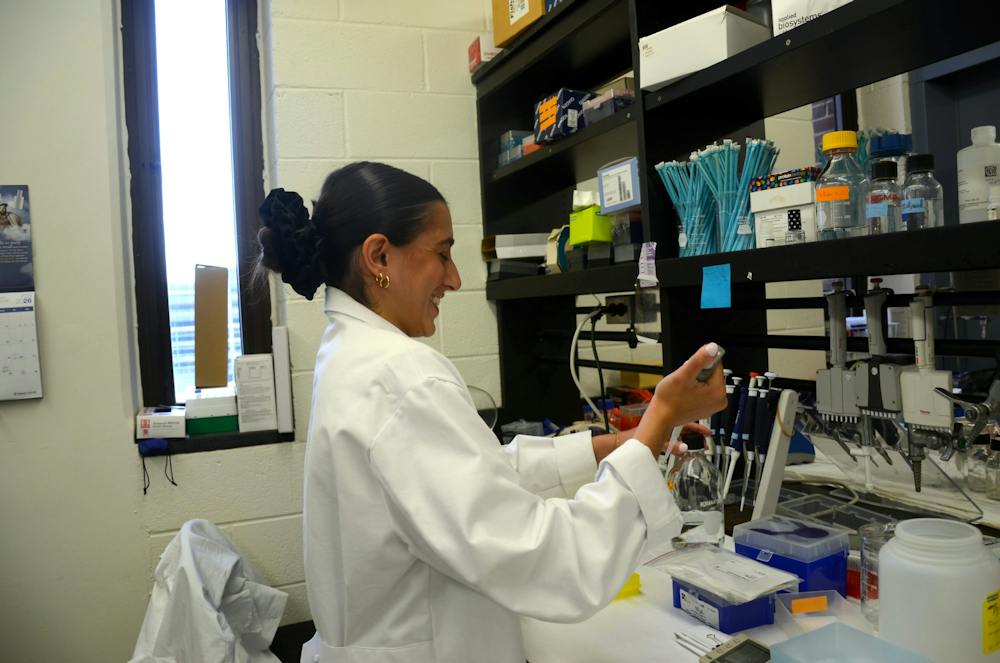
Lee said students learn research techniques by working alongside postdoctoral researchers, graduate students, and other lab members. During the academic year, undergraduates may spend about 10 hours per week in the lab, while summer positions allow them to devote more time to learning techniques and conducting experiments.
“You learn how to do science from a number of people, not just one person,” she said.
CURF Director of Undergraduate Research Ann Vernon-Grey said that Penn has continued to expand its support for undergraduate research, even as applications for some programs have leveled off.
“What has continued to increase is the institution’s commitment to expanding the program,” Vernon-Grey said in an interview. “They continue to give CURF increased funding. They continue to encourage faculty to provide mentorship.”
Vernon-Grey said she encourages students to pursue research not simply to strengthen their applications, but to explore interests they might otherwise overlook.
“I would always encourage people to do it just because I don’t want them to count themselves out of opportunities that they might really love,” she said.
Staff reporter Saanvi Ram covers science and health and can be reached at ram@thedp.com. At Penn, she studies health and societies. Follow her on X @Saanvi_vivi.