College senior Alexis Bienstock had envisioned spending this semester thousands of miles away from Penn.
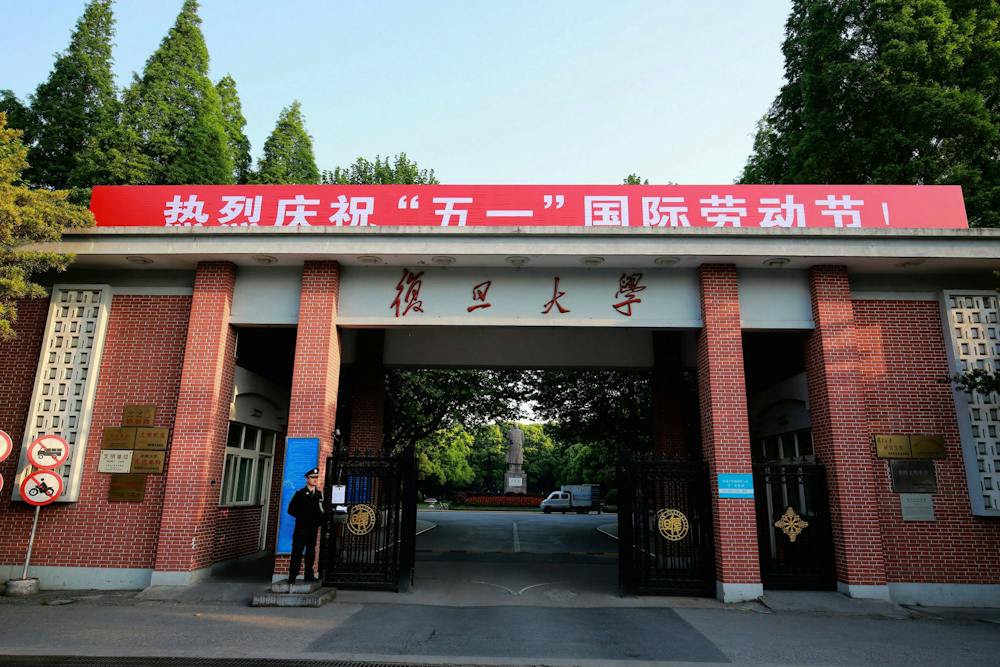
With her flights booked and her visa paperwork in order, Bienstock was set to study abroad at Fudan University in Shanghai, China. But when classes began, she found herself stuck in Philadelphia.
On July 23, the federal government updated Section 1286 of the 2019 National Defense Authorization Act — a list of foreign institutions engaging in activities of concern — to include Fudan. The Department of Defense had determined that the institution posed high national security risks and was likely to misappropriate funds granted to American research projects.
To comply with the new regulation, Penn ended its Fudan undergraduate study abroad program.
On Aug. 5, just over two weeks before the start of the fall semester, accepted students were asked to consider alternatives. A Penn Abroad spokesperson wrote in a statement that the University “may reassess” the program cancelation “should new information or direction become available.”
“Any undergraduate students intending to study abroad at Fudan University were contacted by Penn Abroad directly to discuss alternative options that will allow them to continue to pursue their academic and professional goals,” they wrote.
In response to requests for clarification, the spokesperson declined to comment further.
Students were given the chance to speak with Penn Abroad staff and College advisers about the change, according to an internal email reviewed by The Daily Pennsylvanian. Because other Penn partnerships in China remain unaffected, the office asked students to consider switching.
RELATED:
Penn’s financial footprint spans all seven continents — including Antarctica
Penn researchers say federal grant rule invites ‘mind-boggling’ government oversight
“I did not know that what happened was even a possibility,” Bienstock said in an interview. “I was also confused why it applied to me. I was an undergraduate studying abroad — I wasn’t conducting top-secret research.”
Penn Abroad offered to defer her plans to the spring, she said, but Beinstock did not want to spend her final semester away from campus. Visa processing delays also ruled out a transfer to another Penn Abroad program in China.
Beinstock considered taking a leave of absence from Penn to independently study at Fudan, but doing so would prevent her from completing her East Asian Languages and Civilizations minor. Her options as a result were “not particularly appealing.”
Penn Abroad also warned Bienstock that studying at Fudan could complicate future federal background checks.
“The risk of being excluded from a job I potentially want wasn’t worth it,” she decided.
Bienstock said she wished Penn offered “more clarity" about the last-minute change.
“I understand that they might not necessarily have the information, but I was presented with this very difficult cost-benefit analysis because the cost was unclear,” she said.
One College junior, who requested anonymity due to fear of retribution, had plans to study abroad at Fudan during the upcoming spring semester, but decided to switch his application to a different program.
In an interview, the student described the situation as “unfortunate” and a “somewhat unforeseen” consequence of a “geopolitical conflict started by the administration in power.”
“Had there been some kind of warning or someone watching out for what regions might be at risk, any note might have persuaded me to pursue a different program to begin with,” he said while acknowledging the unpredictability of the circumstances.
He transferred his application to the National University of Singapore, stating that he did not want to choose another university in China — or even Hong Kong — given the risk. Singapore, he said, was “something that I’m just as excited for, but with a little bit more safety.”
Despite his disappointment, the student said he understood the security concerns and considered them “reasonable,” but added that students lose a “cultural aspect” of learning when these opportunities are taken away.
“When the only information that you get about a country or place is from within your own country without seeing it firsthand, it just creates an environment for unhealthy competition and it’s easy to hate something that you don’t know,” he said. “But I think that it’s important to explore cultures firsthand precisely for that reason, because perspective helps you resolve conflict and work productively.”
2026 College graduate Avia Weber — who studied abroad at Fudan in the fall of 2024 — said that despite the tense state of United States-China relations at the time, she does not remember any “fear mongering” or “red flags” during pre-departure training.
Weber said she was surprised by Fudan’s addition to the Pentagon’s list given its status as a civilian university. Other institutions previously affected under Section 1286, she said, had largely been military-affiliated.
“Given that our government is very unpredictable at the moment, I understand why Penn canceled it, and I don’t think Penn would have done it out of the blue if they didn’t have to,” she added.
The Defense Department first published its Section 1286 list in 2023 to identify foreign institutions that could pose a risk to U.S.-funded research. Early inclusions were largely Chinese military institutions, such as the Air Force Engineering University and Army Medical University.
The list expanded in July to include 88 Chinese institutions — among them Fudan — and now names 130 institutions across China, Russia, and Iran. Beginning in fiscal year 2026, the Pentagon is barred from funding research collaborations with any of them.
2025 College graduate Filip Manjevic, who studied abroad at Fudan in the fall of 2024, said studying in China during the final few months of former President and Benjamin Franklin Presidential Practice professor Joe Biden’s term felt “very normal” and “wasn’t controversial at all.”
Now, he said in an interview, Americans studying in China may face “a bad rep” because of 1968 Wharton graduate and President Donald Trump’s return to the White House.
“In the future, people will be more judged if they say that they’re from the U.S.,” he said, adding that American students may need to be “more cautious” and refrain from discussing politics. “Because it’s just very dependent on administration, I hope to see that after these four years, it will go back to normal.”
Students can still study in Shanghai through the Council on International Education Exchange and in Beijing through China Educational Tours or Middlebury. Students at the Wharton School also have the option of studying abroad at Peking University and Tsinghua University in Beijing. The University introduced a program in Taiwan through CIEE Taipei in 2019, but that program no longer exists.
“I’m a firm believer that if we want to improve our relations with these regions and countries, we need people on the ground,” Weber said. “I think study abroad and student exchange is the most important because it goes back to the individual levels of humanity and treating people like people rather than professionals.”
Her parting advice to future students: “Remember your core values and just know that those are transferable to any location no matter what.”
“Penn people are very resilient,” Weber added. “Just make the most of where you end up and being flexible is most important.”
Paul Goldin, who serves as the interim chair of the East Asian Languages and Civilizations department, said he learned about the update “second or third-hand.” He thinks Penn Abroad should have informed the department directly, but he does not blame the University for the larger decision — nor would he have objected to it.
Like Weber, Goldin said he was surprised by Fudan’s inclusion on the Section 1286 list. Penn’s relationship with the university is humanities-focused and does not involve national security, he said.
Goldin said U.S.-China relations now carry greater economic and political significance than they did in the 1990s, which has consequences for both American students who want to study in China and for Chinese students who want to study in the U.S.
“The best case scenario would be finding areas of shared interest and trying to capitalize on that, rather than aiming for something that would be extremely unlikely, which would be that the United States and China become allies,” he said.
Goldin added that he avoids offering student political guidance because “the sands shift so quickly that any political advice we give might be obsolete soon after.” Students, he added, are largely responsible for navigating these decisions themselves.
Melvin Lee, director of the Chinese Language Program, said he was informed of Penn Abroad’s decision in August. He does not expect the restrictions to significantly affect Chinese language enrollment at Penn, because only a “very small percentage” of students in the program study abroad.
Lee said he is more concerned about graduate students, particularly those who travel to China for extended periods to conduct research. According to him, Chinese Language Program faculty will continue recommending established programs in China and will also encourage students to consider alternative options if unexpected restrictions disrupt their plans.
For Bienstock, who is set to graduate by the end of the academic year, it is already too late. Taking Chinese classes at Penn, she said, “will not make up for the experience of being on the ground.”
“I just found it very ironic,” she concluded. “It really undermines partnerships going forward and discourages what I came to Penn to do — intellectual exploration and meeting people from different backgrounds and cultures.”
RELATED:
Penn’s financial footprint spans all seven continents — including Antarctica
Penn researchers say federal grant rule invites ‘mind-boggling’ government oversight
Senior reporter Amy Liao covers student life and can be reached at liao@thedp.com. At Penn, she studies philosophy, politics, and economics and cinema and media studies. Follow her on X @amyliiao.