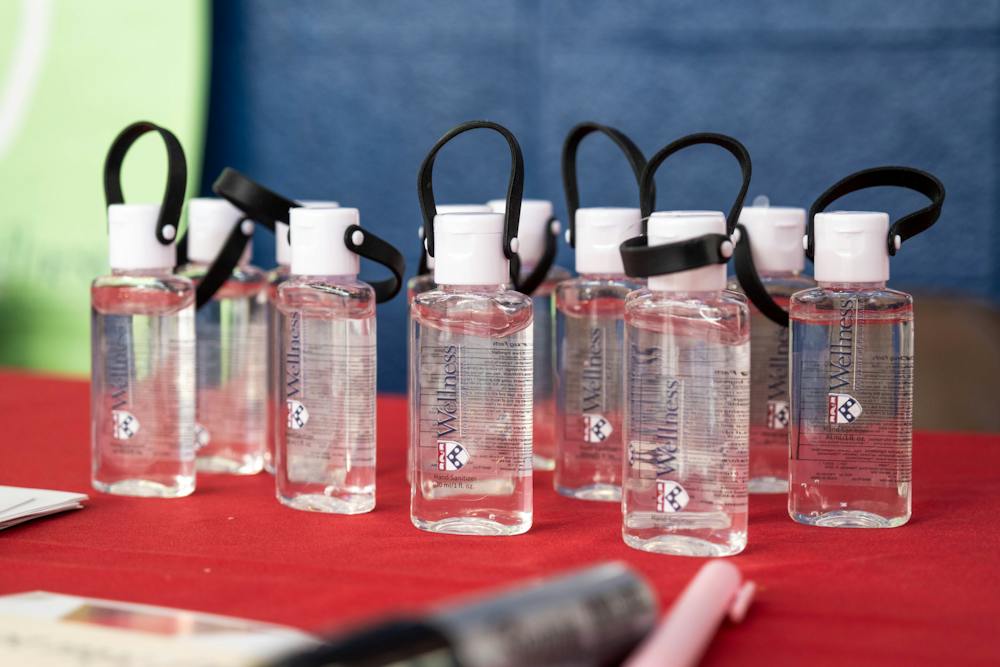
Penn has seen an increase in the prevalence of hand, foot, and mouth disease among undergraduates this fall.
Cases peaked about two weeks ago, according to a spokesperson for Wellness at Penn. Although reported symptoms of the disease — including fevers, sore throats, and oral blisters — have “been decreasing week over week,” the spokesperson confirmed that HFMD has occurred more this semester than in previous years.
“Significant clusters, common exposures, or trends associated within a particular student community were addressed with outreach and additional cleaning in impacted facilities,” they added.
Signs of HFMD may also include blisters on the palms of the hand, soles of feet, knees, elbows, or buttocks. Some individuals, especially adults, may transmit the disease without experiencing symptoms.
According to the Wellness at Penn spokesperson, most cases this fall “have been among undergraduates.”
They advised students with symptoms to stay home “until they have been fever-free for 24 hours and feel well enough to participate in classroom activities.”
Guidance from the Center for Disease Control highlights that HFMD is caused by viruses, most commonly the coxsackievirus. If an individual is sick with HFMD, the virus can be found in their nose and throat secretions, fluid from blisters, and feces.
In 2024, researchers at Johns Hopkins University found that HFMD is “uncommon in older adolescent and young adult populations.” The team studied an “atypical outbreak of HFMD for clinicians who care for older adolescent and college-aged patients in primary care and community settings.”
There is no vaccine in the United States to protect against HFMD. Students can lower their risk of infection by disinfecting frequently-touched surfaces and practicing “good hand hygiene,” the Wellness at Penn spokesperson wrote.
After returning to “essential activities,” students should continue to cover rashes, refrain from close contact “such as kissing or sharing utensils or linens,” and avoid environments “where blisters may come into contact with high-touch surfaces, including large social gatherings, gyms, and workout classes.”
Senior reporter Addison Saji leads coverage of science and health and can be reached at saji@thedp.com. At Penn, she studies English. Follow her on X at @addisonsaji.