

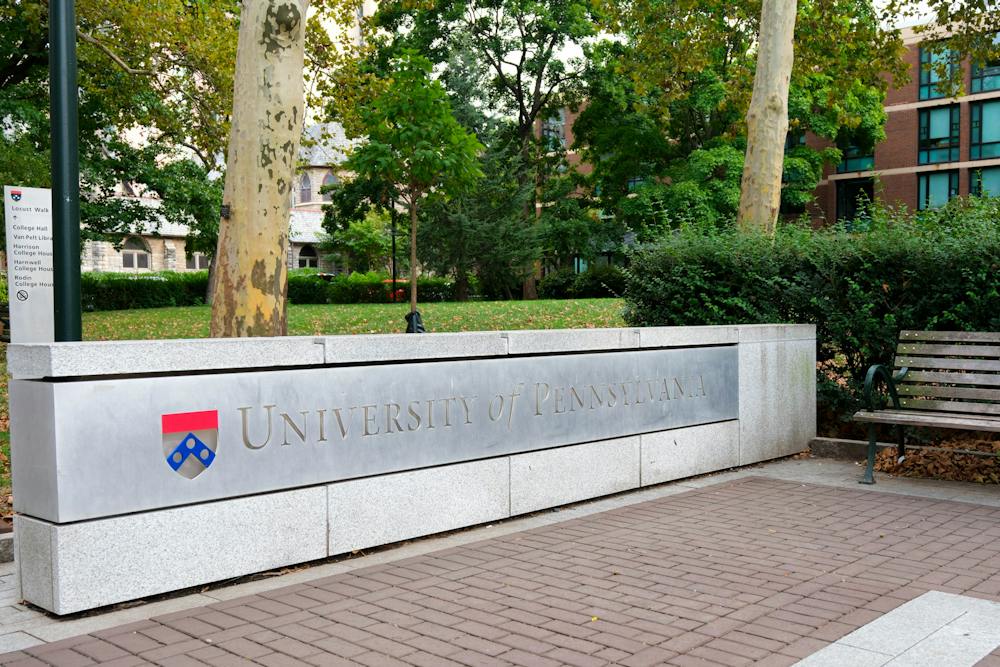
From independent research projects to interdisciplinary seminars, Penn’s scholars programs offer students the opportunity to enhance the traditional undergraduate curriculum.
Programs are hosted University-wide and at a school-specific scale — each combining research, coursework, and community in different ways. Many of these initiatives admit current Penn students, but some are offered solely to incoming first years before they arrive on campus.
There are currently four University-wide academic scholars programs — University Scholars, Benjamin Franklin Scholars, Civic Scholars, and the SNF Paideia Fellows Program.
University Scholars, commonly referred to as UScholars, encourages members to explore particular fields of study in depth through research. The program admits 20 to 30 incoming first-year students, but sophomores and juniors can also join through an on-campus application process.
The program’s central requirement is an independent research project conducted with the support of a Penn faculty member. UScholars are expected to identify and select their own faculty mentor, although help is available from the program’s Faculty Council.
College junior Megan Xie researches neuroblastoma and cell culture as a UScholar, and described the program’s faculty as “very supportive.” To fulfill the research requirement, she joined a lab where she is able to participate without a graduate-level education.
UScholars also allows students to share their work by presenting at the Center for Undergraduate Research and Fellowships exposition, held once each semester.
The Benjamin Franklin Scholars program focuses on breadth and spans the University’s four undergraduate schools. It also aims to promote “intellectual vitality” and interdisciplinary thinking.
Unlike UScholars, all BFS students live in Hill College House during their first year at Penn to foster a community within the program. Program activities also include masterclasses, pre-registration dinners, and off-campus excursions.
RELATED:
Penn GSE establishes master’s in education entrepreneurship scholarship with $3 million gift
BFS scholars are required to take special seminars — small, discussion-based courses that are open to all undergraduates. These classes are topic-based and often unrelated to students’ majors, supporting the program’s interdisciplinary curriculum, according to College first year Nick Ingram.
Ingram, who plans to major in physics and philosophy, praised the program’s interdisciplinary approach. He participates in the Integrated Studies Program, which is the first-year curriculum for BFS students enrolled in the College. This semester’s ISP theme is “Revolutions and Constitutions.”
“Having the opportunity in undergrad to explore these varying areas of interest and get a holistic perspective on the world is super valuable,” Ingram said. “It gives you more than just a technical skill.”
He added that professors are “excited” to teach first years, which has contributed to an “interesting and fun class environment.”
College first year Mackenzie Sanford said the program’s course credit distribution can make it harder to fulfill general education requirements. She added that some students — particularly those on pre-med or pre-law tracks — have dropped BFS as a result.
“I genuinely think if BFS were worth more general education credits for its number of course units, that would actually improve the program’s retention by a lot,” Sanford explained.
Ingram, however, expressed that as long as students are “intentional” about course selection, fulfilling the school’s general education requirements is not an issue.
The Clark Scholars Program — which admits only 10 students each year — is an initiative housed within the School of Engineering and Applied Science. It combines engineering coursework with business, research, and community engagement.
The program was established to support students with financial needs and provides mentorship, summer research, and internship opportunities. Last year, Clark Scholars received an $11 million gift to expand its reach and launch a Philanthropy Challenge — through which scholars join together to collectively invest $20,000 annually in local philanthropic organizations.
Engineering first year Isabela Barrera Leal said that she was drawn to the program’s unique social service focus, which she views as a “valuable” way to adjust to the local community as an international student.
She added that the program’s pre-orientation helped her find a sense of community before beginning classes.
“I think I’ve found a lot of friendships,” Barrera Leal said. “Since we started early, I was able to connect with people earlier.”


