Penn’s curriculum is intended to train students to take part in the world rather than admire it from a distance. Whether shaping markets, building systems, treating patients, arguing cases, or imagining the future, Penn pushes its students to turn knowledge into real-world impact.
Benjamin Franklin himself was adamant in his belief that students’ instruction should focus on the “useful” knowledge, building practical skills for fields such as commerce, medicine, and law. But usefulness, as Franklin understood it, was never meant to end at individual career success. His vision for Penn — and education more broadly — also stressed the importance of cultivating strong community members and upstanding citizens.
If Penn is to fully honor Franklin’s vision, community engagement must be treated as a core part of the undergraduate experience — not an optional add-on.
Despite Penn’s emphasis on community engagement, undergraduate participation in community service is surprisingly sparse. According to the Netter Center for Community Partnerships, just over 1,800 students across all of Penn’s campus report participating in community-service-focused coursework.
It’s not as though community service isn’t valued by Penn students, either. Admissions data from the Class of 2029 suggests that nearly all Penn students (a whopping 93%) partook in some type of community service during their high school years.
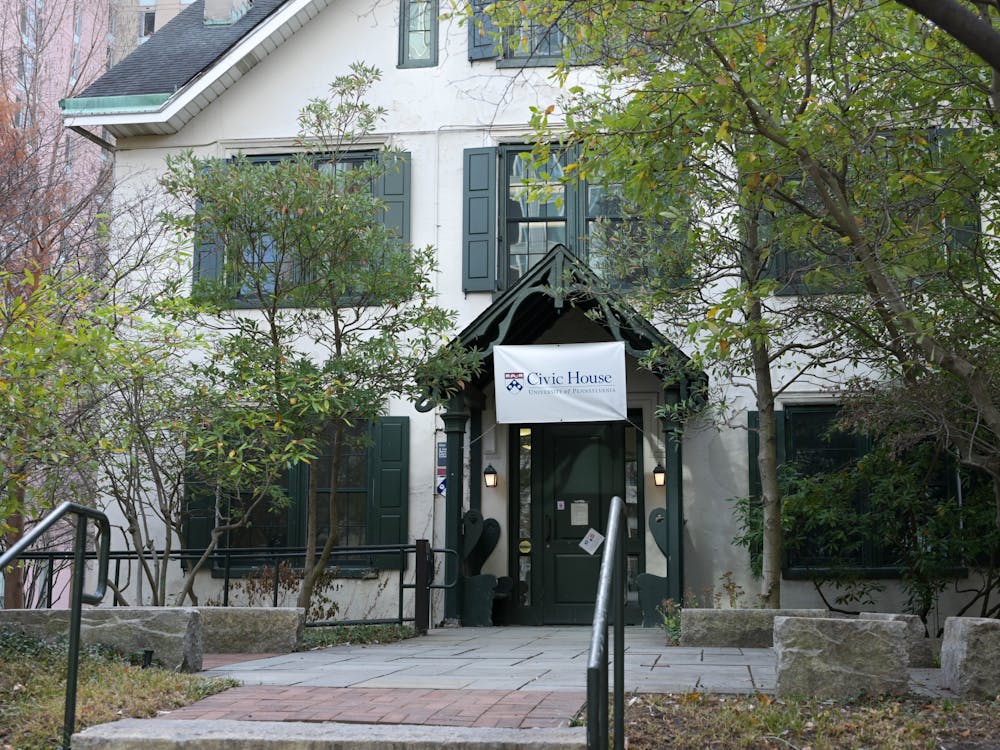
This decline in community engagement is not the result of a lack of opportunity. Each semester, Penn offers dozens of service-focused ABCS courses in a variety of disciplines. The University also coordinates numerous service-focused programs, hosts formal organizations such as the Netter Center and Civic House that foster community engagement, and supports dozens of student-led community-service-oriented clubs.
Instead, participation in community service wanes as students navigate an undergraduate experience shaped by demanding coursework, time-intensive extracurricular involvements, and accelerated recruiting timelines. Together, these pressures push students down a path that too often relegates community service — particularly when optional — to an afterthought.
In order to address this gap, Penn must implement a graduation requirement that ensures all undergraduates engage in meaningful community service during their time on campus.
Regardless of your undergraduate school, all Penn students are required to complete a critical writing seminar, explore the liberal arts, and complete coursework in quantitative reasoning. These requirements exist because Penn believes they are essential to our development as students, thinkers, and engaged citizens. Community service should be treated in the same way: a core component of the undergraduate experience.
Implementing such a requirement would be far from unprecedented — Penn’s graduate and professional schools already mandate similar commitments. The University of Pennsylvania Carey Law School requires all J.D. candidates to complete 70 hours of pro bono work prior to graduation, while students at Penn’s Perelman School of Medicine must fulfill a community engagement requirement before earning their degrees. Penn clearly recognizes the academic and professional value of service-based learning. There’s no reason undergraduate education has to be treated differently.
Beyond fostering civic and professional skills within students, a mandatory community service requirement would help give back to Philadelphia. Considering Penn’s tax-exempt status, the contributions of roughly 10,500 undergraduates could “help” offset the $90 million in annual revenue the city forgoes.
Service learning also has measurable personal benefits for students themselves. Research finds that students engaged in service learning often build stronger relationships with faculty, report higher college satisfaction, and are more likely to graduate than peers who aren’t involved. Service learning is also linked to improved academic performance and increased self-confidence. If Penn mandates coursework in writing, quantitative reasoning, and the liberal arts because they strengthen student outcomes, community service should be treated no differently.
Penn is an institution steeped in history, with a founding that predates the United States itself. As Quakers, we have a duty to honor Franklin’s vision for an education that shapes not just professionals, but engaged, responsible citizens. A mandatory community service requirement for all undergraduates would fulfill that vision, ensuring all students give back to the city and a community that sustains us while cultivating the skills and values Franklin intended.
PETER KENNEDY is a College first year from West Chester, Pa. studying history and philosophy, politics, and economics. His email is kenned29@sas.upenn.edu.

Peter Kennedy is a College sophomore studying philosophy, politics, and economics from West Chester, Pa. His column focuses on University policy and student culture. He can be reached at kenned29@sas.upenn.edu.