

Rachit Shukla wanted to prove he could start a functioning company in 24 hours.
So, he did it.
Last week, Shukla, who graduated from Wharton in December, launched the humor T-shirt site StartupWear.com overnight, "just for fun," he said.
At Penn, Shukla is not alone in joining the Internet start-up culture.
"Ten years ago the thing to do was be a doctor or lawyer," said Wharton senior Richard Talens, co-founder of Cupmakes.com. "With the dot-com age, the thing to do is start your own company."
There has been an increase in the number of students starting their own companies over the last five years, said Anne Stamer, director of the Weiss Tech House. But because of the independent nature of the companies, it's difficult to track exact numbers.
Reasons cited for this trend range from improved technology to an increase in resources available to entrepreneurs on campus.
While Startup Wear may have been "just for fun," other Penn students have big plans for the futures of their companies.
Right now, Cupmakes delivers personalized cupcakes to the Penn, Drexel University and University of the Sciences areas.
But Talens and his co-founder, College senior Terence Huang, said the next steps for their company are to open a front-end store and create franchises in other cities.
Talens said he also plans to continue with Cupmakes - a job that already demands 40 to 50 hours per week - after graduation.
Student entrepreneurs say that while running a company and going to school full-time can be difficult, it also has its advantages.
Wharton senior Nat Turner, whose company, Invite Media, is working to develop an engine that will improve online advertisements, said he almost dropped out of school because it was hard to run a business and still make it to class everyday.
"On the flip side, being a student helps," Turner added. "You don't have a family or a mortgage to worry about."
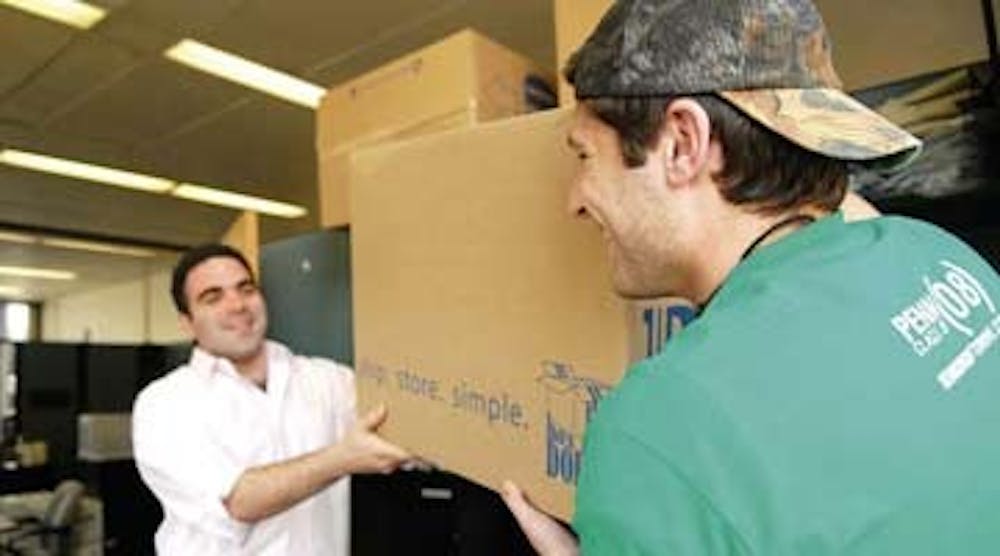
For Peter Handy, who graduated from Wharton in December and co-founded the shipping and storing company BoxMyDorm.com in March 2005, his company has both helped and harmed his education.
Because BoxMyDorm - which has helped 2,500 students pack thus far - has been his first priority, some of his classwork has suffered, Handy said. But, he added, the company has also given him "real world experience."
"Learning about management is one thing," but applying that to BoxMyDorm is different, he said.
Handy also said being a student helps him relate to his customers, all of whom are students themselves.
"I know what its like to move out and to have to wait for the elevators in the high rises," Handy said.
Part of the reason why more students are able to start their own companies is because of recent technological innovations.
Recent Wharton graduate Kelly Shaefer and Wharton senior Jason Toff started two companies while at Penn - PennDrinks.com, a drink delivery service, and Tellmewhich.com, a simple survey Web site.
Shaefer and Toff hired programmers in India to help them create their Web sites. According to Toff, years ago, "you couldn't even send files that big."
"You don't have to be an expert in everything anymore," Shaefer added. "A lot of times you have a great idea and can't personally do all of the steps to make it happen - that's when you reach out to programmers and friends for help."
Stamer, of the Weiss Tech House, said an increase in resources available at Penn has helped spur the tech start-up trend.
The Weiss Tech House itself was founded just five years ago, and prizes in University-sponsored business competitions have also been increasing in recent years.
But Shukla said the University must make a greater push to create an entrepreneurship community.
Many students at Penn, he said, lose sight of the fact that "there is more to business than just doing investment banking and consulting."

