From Chris Geisel's "A Crafty Trilobyte," Fall '92 How are you going to trick all those people whose names you have forgotten that of course you remember them, how silly that they might think otherwise, true friend that they be in the deepest sense of the word? How to make them not feel slighted when their cheerful and intimate "Hi, (your nickname) how was (a detailed description of your summer) and is dear (sick great aunt or uncle) recovered from their gall stone operation?" is met with this clever rejoinder: "Heeey guy, how was your summer?" Remember, no matter how much like a bacterial lifeform you feel, it is not your fault. The primate brain is simply not built for long-term memory. When we were simple hunter-gatherers, we learned all we needed to know about life by the time we were twelve. After age twelve, we only had to remember a few general ideas, like not to touch the fire and which cave the bear family lives in. Our brains really haven't changed significantly over the last couple thousand years. We still learn ninety percent of our permanent knowledge by the time we are twelve. This is why we can remember every episode of the "Brady Bunch," but still can't really do integrals, even after calculus in high school and Math 140. And how many of us could still pass the written portion of the driving test? How many feet do you drive behind a trolley? That's why you feel like Chaka from "Land of the Lost" when trying to figure our how to introduce your Dad to that girl from Spanish class, is it Jen or Rachel? If you feel like grunting, try it -- often they mistake this for some kind of weird inside joke, and may be too embarrassed to show that they don't get it. Here are some other strategies: · If it's a guy, say Steve or Dave. Fact: Over thirty percent of last year's freshman class was named Steve or Dave. Any gambler will tell you that one in three isn't bad odds. One in six is, however, so try to make an educated guess. · Say "Hi." Keep it short. This is like "taking the fifth." The less you say the less likely you are to reveal your complete lack of any knowledge of the other person's identity. We've all seen police shows. · Draw them out. Use leading questions. "Where were you this summer?" Advantages: They are likely to drop clues as to how you know them. Didadvantages: They may tell you all about their exciting summer trip to Tulsa. · Imply that you are in a rush, but will gladly speak at length with them at a later date. A very good ploy, because it gives you time to search those memory banks and ask your friends if they remember. Also, Penn students always seem to respect someone on a schedule. If you are carrying something, gesture ambiguously with it -- your mystery acquaintance will associate it with the fictional errand, even if it is something like an avacado. "I saw Chris, but we couldn't talk. He was rushing off to make bean dip, I think." · Get them to give you their phone number. Girls often write their name along with it. Remember not to read the name hungrily and say "oh" when they give it to you -- they'll suspect something. Unfortunately, girls also tend to write something cute instead, such as "for a good time . . . " These little notes, which frequently end up tucked in your wallet near your fake I.D., make for perfect crank phone call fodder after you've put away a six pack or so. Note: it is generally considered embarrassing when you are recognized on a crank call, but this could also be a good way of asking the other person's name. Any faux pas can be blamed on drunkenness. Disadvantage: You may not remember anything at all the next morning. · Pretend you misunderstood their friendly hello. Example . . . Mystery Kid to Me: "Hi Chris, when did you get back?" Me to Mystery Kid: "It's about four-thirty." This is last ditch only. Remember to keep moving. Put as much distance between you and them as possible before they can figure out what happened. (Remember, they are using the same primate brain that you are.) Finally, never just ignore someone and hope they go away. This will result in a lingering bad feeling for many weeks, even after you have properly said hello and flawlessly demonstrated your staggering knowledge of that person's life, proving that you truly are their soul-mate. It's better to admit your ignorance and throw yourself at their mercy. Ignoring them insults their feelings of importance -- after all, weren't they valedictorian and student council president in high school? -- which is unforgivable. Happy motoring! Chris Geisel is a senior English major from Arkham, Massachusetts. A Crafty Trilobyte will appear alternate Mondays.
The Daily Pennsylvanian is an independent, student-run newspaper. Please consider making a donation to support the coverage that shapes the University. Your generosity ensures a future of strong journalism at Penn.
DonateMore Like This

A history of the Penn presidency
By
Aidan Shaughnessy
·
4 hours ago

No — AI will not wipe out humanity by 2030, Penn experts say
By
Addison Saji
·
4 hours ago

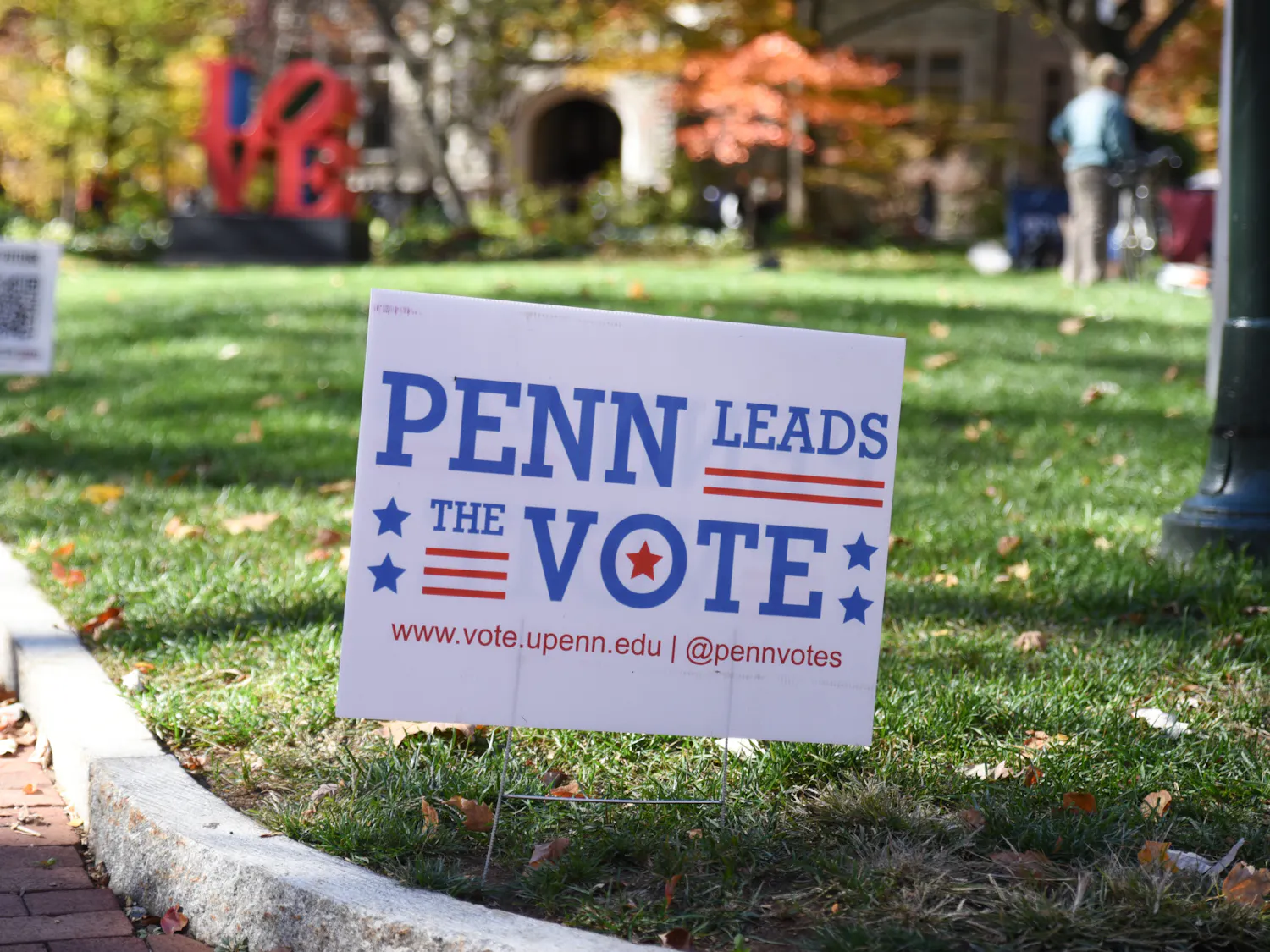
Penn student groups promote voter registration on Locust Walk
By
Mara Flores
·
4 hours ago