Penn’s School of Arts and Sciences hosted the inaugural event for its new academic initiative on Constitution Day.
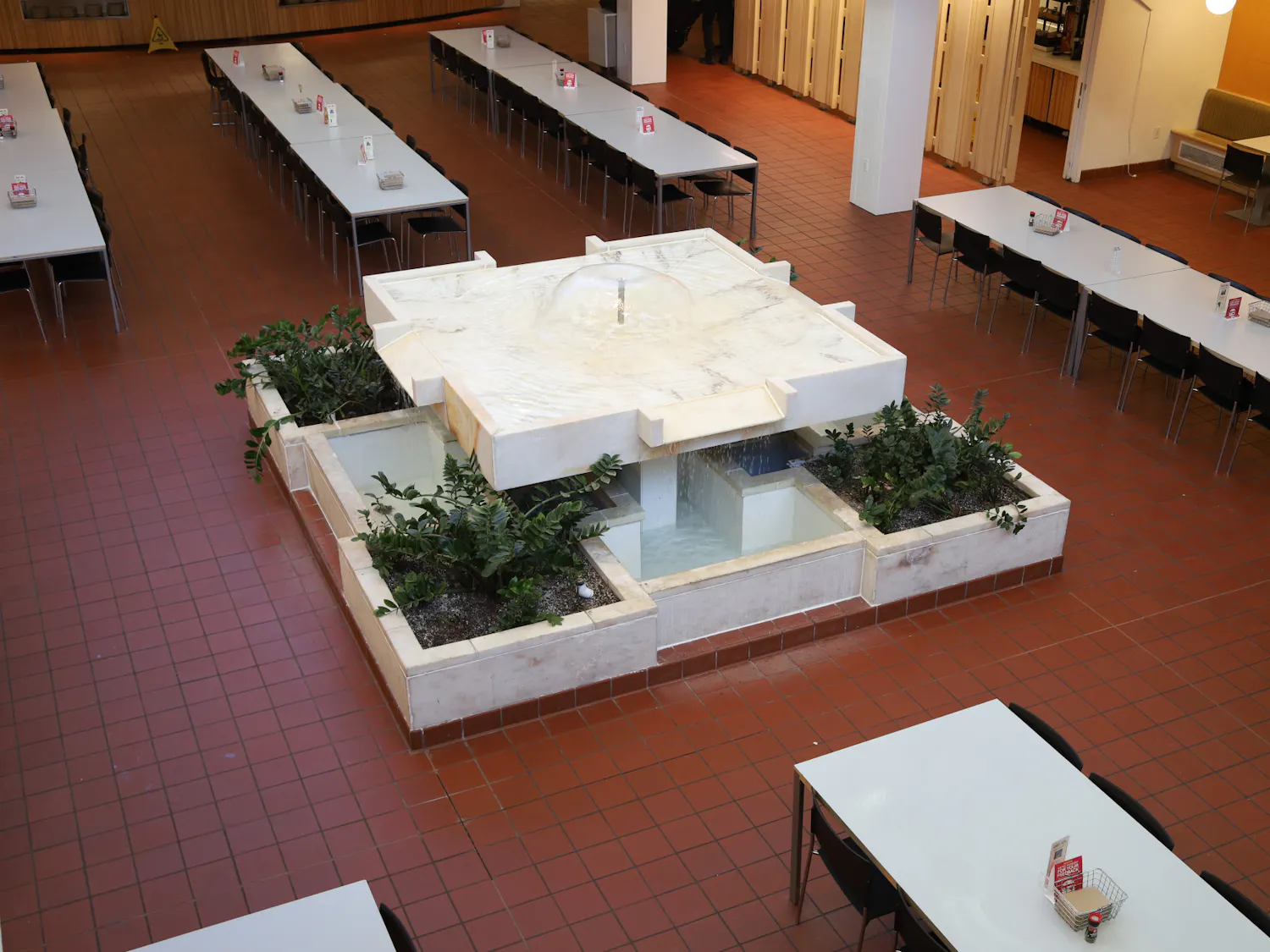
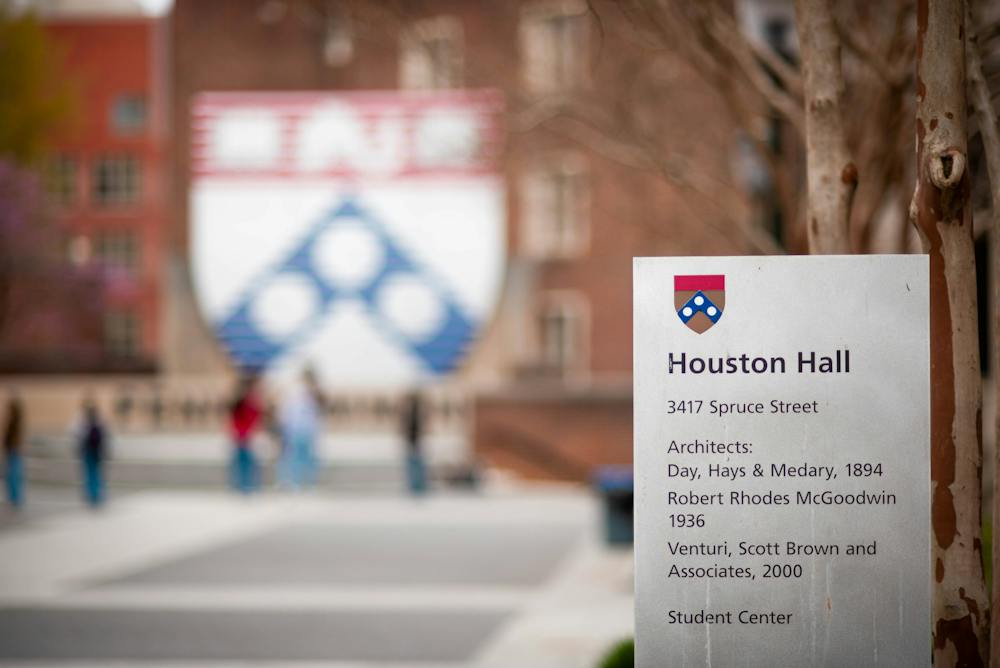
The Sept. 17 discussion — which launched programming for SAS Commons — drew an audience of 350 students, faculty, and members of the public to Houston Hall. During the event, College of Arts and Sciences Dean Mark Trodden and program director Sophia Rosenfeld considered the role of higher education institutions in strengthening democracy.
SAS Commons is a themed initiative that shifts its focus biennially in an effort to provide Penn and the local community with timely programming. Rosenfeld — the Walter H. Annenberg professor of History — leads the inaugural theme, Democracy and Knowledge, which considers the role of universities in creating a strong democratic culture.
In an interview, she expressed hope that following the discussion, students will begin to “ask some new questions about what they’re studying and why.”
“I hope that they might even have some new answers when somebody says, ‘What are you doing in college?’ and ‘What’s the point of that?’” she added.
Rosenfeld began the event by discussing her own definition of “democracy,” and explaining that the classic arc where democracy prevails over “illiberal and undemocratic strains” has begun to shift over the past decade.
“It doesn’t seem inevitable that the U.S. has to be a democracy because it’s been that way for 250 years,” she added.
Rosenfeld also considered what is required for democracy to be sustained, saying that the process “requires a kind of an ethos, which is harder to define.” She then compared it to education.
RELATED:
No — AI will not wipe out humanity by 2030, Penn experts say
24-hour Wharton competition challenges Penn students to develop business strategies
“Democracy requires constant revision,” she said. “I see education very similarly.”
Both speakers considered how the “core” of a liberal arts education is in “creating citizens” and “shaping a democratic culture.”
“Universities are where the status quo not just gets reproduced, but gets challenged,” Rosenfeld explained. “Ideas that are not part of the current discourse can be articulated, debated, imagined, revised.”
When discussing the role of the internet and artificial intelligence in a liberal arts education, both speakers acknowledged the convenience of these tools. However, Rosenfeld also emphasized the importance of understanding “what knowledge you can start to trust, and how to challenge that knowledge.”
“You also have tools for questioning that information, and the tools are not simply asking Claude,” she emphasized.
The event concluded with a question and answer session. Audience members asked questions regarding the role of democracy in the current national climate and asked how AI could affect democracy.
“We are constantly in a battle with technology to exploit its best features to make democracy better, and to tame its worst features that work against democracy,” Trodden said.
SAS Commons is part of the SAS Horizons initiative, and promotes the school’s strategic goals. A new director and theme will be chosen after programming related to Democracy and Knowledge concludes in 2028.
The program will continue to host events throughout the academic year, with the next scheduled for Oct. 23.
That discussion will consider elections and how “democracy rests on a foundation of mathematics,” according to Rosenfeld.