

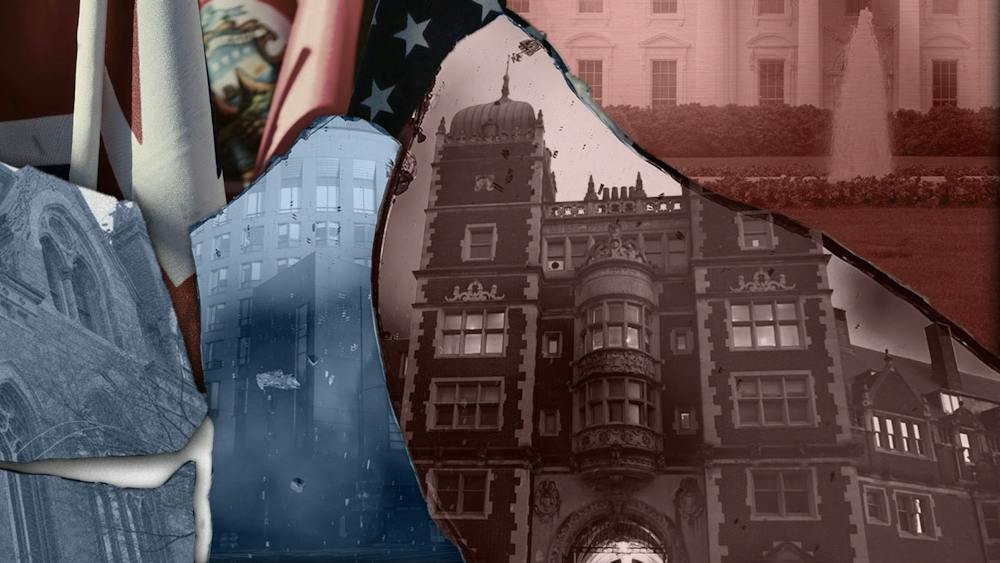
The American public is losing trust in the institution of higher education. This trend has made headlines since 2015 — when Gallup first began tracking the issue — and the discourse seems to be revived with every follow-up report. The phenomenon was then thrust back into the limelight last month, when it was referenced in United States Secretary of Education Linda McMahon’s call to action for universities.
The message is a far cry from the White House’s aggressive 2025 compact, though the documents do share similar priorities. The August letter frames itself as a response to America’s eroding trust in higher education, attributing the fault to universities which have “drifted from the principles that built up so much public esteem.” The solution, according to McMahon, is a careful and public reflection from university leadership guided by a series of questions. The inquiries span seven broad topics, including admissions, free speech, and intellectual pluralism, among others.
As universities wrestle with how — or whether — to respond to these questions, we examine the national decline of confidence in higher education and evaluate the efficacy of federal suggestions to reinstill it.
The numbers tell a clear enough story: Only 38% of U.S. adults say they have “a great deal” or “quite a lot” of confidence in higher education, compared with 42% last year and 57% in 2015. While the degree of support varies across groups, this decline in confidence is consistent across political parties and levels of educational attainment. It’s apparent that Americans are losing trust in our universities. And it’s a concerning trend.
But in McMahon’s proposed remedy for this public disillusionment exist several fundamental flaws. The most obvious is the scope of issues it aims to address. While Gallup’s report identifies three main drivers of eroding trust in universities — politics, cost, and workforce preparation — the letter’s suggested reforms span a host of broad and seemingly irrelevant concerns.
The message vaguely asserts that universities must “prioritize American students and faculty” and advises against the practice of American universities accepting “gifts with problematic conditions” from foreign nations. Both international enrollment and foreign funding are long-standing targets of the Trump administration, and those concerns are nowhere to be found in public opinion research on trust in higher education. It’s clear that many of these suggestions have little to do with the restoration of confidence in universities and are instead poorly veiled attempts at fulfilling the president’s political agenda.
Equally puzzling is the fact that many of the secretary of education’s purported objectives overwhelmingly contradict the actions undertaken by the federal government. Consider the issue of affordability, on which McMahon’s letter focuses extensively. It is a concern that we have often highlighted, especially in the context of Penn’s most recent tuition hike. Our University is far from an anomaly, as national averages for tuition have swelled to 312.4% of what they were in 1963. But the federal government’s supposed commitment to the affordability of education rings hollow given its slashing of financial support for college students and graduates. In just the past year, the Trump administration has cut federal loans for low-paying degrees and eliminated former President Joe Biden’s student loan repayment program.
In the same vein, McMahon’s encouragement of “open-minded campus discourse” diverges drastically from Trump’s repeated assault on free speech at universities. Of course, the letter also prompts institutions to “guarantee that unruly and violent protestors do not harass students or disrupt classes” — effectively contradicting itself between sentences. It’s absurd to declare values of affordability and free expression while working within an administration that is actively attempting to dismantle them.
SEE MORE FROM THE DAILY PENNSYLVANIAN EDITORIAL BOARD:
Tracing the legacy of 9/11 at Penn
The systemic flaws of UPennAlert
Perhaps most egregiously, the letter’s very existence is entirely antithetical to its alleged goal of restoring confidence in higher education. The top reason Americans cited for their lack of trust in universities was institutional promotion of political agendas. By publicly announcing plans to adopt federal priorities of nationalist education and crackdowns on campus protests, aren’t universities doing just that?
Americans don’t like federal overreach in academia. Last year, 57% of U.S. adults opposed increased federal oversight in university operations. In May, 62% of U.S. adults disapproved of the Trump administration’s approach to higher education. While the eroding trust in universities is undoubtedly driven by complex and varying factors, the path to rebuilding it certainly is not submitting to the arbitrary demands of political leaders.
A trustworthy university is not one that capitulates to government pressure. Once higher education is beholden to political whims, the institution has severed itself from its defining purpose. In the true interest of restoring public confidence, our universities must focus on reforms that improve the accessibility and quality of higher education. And these changes should be made out of a commitment to the public, not in response to federal force.
Editorials represent the majority view of members of The Daily Pennsylvanian Editorial Board who meet regularly to discuss issues relevant to the Penn community. This body is led by Opinion Editor Ingrid Holmquist and operates independently from the newsroom. Questions or comments should be directed to letters@thedp.com.
SEE MORE FROM THE DAILY PENNSYLVANIAN EDITORIAL BOARD:
Tracing the legacy of 9/11 at Penn
The systemic flaws of UPennAlert


