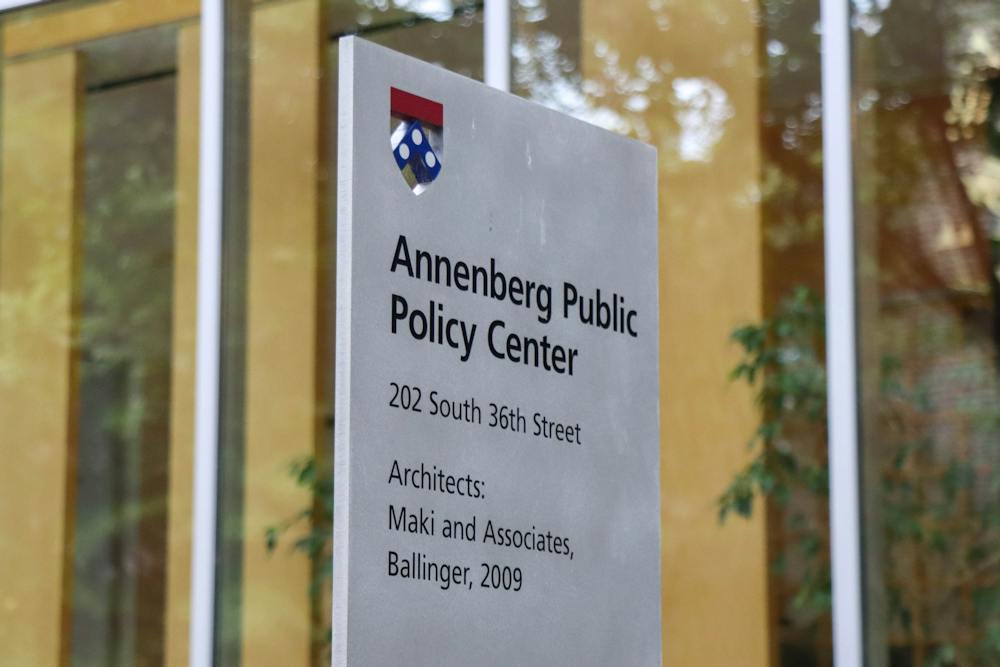
Researchers at the Annenberg School for Communication recently found increased success when tailoring antismoking messaging toward young adults based on their gender identity.
The study, published in June, investigated how gender-oriented messaging impacted “perceived targetedness” — or the extent to which recipients felt that the messages were designed for them. Communication professor Andy Tan led the study alongside Annenberg doctoral candidate Qijia Ye.
The research team found that sexual and gender minority communities have higher smoking rates — especially among transgender, gender expansive, bisexual, and lesbian individuals as compared to their cisgender and heterosexual counterparts.
However, although some antismoking campaigns target the LGBTQ+ community, they are often “quite inconsistent” with disparities among specific subgroups, Ye explained in an interview.
“Our goal is trying to use communication theories and evidence-based interventions to help improve health equity,” he added.
The study builds upon research done in “Project RESIST: Increasing Resistance to Tobacco Marketing Among Young Adult Sexual Minority Women Using Inoculation Message Approaches,” which Tan led as the principal investigator.
This research categorized gender expression into four groups — including transgender and nonbinary expression, feminine expression, masculine expression, and multiple gender expressions.
Over the course of two experiments, the team found higher reported perceived targeting when the gender expressions in the antismoking messaging mirrored participants’ own identities — which Ye noted was “not very surprising.”
RELATED:
Penn experts study extreme heat, adaptation measures as annual temperatures rise
As Penn research funding remains in flux, Trump moves to tighten grip on NIH grants
Participants also reported higher perceived targetedness when viewing messages with multiple gender expressions.
In applying the practical results of their study, Ye emphasized the importance of not treating sexual and gender minority members as a “homogeneous or monolithic audience,” and instead focusing on distinctive gender subgroups when designing antismoking campaigns.
To prevent stereotypes or stigmatization when directing antismoking health campaigns at such subgroups, he highlighted the use of multiple rounds of pre-testing for “cultural appropriateness, cultural sensitivity, and reactance.”
“We measure all kinds of these variables to ensure that the message we selected for the campaign is a good message,” Ye added.
Project RESIST faced difficulties in 2025, when it was one of several studies whose funding was terminated by the National Institutes of Health. The NIH cited the studies as “incompatible with agency priorities,” at the time. Although the federal agency reinstated project funding after an appeal process, the funding cuts will still affect Project RESIST’s future research.
“We have ongoing projects, but we don’t have funding for researching health communications in the marginalized populations, so now we focus on the general population,” Ye said. “We can fight back, but the chances are small.”