When I was shipping off to college in August 2022, my father’s one request was that I take some time out of my college experience to write — in any capacity. So, naturally, I elected to join The Daily Pennsylvanian in a distinctly non-writing role as a copy associate.
It turned out to be a perfect fit. I loved the Oxford comma (which the paper still uses, in defiance of the AP Style Guide!), and I loved correcting mistakes, and I loved the black-and-white nature of the gig. I loved it so much that I found myself leading the department in the spring of my sophomore year as copy editor, guiding a faithful cadre of deputies and associates of my own. I made it to the big leagues, taking my red pen to the print proofs of the DP and 34th Street Magazine, swift to correct any incorrectly abbreviated states or improperly gendered uses of the word ‘alum’ with glee. And, for the first time, I was both subject to the rules of the DP’s style guide while copy editing and now arbiter of its innumerable contents.
It wasn’t until April 2024 when this new role came to a head. When pro-Palestinian protesters began the Gaza Solidarity Encampment on College Green, I — along with my road dogs on the DP’s 140th Board — got a crash course in round-the-clock protest coverage, largely from a GSR on the fourth floor of Van Pelt-Dietrich Library. It very quickly became apparent that the vast annals of the DP style guide, while nearly comprehensive, were no match for the urgently political news cycle at hand.
In shaping our coverage through the style guide, I had my mandate: delivering strict neutrality, unflinching evenhandedness, and perfectly nuanced coverage to the reader through uniform terms and references. Such a mandate, I realized, was not only impossible but also upsetting. Some rules were fun. I standardized spellings like “protester” (not protestor), “doxxing,” and “counterprotester.” Some decisions were more burdensome: “Gaza Solidarity Encampment,” “Israel-Hamas War,” and “Pro-Palestinian.”
The clearcut nature of copy editing that I so enjoyed had turned into a balancing act, bouncing between my own values, the interests of the DP’s stakeholders, and the journalistic principle of objectivity. Impartiality became difficult as I sat outside the library each day and saw the way tension built on campus. How organizers and activist student groups were treated by the University. How a complicated narrative of community activism was misrepresented by mainstream media. How the campus community processed intense grief for a conflict that, for many, wasn’t really thousands of miles away.
Still, this challenge imbued me with a newfound sense of agency. I wasn’t just following the rules anymore — I was writing them. Getting thrown into the whirlwind uniquely positioned me to assess the rules and meaningfully inform them with my gained expertise and that of the people around me. We spent many a long night in the newsroom, haggling over new entries to the style guide. I listened, and I argued, and I decided what I thought was the best reflection of reality. I originally joined the DP because I loved to follow the rules — but my time here actually gave me the courage to rewrite them.
The rules we follow aren’t thrown down in front of us to blindly accept, though that’s what orientation at the copy department of the DP might inadvertently lead you to believe. They are a framework; an opportunity to look around and challenge what doesn’t feel right. My time at Penn, in and out of the classroom, has given me the tools to make that judgment and the strength to act on it. The DP’s coverage can never be perfect. But, armed with these tools and a few thousand style guide entries, I helped build what I saw to be the closest approximation of perfect we could.
None of this would have been possible without the determination of the editors, reporters, photographers, designers, social media associates, and executive leadership of the paper. Their unflinching commitment to delivering journalistic excellence to the Penn community at great personal (and often academic) expense resulted in an exhaustive archive of a period of acute unrest. And, that archive is fair, insightful, and poignant. Their trust in my judgment and understanding of style was essential to my work and also to my development as a person. I count myself supremely lucky to call them some of my closest friends. I wish it weren’t a rule that I have to graduate and leave behind such a special place and talented, caring people.
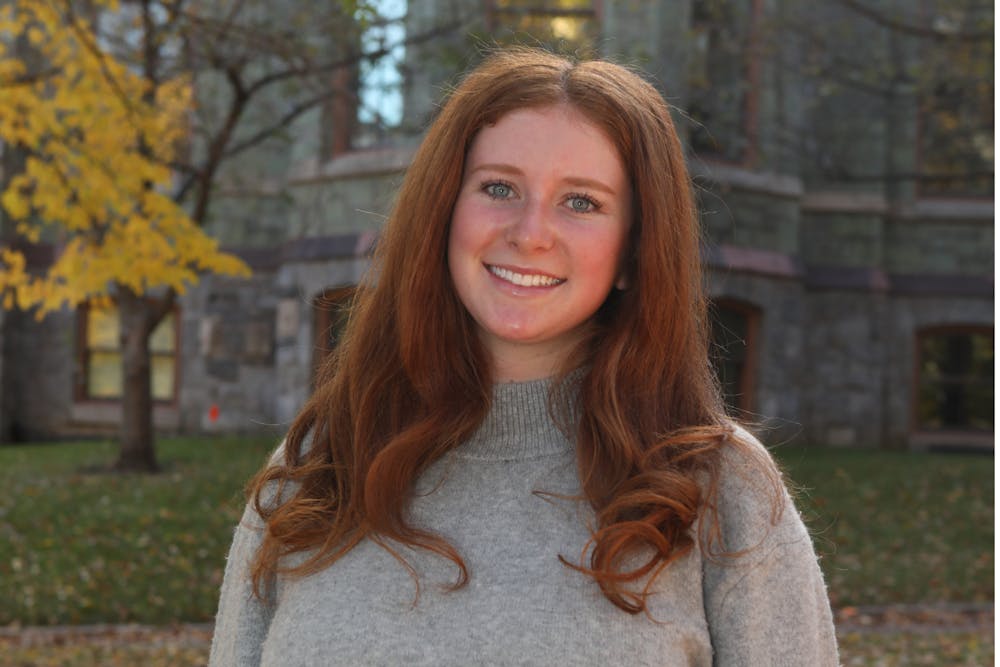
CHARLOTTE BOTT is a College senior studying philosophy, politics, and economics from Towson, Md. She served as copy editor on the 140th Board of The Daily Pennsylvanian, Inc. Her email is cebott@sas.upenn.edu.