

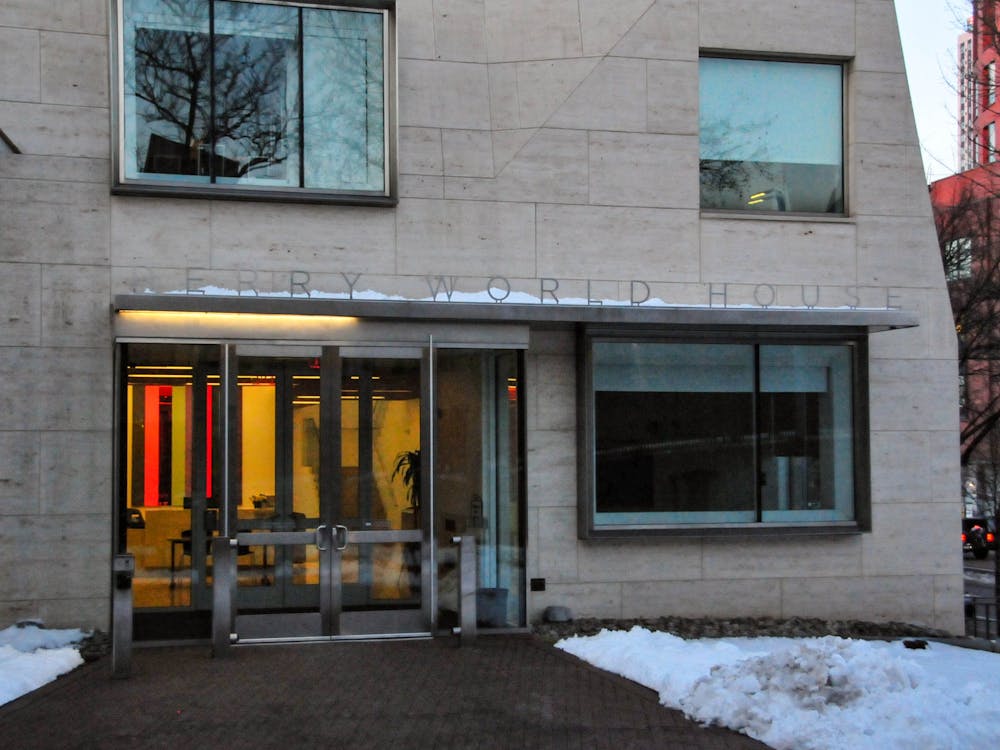
Perry World House received a $385,000 grant to conduct research about the future nuclear landscape and new technologies on Friday.
The funding will cover a two-year project focused on United States-China nuclear competition and bringing the countries to a consensus about the use of artificial intelligence. PWH Faculty Director Michael Horowitz and political science professor Fiona Cunningham will lead the initiative.
In the Feb. 27 announcement, Horowitz wrote that he was “deeply excited” for the undertaking, which will address “vital international security questions that impact global stability.”
“We will be working hard to develop actionable recommendations that can reduce risk in the nuclear arena and surrounding emerging technologies,” he added.
The grant was funded by two organizations, Longview Philanthropy and PAX sapiens, both of which are members of a consortium that aims to mitigate nuclear harm. The consortium reviewed 472 proposals from organizations and researchers across the world before allocating a total of $5.4 million across 12 projects focused “immediate and long-term nuclear risks.”
“A significant factor shaping the risk of nuclear war and arms racing is whether the United States and China can manage their nuclear relationship,” Cunningham wrote in the announcement. “Our project will propose steps to overcome obstacles to U.S.-China cooperation, especially where emerging technologies are concerned.”
According to the release, the grant is meant to acknowledge PWH’s “significant” contributions to “cutting-edge” research in the fields of technology and global politics since its 2016 founding. The center is set to commemorate its 10th anniversary this fall, celebrating with an anniversary gala and First Annual Conference from Nov. 11-12.
Horowitz is also involved in PWH’s ‘Technology for America’ project, which was announced in December 2025. This project — which combines efforts from the Wharton School, the School of Engineering and Applied Science, and Penn Washington — is working to form policy and governance ideas that will spur technology development and adoption in the U.S.
RELATED:
Penn community responds to U.S. military strikes in Iran
Perry World House hosts Holocaust scholars to discuss genocide accusations against Israel
In July 2025, PWH also launched the Penn International Climate Observatory in an effort to translate climate science into information that can be used in current policy contexts across the world.
PICO produces biannual Global Climate Trend Reports intended to help policymakers prioritize actions amid an increasingly complex climate landscape. Since its launch, the program has been involved in several international policy forums.
Ahead of COP30, PICO leaders contributed analysis focused on operationalizing global climate frameworks. The observatory also debuted programming on the sidelines of the Munich Security Conference, where it co-convened discussions on climate intelligence and strategic preparedness.


