

Penn’s district in the United States House of Representatives has an open seat for the first time in a decade, after longtime incumbent U.S. Rep. Dwight Evans (D-Pa.) announced his retirement.
Three frontrunners in the race have ties to Penn — two are alumni, and one is a current professor. Ahead of the May 19 primary elections, The Daily Pennsylvanian examined each candidate’s time at the University and their vision for higher education policy.
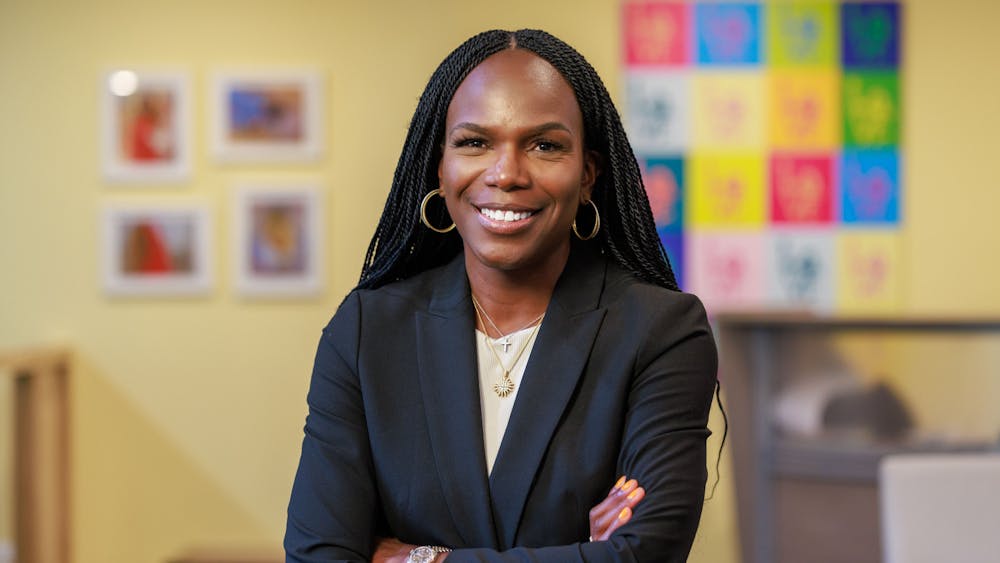
Ala Stanford
Penn biology professor Ala Stanford has centered her career as a pediatric surgeon and public health administrator throughout her campaign. She currently teaches “The Intersection of Biology and Health” at the College of Arts and Sciences.
In a statement to the DP, she wrote that her experience as a Penn professor inspired her to run for public office.
“A SEPTA bus ride to University City changed what I thought was possible for my own life,” she recounted. “Sitting in those Penn classrooms with students from every background imaginable, I kept thinking about the kids in North Philadelphia who may never get that experience because the opportunity never found them. That is a policy failure. And it is part of why I am running.”
She added that her experience as a professor has made her a better thinker and keeps her “honest.”
“You cannot hide behind talking points in a room full of twenty-year-olds who are going to push back on everything you say. You have to be precise,” she continued. “You have to be honest about what you do not know. And you have to be willing to say hard things clearly.”
RELATED:
Student group hosts Penn-affiliated congressional candidates running to represent University City
Stanford said she plans to still teach if elected, referencing other physicians serving in Congress while continuing to see patients.
“My relationship with Penn and with the academic community is not something I plan to walk away from permanently,” she wrote.
She also described how her Penn experience will inform both her campaign and governing philosophy. She emphasized the importance of classroom discussion surrounding equity and health care policy.
“What I can say is that everything I have learned as a professor, how to listen carefully, how to explain complex things clearly, how to build an argument from evidence rather than ideology, that goes to Congress with me,” she wrote.
Stanford founded the Black Doctors COVID-19 Consortium — which delivered testing, vaccination, and care to more than 100,000 people during the pandemic. Last week, Stanford’s consortium broke ground on a new imaging center in North Philadelphia.
On Wednesday, Stanford announced she was dropping out of a candidate debate just hours before it was scheduled to begin.
Sharif Street
1999 University of Pennsylvania Carey Law School graduate and state Sen. Sharif Street (D-3) has represented North Philadelphia for nearly a decade. On March 23, he returned to campus for a fireside chat with the Penn Black Pre-Law Association.
During the talk, he told the audience Penn was “one of the best places for him.” He added that the University hosted “so many great speakers” during his time attending Penn Carey Law, and the law school “did a much better job” than other institutions at being “intentional” in its operation.
He said several people he met at Penn have continued to be “a part of” his life, including Philadelphia elections lawyer and 1998 Penn Carey Law graduate Kevin Greenberg, who works on Street’s campaign.
During a March 26 candidates forum hosted by Penn Democrats, Street criticized the 1968 Wharton graduate and President Donald Trump’s administration for “attacking international students.”
Chris Rabb
A self-described democratic socialist, state Rep. Chris Rabb (D-200) has argued he is the most progressive candidate in the race. Rabb graduated from Penn in 2006 with a master’s degree in Organizational Dynamics.
He told the DP at a “No Kings” rally in March that young voters, including college students, “can see themselves” in his campaign and “realize that their future is connected with someone who’s going to represent their interests,” not those “who cut the biggest checks.”
Rabb has engaged with Penn throughout his public career.
In February, he signed a letter urging Penn to reach a contract with the University’s graduate student union, Graduate Employees Together — University of Pennsylvania, before the union’s strike deadline.
He has been outspoken about Penn’s responses to actions taken by the Trump administration, including the revocation of student visas and cuts to research funding.
Last April, he wrote to the DP that Penn should act to protect students from visa revocations and other federal immigration policies.
“Penn should leverage its vast resources to protect and otherwise support students and other members of its academic community — irrespective of their political views — against harassment and potentially illegal actions by federal agents and their accomplices,” Rabb’s statement at the time read.
At an anti-Trump rally that same month, he said universities “with the biggest endowment” have “the least courage to use their ‘f—k you’ money.”
In June 2025, while attending a panel about research funding cuts, he said “more people will want to go to Penn” if the University “stand[s] up with moral courage.”
Rabb is set to appear at a fundraising event with progressive Twitch streamer Hasan Piker this week.
RELATED:
Student group hosts Penn-affiliated congressional candidates running to represent University City
Staff reporter Luke Petersen covers politics and can be reached at petersen@thedp.com. At Penn, he studies philosophy, politics, and economics. Follow him on X @LukePetersen06.
Senior reporter Riana Mahtani covers national politics and can be reached at mahtani@thedp.com. At Penn, she studies political science. Follow her on X @Riana_Mahtani.


