

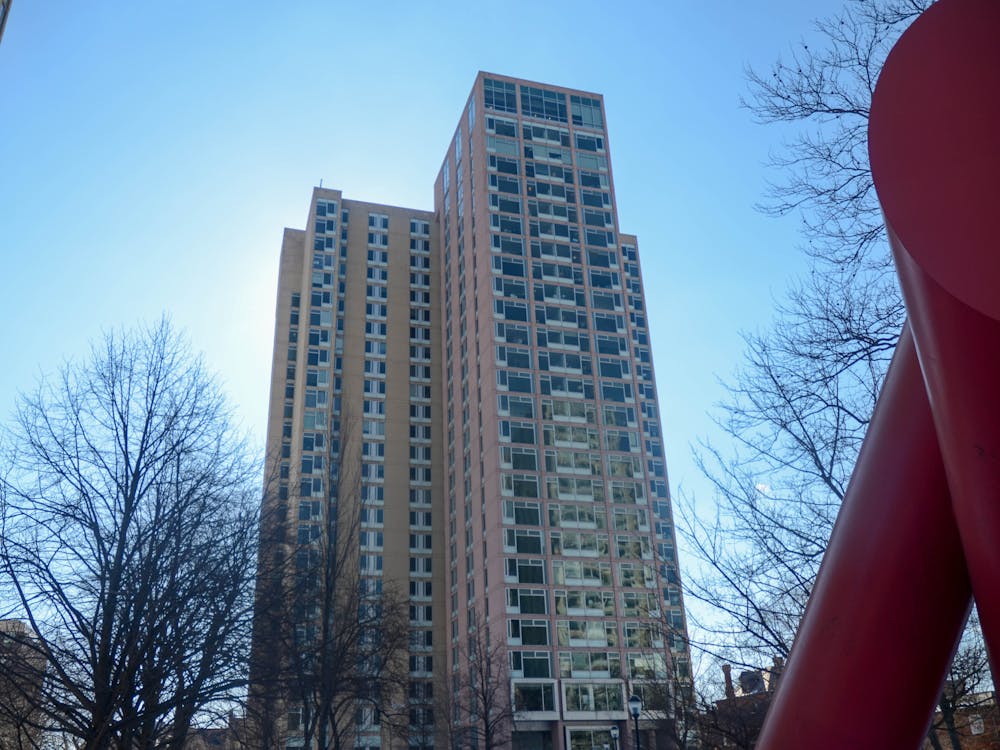
Each year, hundreds of Penn undergraduate students participate in the University’s housing lottery, giving them the opportunity to choose where they will live for the upcoming academic year.
The system randomly assigns students time slots to select rooms. In interviews with The Daily Pennsylvanian, students expressed discontent with the process, saying a limited number of “preferred” rooms leaves those with later time slots at a disadvantage in securing their desired housing.
“For returning students, Room Selection is a self-selection process,” Penn Business Services Director of Communications Courtney Dombroski wrote in a statement to the DP. “Students are assigned a randomly generated timeslot and are notified of that timeslot at least one business day before their selection phase begins. The process is not first-come, first-served.”
Dombroski explained that “timeslots are randomly generated,” and the final selection order is “not tied to when a student submits their application.”
“Once their timeslot opens, students may select from available rooms and can view real-time availability through the Room Availability tool in MyHomeAtPenn,” she added.
Students also replied concerning the randomness of housing selection. College first-year Anish Gopala — who will live in Lauder College House next year — thinks that students have limited control over the housing selection process.
“I think it is nice that students will get at least one semester, if not two, in a single room to themselves,” Gopala said. “I’ll also say I don’t love the randomness of it and how your time slot is fully random.”
College first-year Jecolia Pinto described the selection process as “unorganized and inconvenient.”
RELATED:
Du Bois College House hosts symposium on community healing, local education
How the College House system shapes residential living at Penn
“It’s definitely not what I expected coming to Penn,” she added.
College sophomore Taya Allardice — who serves as the Undergraduate Assembly’s communications director — said the process presents “a huge equity issue.” She added that some students pay hundreds or even thousands of dollars to secure an earlier slot.
“I know Penn students are super savvy, [and] often very entrepreneurial, but I don’t think this is the best way it can manifest,” Allardice said.
“We are aware of concerns raised about students potentially exchanging or selling room selection timeslots,” Dombroski wrote. “The Undergraduate Assembly recently shared similar feedback with our office.”
She added that “while we strongly discourage students from attempting to exchange or sell timeslots, no specific incidents have been formally reported to our office.”
According to Dombroski, Penn “will continue to emphasize expectations around participating in the process as intended.”
“We have housing like Gutmann, which is very, very nice, like a whole different quality of living,” Pinto said on the differences between available housing options. “Then we have the towers, where there’s several reports of mice, rodents, and mold. It’s just very unfair.”
Pinto additionally expressed discontent with the two stages in the room selection process. “By the time you’re filling a bed, your options are very limited,” she said.
The housing process presents additional obstacles for students with disabilities, a student who requested anonymity told the DP. The student — who participated in an earlier selection process because her roommate required accommodations — said that their needs were not met when choosing a dorm for the upcoming year.
According to the student, their group was told that they would have the option to select an accessible room in Gutmann College House. However, at their designated time slot, they found that no rooms matching that description were available.
“The only option left was staying in a high-rise, which would cost $4,000 more,” the student said. She added that it was “against ADA standards to make an individual with a disability pay a substantial amount more for something out of their control.”
According to Allardice, the problem of limited housing availability is exacerbated by the requirement that students live on campus through their sophomore year. She said that there is “a handful of sophomores who have the means to stay off campus in other apartments while technically still filling up a room.”
“There are students coming on exchange or upperclassmen who aren’t necessarily guaranteed housing, but they would like to live on campus,” she added. “Those opportunities are taken away from them by people who are obligated to fill a room but don’t even stay there.”
Pinto said that she would prefer a model similar to the first-year housing process, in which students rank their preferred houses and get assigned randomly, rather than selecting from available housing at a predetermined time. “There has to be a better way to fix our housing system,” she added.
According to Dombroski, approximately 80% of first-year students receive one of their top three housing choices. She did not share similar data on the satisfaction of sophomore and upperclassmen housing participants.
“The assignment and selection processes are structured to provide equitable access to available housing,” Dombroski wrote. “Later in March, Residential Services will host focus groups to gather student feedback and identify opportunities to improve the Room Selection process. Students who participated in the selection process will receive an email invitation to participate.”
“Some of us pay, let’s say, almost a hundred thousand dollars in tuition,” Pinto said. “To be living under these conditions, it’s just not adding up.”
RELATED:
Du Bois College House hosts symposium on community healing, local education
How the College House system shapes residential living at Penn
Senior reporter Lavanya Mani covers legal affairs and can be reached at mani@thedp.com. At Penn, she studies comparative literature. Follow her on X @LavanyaMani_.
Staff reporter Cathy Sui covers politics and can be reached at sui@thedp.com. At Penn, she studies finance and statistics.


