Last week, city council advanced an amended annual budget of $277.2 million for Mayor Cherelle Parker’s Housing Opportunities Made Easy (H.O.M.E.) plan. This advancement in a program that would expand homeownership and housing options did not pass without controversy. Jamie Gauthier, council-member representing University City, argued that Parker’s initial plan favored those with higher incomes much more than the poorest Philadelphians, who were in need of support the most.
Unsurprisingly, Mayor Parker has consistently prioritized her base supporters of middle class Philadelphians over other constituents. Despite her favorable polling, many of Philadelphia’s harm-reduction activists, local community organizers, and poorer Philadelphians see her as part of the establishment — a leader who is unwilling to support those on the margins of society. On the surface, her campaign promises parallel that of New York City Mayor-Elect Zohran Mamdani. But while Mamdani avidly champions affordability for all, Parker quietly champions affordability for those she knows will vote for her.
Mamdani’s mastery in coalition-building won him the election. He gained support among Hispanic and South Asian voters, who were more likely to vote more conservatively in the last election. He accomplished this by building solidarity across boroughs, racial divides, and classes on the basis of affordability. It is that very spirit of solidarity that is lacking in Philadelphian politics.
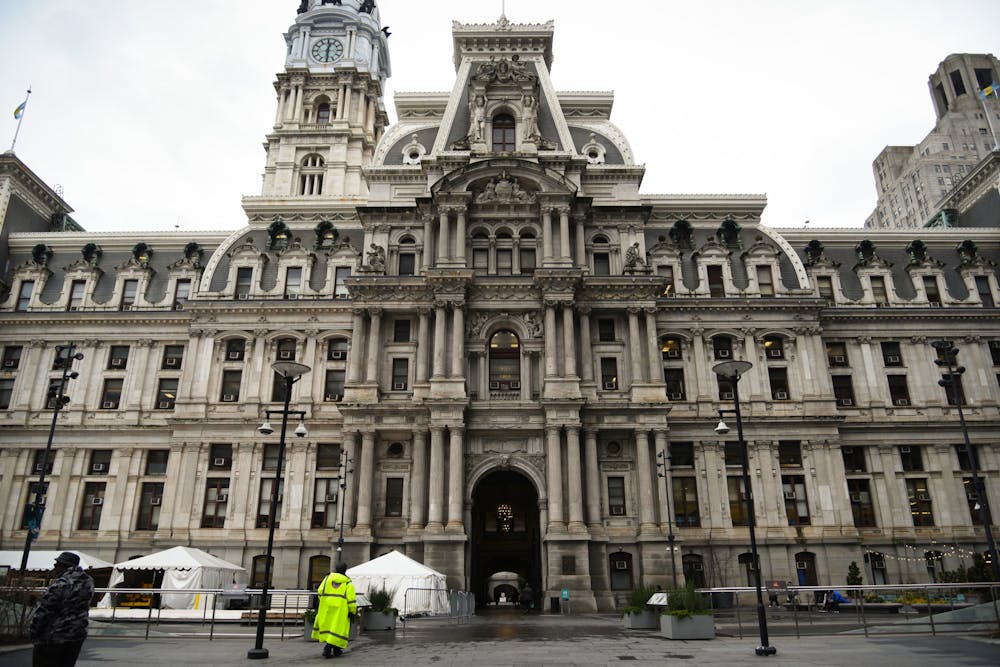
Those involved in Philadelphia politics will tell you: it’s transactional. If you’ve ever been to a public hearing at city hall, there is an air of animosity — tension so thick you could cut it with a knife. Concessions and compromises are not uncommon, but they come with a price. The very city where the United States was birthed is now plagued with a political culture characterized by conflict and corruption. Endorsing your opponent (or even just the notion of rank choice voting) is unimaginable in the so-called City of Brotherly Love.
Here are some lessons for Philadelphia’s politicians.
Housing
As stated above, housing is the greatest source of divergence between city council and the Mayor. Mamdani’s rent freeze was appealing to many New Yorkers suffering from sky-rocketing rent and stagnant wages. This wide appeal to most constituents was risky — it came at the expense of appealing to wealthier constituents who hold most political power. But, it ultimately paid off. In playing it safe, many Philadelphia politicians fail to cast a safety net for their whole city, leading to disgruntled citizens with little faith in local politics.
Don’t get me wrong. Parker’s housing plan can and will help vulnerable people in our city. Expanding low-interest mortgage access and housing repairs are sure to curb inequality. However, promising to proliferate "affordable luxury everywhere" through 30,000 new homes does not prioritize the unhoused or nearly unhoused.
SEE MORE FROM SIMAR SONI:
Safety
Mamdani controversially supported community policing on the campaign trail. As someone involved in criminal justice in Philadelphia, many local organizers proudly believe that these measures are key to reducing recidivism, supporting those addicted to substances, and generally having a safer and healthier city. Parker, on the other hand, proposes increased policing, murals, and cleaner streets: the basic elements of broken window policing.
Addiction
Mamdani’s been a fierce proponent of harm reduction. Many of Philadelphia’s council members, on the other hand, don’t agree. A new bill was passed that would limit traveling treatment in Kensington. Instead of meeting those suffering from addiction where they are, incorporating them into our constituency, and truly serving them, Philadelphia casts them to the side.
I’m not writing this to tell you to transfer Mamdani’s policies to Philadelphia. Many of Mamdani’s policies would not work in Philadelphia — we don’t even know if they will work in New York City. For instance, increasing the corporate tax might work in New York City because its culture is just too attractive for corporations the leave. After all, can you imagine New York City without Wall Street. Philadelphia, on the other hand, just doesn’t attract enough businesses as is. And free buses are especially unlikely when SEPTA is on the brink of collapse. Philadelphia is not New York City, and Mamdani’s policies can’t be neatly transferred here. But the essence of Mamdani’s policies — the promises of a unified city beneath them — is exactly what Philadelphia needs.
SIMAR SONI is a sophomore studying political science from Danbury, Conn. Her email is simars@sas.upenn.edu.