

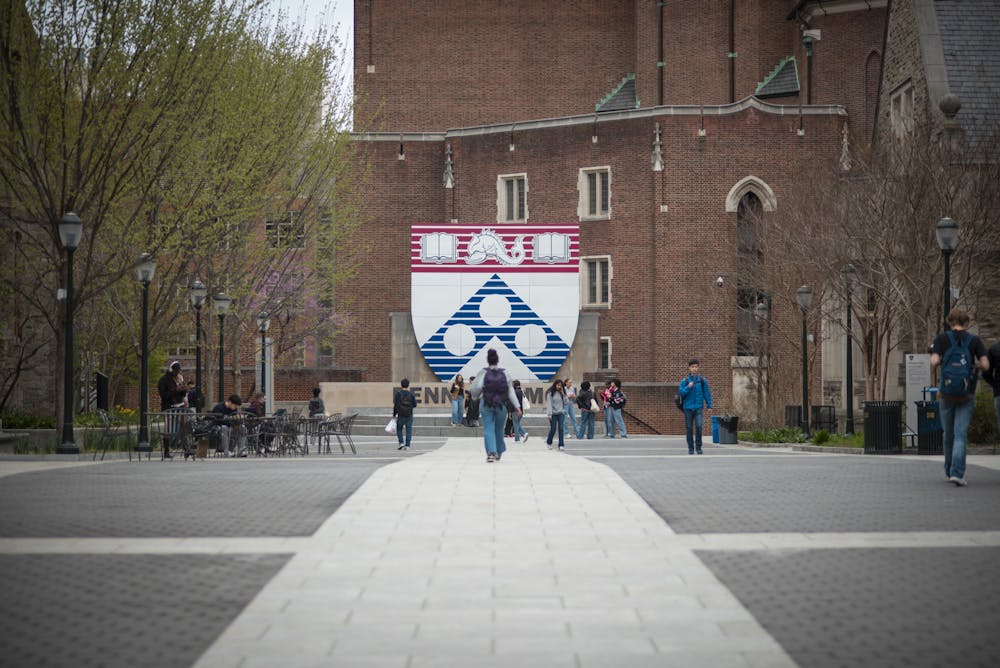
Penn received a “B” rating on the Anti-Defamation League’s 2026 Campus Antisemitism Report Card, an improvement from the University’s “C” rating in 2025.
The ADL’s annual report — which has tracked “the current state of antisemitism” on college campuses for three years — rated Penn “above expectations” in publicly disclosed administrative actions and “excellent” in Jewish life. However, the organization referenced broader concerns about “campus conduct and climate.”
In an interview with The Daily Pennsylvanian, ADL Philadelphia Senior Regional Director Andrew Goretsky highlighted improvements both at Penn and nationally, as well as changes to the ADL’s metrics while evaluating campus dynamics.
According to Goretsky, Penn’s higher grade reflects the University’s efforts to support Jewish students on campus, including the work of Penn Hillel and Chabad at Penn, the Jewish Studies Program, and other opportunities for Jewish education.
A University spokesperson declined a request to comment.
Goretsky credited Penn for establishing the Office of Religious and Ethnic Interests and cited the office’s programming as a key campus resource for investigations, mediation, and support.
He added that “when other institutions reach out to me and ask” how to approach campus antisemitism, he points to Penn and Temple University as examples of how to “address these issues.”
This year, Goretsky said the report card adjusted its evaluative framework to account for changing conditions on campuses nationwide. He said that severe antisemitic incidents have been highly weighted in determining the rating in past years, but that their weight has been decreased this year to account for falling frequency.
RELATED:
Penn faces off with federal agency in court over antisemitism investigation subpoena
How a federal agency used personal faculty phone numbers to investigate antisemitism at Penn
“There has been a nationally documented decline in severe incidents,” Goretsky added. “The weighting of severe and other incidents criteria has been slightly reduced.”
Criteria previously “assessed as extra credit,” such as a campus climate assessment and rules “policing” encampments and event disruption, also became part of the core grading framework this year.
In June 2024, Penn implemented temporary guidelines on open expression in response to a semester that saw increased protests and tensions on campus, including an encampment on College Green that lasted 16 days.
The temporary guidelines banned encampments, which Goretsky identified as one of the criteria considered in the ADL’s rating. Having previously served as an administrator at Arcadia University and taught higher education law and policy at Temple, Goretsky also spoke to the limits of free speech protections on campus.
“You have the right to make the argument you want to make,” Goretsky said. “You don’t have the right to disrupt somebody else’s ability to get the education or to learn something that they’re trying to learn.”
He described himself as “a huge advocate and proponent for maintaining free speech rights” while maintaining “that schools have the responsibility to protect the environment for all students.”
The report comes as Penn faces an ongoing investigation by the United States Equal Employment Opportunity Commission over allegations of antisemitism on campus. The EEOC’s investigation — which includes a subpoena that requests information on Jewish students and faculty — sparked criticism from various members of the Penn community and external organizations, including the ADL.
In collaboration with the American Jewish Committee of Philadelphia/Southern New Jersey and the Jewish Federation of Greater Philadelphia, ADL Philadelphia released a statement in November 2025 responding to “the privacy and constitutional implications” of the EEOC’s investigative efforts.
While the organizations noted their shared commitment with the EEOC to combat antisemitism, they cautioned against “any effort (even those that are well-intentioned) to force the production of a list of Jewish faculty, staff, and students by religious affiliation, along with confidential responses from participants in Penn’s internal Antisemitism Task Force.”
“History has taught us to be vigilant when governments compile lists of people based on religious identity, and we hope that the EEOC’s important work can continue without such a list,” the statement continued.
In November 2025, the EEOC filed a lawsuit alleging that Penn failed to comply with the agency’s requirements. At the time, a University spokesperson told the DP that Penn “cooperated extensively” with the EEOC but would not provide “personal and confidential” information of students and employees without their consent. On March 10, a federal judge heard oral arguments as part of the lawsuit.
“I stand by that statement that the joint of us put out back when we first learned about the investigation,” Goretsky told the DP.
RELATED:
Penn faces off with federal agency in court over antisemitism investigation subpoena
How a federal agency used personal faculty phone numbers to investigate antisemitism at Penn
Staff reporter Ishani Modi covers state and local politics and can be reached at modi@thedp.com. At Penn, she studies biochemistry.


