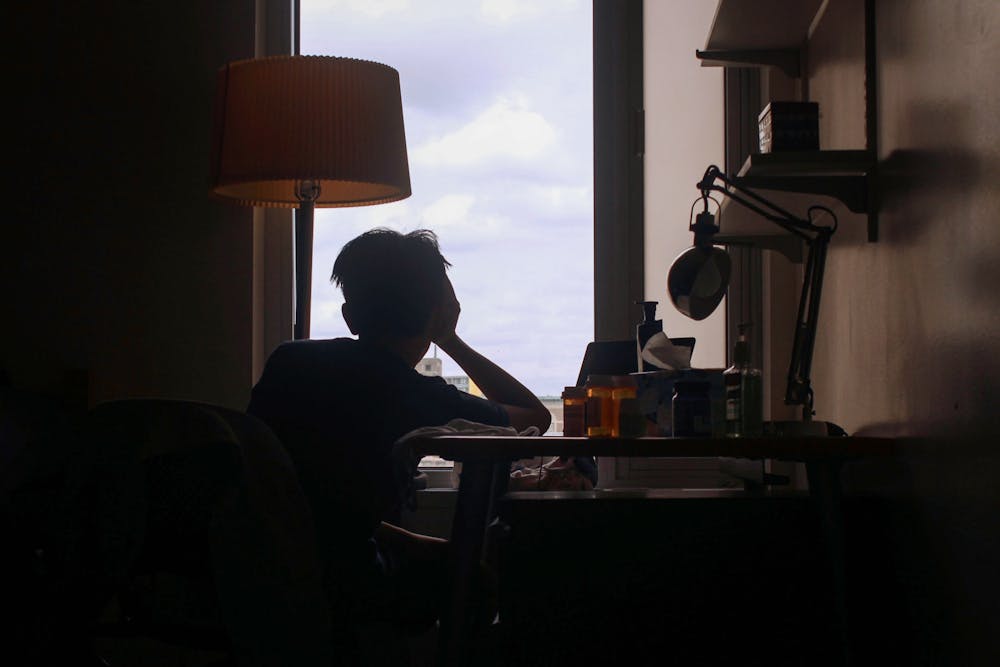
So, you want to be a loner, huh? Whether it’s burnout from trying to maintain too many transactional relationships or realizing that your friends are simply terrible people, there are plenty of reasons for you to choose loneliness over friendship, and I support your decision. After all, if there’s one thing Penn students excel at — other than complaining and selling out to the world of business, of course — it’s being lonely. Why not take a stab at the easy life of giving up on human interaction? It’s not like you owe it to your friends to be a good person.
Of course, properly living the lonely life takes time and effort. Like everything else here at Penn, it must be earned. Start by filling every free minute of your Google Calendar. Research shows that overcommitment increases stress and reduces spontaneous interaction — precisely what you want. Wake up early for a run, rush to classes, attend every club meeting, stay up late finishing work due the next day, and repeat. When a friend invites you out, tell them something about being too busy or having too many clubs to juggle; something just preprofessional enough to the point of attracting an “oh, damn” but not to the point of obviously bragging.
Next, try some self-improvement. Modern wellness culture offers endless ways to flavor your loneliness in ways that sound productive. Download apps that restrict your screen time (but not to the point that they’ll get in the way of your daily doomscroll), read “Atomic Habits” or some other self-help book with a catchy title, and journal until it feels like a full-time job. Try taking a few days off from your classes and clubs, then reappear out of the blue claiming you were “prioritizing yourself.”
When any of your friends wonder why you never show up anymore, just say you’re “working on yourself,” and they’ll give you some half-hearted compliment or other. Studies consistently indicate that people who are lonely tend to prioritize individual achievement over more trivial things like social bonds. You’ll have traded the messiness and drama of friendships for the measurable comfort of progress, an easy exchange to maximize your professional growth.
Once your days are packed, it’s time to do the same with your nights. Go out frequently but only for the optics. Show up to a pregame just long enough to take a few selfies then post them to your story with a blurry flash photo that screams, “Work hard, play hard.” After that, hit the frats to get absolutely hammered, before waking up with a hangover and the realization that your entire weekend is gone, and you didn’t take a moment to relax.
Still, total solitude can be jarring. That’s where social media comes in. Heavy social media use doubles the odds of perceived social isolation, which is ideal. Liking photos and watching stories creates a pleasant simulation of intimacy without the time sink of actual connection. Think of Instagram as outsourcing your social interaction. Why go to the effort of attending someone’s birthday party when you can slap together a quick story post for them instead?
As the weeks blur together, your detachment will start to feel productive. People will praise your individualism. “You’re so locked all the time,” they’ll say, giving you the perfect morsels of moral support necessary for you to take pride in your loneliness. At some point, though, the symptoms will creep in. You might catch yourself mindlessly scrolling and cry yourself to sleep or notice just how long it’s been since you had a genuine conversation. But you don’t have time for that. You’ve got a degree and a bag to chase.
Eventually, you'll become the ideal Penn student: productive, performative, and constantly busy. When you see others laughing too loudly, you'll tell yourself they're wasting precious time. They probably are. But somewhere in between your perfectly curated schedule and your third hour of doom-scrolling for the evening, you'll feel the faint hum of envy — the recognition that, in maximizing your time, you minimized your life. You'll never stop long enough to name what's missing though. That would require stillness, and stillness is dangerous.
SEE MORE FROM ANDY MEI:
So go ahead: Keep the calendar full, the headphones on, the heart guarded. Fill every void with something urgent and meaningless. You’ve achieved what you wanted: self-sufficiency so complete you’re constantly busy. Congratulations. You’ve optimized yourself into loneliness — and you’ll be far too empty to notice. But you probably didn’t need me to guide you through all this. It comes with the territory of being a Penn student, after all.
ANDY MEI is a College first year studying economics and history from Palo Alto, Calif. His email is andymei@sas.upenn.edu.

Andy Mei is a College first year studying economics and history from Palo Alto, Calif. His column focuses on University administration. He currently serves as a Deputy Opinion Editor and can be reached at andymei@sas.upenn.edu.