Fall is said to be the season of change. Perhaps that’s why all I’ve been seeing on my feed as of late is the dreaded “October theory” — the idea that October is the time of year with the most drastic life developments, and therefore the worst relationship drama. And judging by the waves of breakups and situationships that I’ve seen around me, that theory feels hard to dismiss.
Of course, Penn’s no stranger to relationship drama. A recent study indicates that 91% of college students feel as though their lives are dominated by hookup culture, and as the so-called “Social Ivy,” that statistic is especially fitting here. Even among our fellow Ivies, which share our demographics and academic environment, Penn stands out. We have by far the lowest reported marriage rates, especially compared to the whopping 50% of Princeton graduates who end up married to another Princeton graduate.
These statistics seem to suggest that we Penn students are superficial, non-committal, and addicted to easy gratification. However, while there may be some level of truth to be found in those claims, our tendency to be dissatisfied with both extremes (hookups and marriage) suggests that the issue is much more nuanced than it appears.
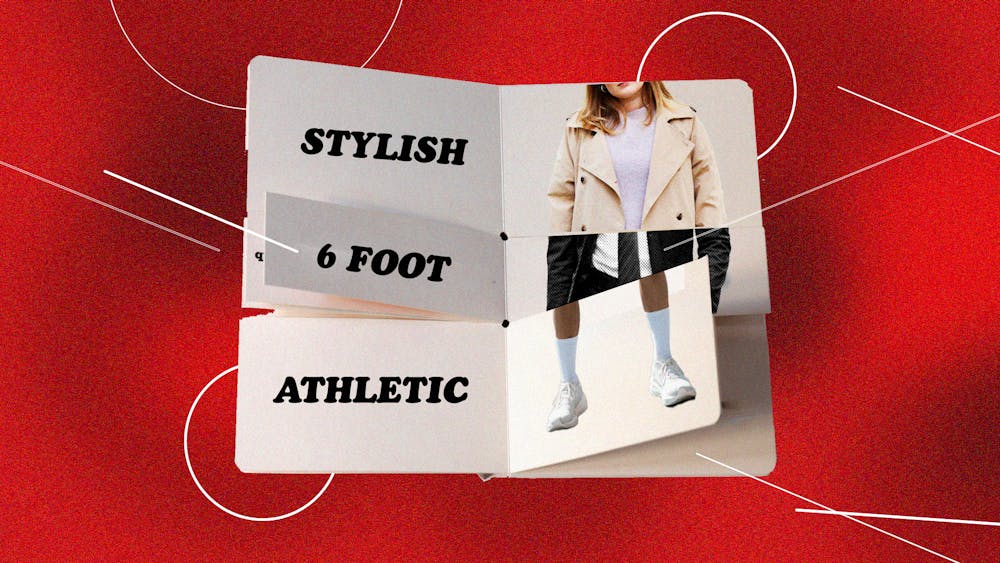
What I see at the heart of this struggle is what I’d call the “paradox of the perfect partner” — believing that true love must be perfect in every way inversely discourages us from taking dating seriously at all. Rather than encouraging us to commit to our relationships, the pressure of this belief instead causes us to find flaws in partners where they don’t exist, pushing us away from potential connections out of fear that they aren’t perfect.
So where do our inflated expectations come from? Part of the answer is social media. Generation Z grew up scrolling on platforms that constantly inundated us with romantic advice, whether they be cautionary horror stories or overly rosy fairytales. TikTok trends like “I hate my boyfriend” nitpick and exaggerate the most trivial of issues, encouraging breakups rather than conflict resolution. At the same time, the curation offered by social media presents picturesque couples who seem to live in an eternal honeymoon phase.
When combined, these polar opposites distort our perception of love, turning relationships into a false binary of either being toxic or cinematic, but never ordinary. With such polarized expectations, it feels as though a proper relationship should instantly fix all of our problems, brighten our lives, and never make mistakes. The irony is that this standard is impossible, and by expecting it, we see real relationships — which require effort and constant compromise — as flawed and undeserving of our time.
Social media also pushes the narrative that we should always prioritize our own time over our partner’s time. Influencers will often make claims like “your 20s are for you, not for love” or “don’t waste your time with someone who isn’t perfect,” feeding into our natural desire to favor ourselves. For us as Penn students, ever engrossed in the preprofessional life, this narrative is ridiculously alluring. Believing that every argument or pet peeve constitutes grounds to end a relationship allows us to rationalize staying casual, as we talk ourselves into believing that our career takes precedence over our partner.
This mindset helps explain Penn’s institutionalized hookup culture, but it doesn’t justify why we continue to yearn for love instead of giving up on it altogether. That aspect comes from our desire to SABS, or “see and be seen,” in the context of romance. At Penn, appearances carry enormous weight; whether we purposefully put ourselves on display in public spaces or carefully curate our social lives, there’s a constant pressure to radiate composure and success. And since this attitude is deeply pervasive, being seen with a partner, and especially being seen with many partners, has turned into a performative act meant to broadcast desirability. The relationship itself, then, can matter less than the fact that it’s perceived by others.
SEE MORE FROM ANDY MEI:
In a word, the inability of Penn students to find a relationship beyond a casual fling stems from the same impulse that drives our academic lives: the need for overachievement. We seek out only the best and dedicate as little time as possible to anything we deem as less, preventing us from investing the effort that real, committed relationships require. But if we want to move past this cycle, we have to abandon the ideal of a perfect partner and come to terms with the fact that though love will never be flawless, those imperfections make it valuable.
ANDY MEI is a College first year from Palo Alto, Calif. studying economics and history. His email is andymei@sas.upenn.edu.

Andy Mei is a College first year studying economics and history from Palo Alto, Calif. His column focuses on University administration. He currently serves as a Deputy Opinion Editor and can be reached at andymei@sas.upenn.edu.