

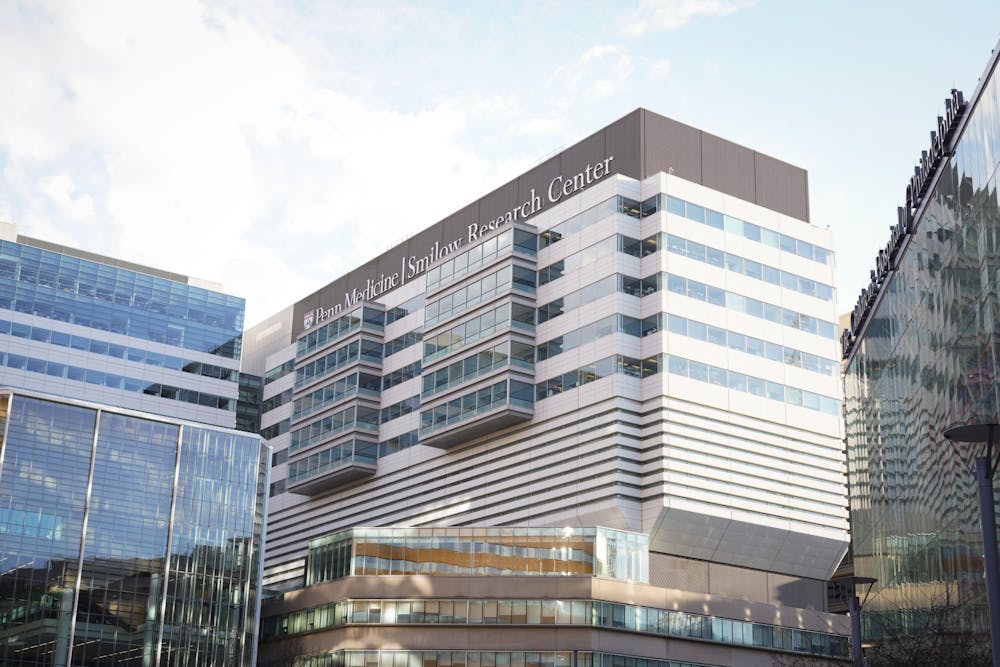
Six researchers at the Perelman School of Medicine received National Institutes of Health Director’s Awards through the High-Risk, High-Reward Research program, in recognition of their work in biomedical and behavioral science.
Through the program, the NIH Common Fund allows researchers to pursue unconventional approaches to address gaps in biomedical research. The research program also funds four types of awards: the Pioneer Award, New Innovator Award, Transformative Research Award, and Early Independence Award.
Cell and developmental biology professor Roberto Bonasio and neurosurgery professor Casey Halpern both received the Pioneer Award: a grant that supports scientists with “outstanding records” of “pioneering” approaches to the challenges in biomedical, behavioral, or social sciences.
Bonasio’s research focuses on the molecular mechanisms of epigenetic memory, especially how noncoding RNAs help cells “remember” their roles, which can have a significant impact on an organism. The Pioneer Award will support his new project, which investigates how planarian flatworms retain memories after regenerating their brains.
Halpern is researching technologies to treat brain disorders, such as major depression, obsessive-compulsive disorder, and substance use disorder.
The New Innovator Award recognizes early-career researchers who propose innovative projects with large-scale implications for areas relevant to the NIH mission. Endocrinology professor David Michael Merrick was the only Penn researcher to win this award.
Merrick’s research proposes that thermogenic adipose — energy-burning fat cells — are related to boosting metabolism in obese patients, an idea that could potentially offer novel cell-based therapies.
The Early Independence Award was bestowed upon three Penn scientists — ophthalmology professor Lucie Guo, hematology-oncology professor Elizabeth Traxler, and dermatology professor Leo Le Wang. This award helps newly graduated scientists in bypassing the traditional postdoctoral training period so they can begin independent research careers.
RELATED:
Penn Med, CHOP among 13 recipients of NIH funding for autism research collaboration
Mapping project featuring Annenberg researchers receives $336K award to track NIH funding cuts
Guo, who received her M.D. and Ph.D. from the Medical School, is developing smart gene therapies that could respond dynamically to disease conditions with the goal of protecting and restoring vision with precision. Traxler is studying gene regulation during red blood cell development in disorders such as sickle cell disease and thalassemia. Finally, Wang’s research focuses on “hydrogels” that deliver healing signals to skin wounds, promoting hair follicle regeneration and scar-free healing.
Prior to these awards, Penn researchers won three awards under this program in 2023.


