The Science and Community Impacts Mapping Project recently received a $336,000 award from Open Philanthropy to expand its work tracking the economic effects of federal research funding cuts.
SCIMaP — launched in March — is led by researchers from Penn, the University of Maryland, the University of Utah, Georgia Institute of Technology, and the University of Oregon. Using federal grant data and economic multipliers, the project models how recent changes to National Institutes of Health funding have affected the economy.
Open Philanthropy is a grantmaking foundation that funds initiatives across public health, global development, criminal justice reform, and climate change. Using the award, the researchers aim to make the effects of funding cuts visible to policymakers and communities.
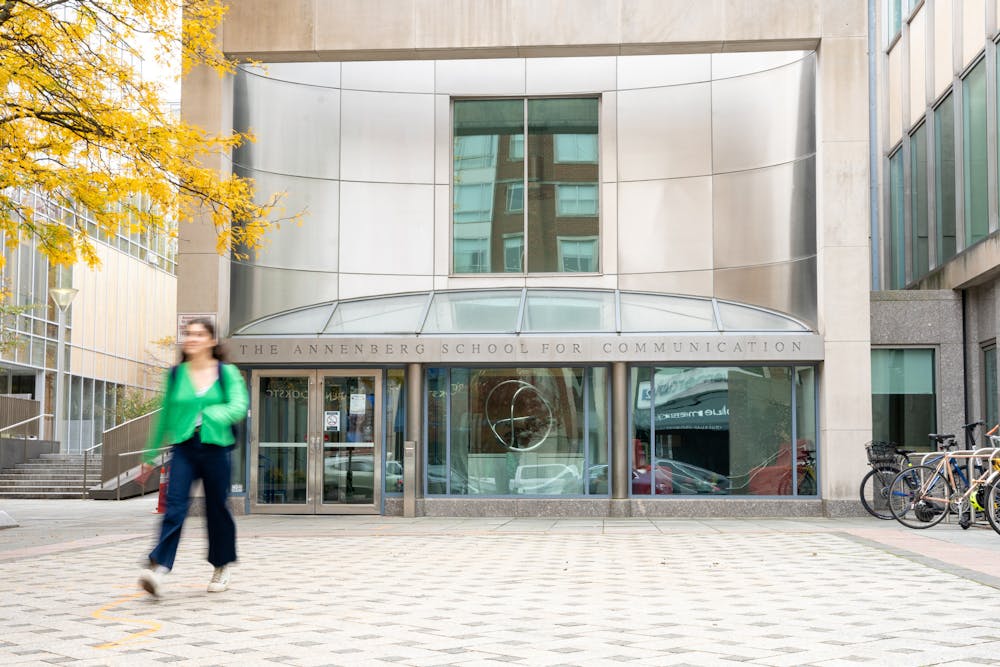
Alyssa Sinclair, SCIMaP co-lead and a researcher at the Annenberg School for Communication, told The Daily Pennsylvanian that the award would help her team respond to future changes.
“This support from Open Philanthropy will take this short-term emergency effort and make it possible to sustain in the longer term and continue adapting to all of these changes,” Sinclair said. “It will help us hire new people, like a media and outreach coordinator and a data analyst.”
Sinclair also stated that SCIMaP’s next steps includes expanding the scope of the project to "look at NSF and other federal agencies" and analyze additional metrics, such as job losses.
The need for SCIMaP’s analysis arose from NIH’s February announcement that it would cap indirect cost reimbursements for grants at 15%, down from an institutional average of about 42%. According to SCIMaP’s estimates, the change results in a $16 billion national economic loss and 68,000 jobs erased.
In an email to the University community, Penn President Larry Jameson stated that the University stood to lose $240 million from the cuts. He wrote that the directive would "severely harm" the University's research mission.
Penn researchers have already experienced the effects of funding instability. The Perelman School of Medicine paused its internal pilot grant program in March. Several federally funded projects — including studies on HIV vaccines and nicotine addiction — were terminated earlier this year before being partially reinstated after legal challenges.
SCIMaP draws on publicly available data to calculate the economic impact of funding changes. By mapping the results at the national, state, and congressional district levels, the project shows how reductions extend beyond universities to affect local vendors, service workers, and surrounding communities.
Since its launch, SCIMaP has added features including institution-level listings of terminated grants, tracking of frozen grants, and projections for the proposed FY 2026 NIH budget.
An article published in Nature Human Behaviour detailed SCIMaP’s methodology. Canceled and frozen NIH grants are incorporated into loss estimates using the Grant Witness database, which aggregates government and researcher reports. Losses for the canceled and frozen grants are calculated as the value of unspent funds at the time of termination, and are tracked separately to avoid double-counting with projected indirect cost reductions.
SCIMaP estimates economic losses by multiplying direct funding reductions by 2.56, based on a report from United for Medical Research that found every federal dollar invested in NIH generated more than twice that in new economic activity.
Job loss estimates are based on the ratio of jobs supported per dollar of research funds awarded in FY 2024. Census commuting data illustrates how reduced research funding spreads into surrounding counties.
Staff Reporter Sameeksha Panda contributed reporting.
RELATED:
Penn Medicine pauses pilot grant programs, citing federal funding uncertainty
Penn Med, CHOP among 13 recipients of NIH funding for autism research collaboration
RELATED:
Penn Medicine pauses pilot grant programs, citing federal funding uncertainty
Penn Med, CHOP among 13 recipients of NIH funding for autism research collaboration
Staff reporter Advita Mundhra covers student life and can be reached at mundhra@thedp.com. At Penn, she studies cognitive science and economics.