In a recent survey, 90% of Americans believe that easy access to food is a basic human right. Penn’s executives apparently disagree.
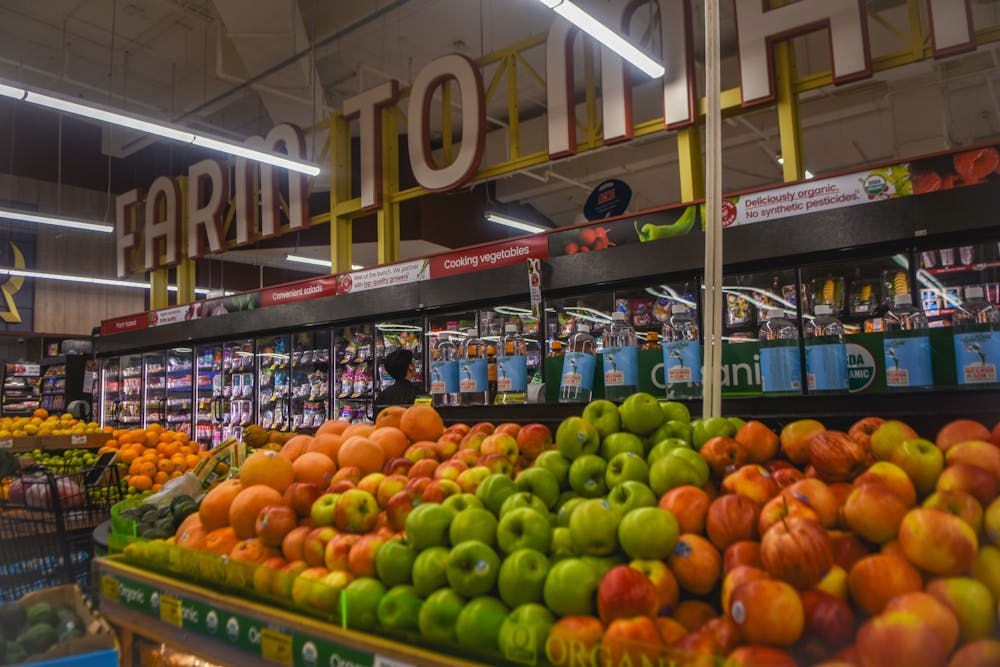
Across Penn’s campus, the food options are endless. Taking a stroll down Locust Walk opens a door to a Gourmet Grocer. Making a right turn 100 feet ahead gets you outside of the vibrant red lights at Acme. Hiking up towards Drexel, a Giant supermarket can provide you with anything from microwaveable mac and cheese to fresh produce. For the majority of Penn students, this bubble of food security and 24/7 access to whatever you could possibly need is a great asset. Dining halls, Pret, and Starbucks: whether you need a quick meal or a Sunday night grocery run, you will never be clueless as to where you can go.
Even though the pre-packaged caesar salads may cost you more dining dollars than you think they’re truly worth, imagine the 250,000+ Philadelphians struggling to find the basic nutrients Penn students have such easy access to.
Looking more closely at Philadelphia’s geography, North Philadelphia is the most barren in terms of abundance of grocery stores and access to nourishing foods. With the average household income hovering around $30,000, it’s often difficult for families to be able to put healthy, nutritious meals on their tables.
While this is a direct example of a food desert — that is unfortunately growing worse with time — Penn has the opportunity to help this nearby neighborhood just 30 blocks northwest. Penn’s endowment currently sits at a strapping $24.8 Billion and they have never paid a single dollar in property taxes. Are they truly committed to their very own birthplace of Philadelphia?
After reading those facts for the first time, I had to pinch myself and try to remember if I’ve ever seen President Jameson eating cake with Marie Antoinette. This level of gluttony is hard to digest, literally. With Penn’s endowment growing exponentially while the prices of produce in North Philadelphia increase daily, it's easy to wonder:
Why does Penn continue to encourage hefty donations when that just renames a building or adds a wing to your least-favorite library on campus?
Why wouldn’t Penn executives want to use a minute percentage of their billions to help kids have access to apples, oranges, and tomatoes just 30 blocks Northwest?
SEE MORE FROM JUDAH BLITSTEIN:
By refusing to even make a PILOT or SILOT, does Penn even want to care for Philadelphia? How is Penn going to fulfill their 501(c)(3) non-profit categorization if they refuse to share their funds?
In the past, Penn has made a few contributions to better Philadelphia’s public systems. In 2020, they provided $100 Million to the School Districts of Philadelphia to aid them with the difficulties of navigating education amidst the Pandemic. They have also invested millions towards Penn Medicine and hospitality-related endeavors. But is that enough to counter all the good that they’re able to do?
Penn’s reluctance to share their funds has forced them into a pedestal of seclusion, leaving everyone outside of the University City circle to fend for themselves.
And it’s more than just the residents of Philadelphia that encounter difficulties finding healthy, enjoyable food. It’s easy to think that all college students in the Philadelphia region would be nourished, as dining dollars, “swipes,” and other forms of a meal plan help grant that. Ironically, Temple concluded a study that found that 23% of their undergraduates — in North Philly — are experiencing food insecurity.
This isn’t an issue of who: it is a matter of where.
It’s clear that donors and fat checks fuel the motives of Penn execs. It’s clear that Penn prioritizes their Ivy League status and “state-of-the-art” buildings more than the city around them. It’s clear that all of the bonds, stocks, and assets under Penn’s name aren’t being used for the sake of “brotherly love.”
With gorgeous architecture, greenery, restaurants, and grocery stores abundantly surrounding our campus, it’s hard not to want to be here. While I couldn’t be happier to be able to live in the Quad, have coffee chats at Pret, and even take classes in Williams Hall, it’s impossible for me to ignore the immorality that Penn has going on in its very own backyard.
If only Penn could grant others just a taste of what they have to offer.
JUDAH BLITSTEIN is a first year studying International Relations and Political Science from Elkins Park, PA. His email is blits@sas.upenn.edu.
SEE MORE FROM JUDAH BLITSTEIN: