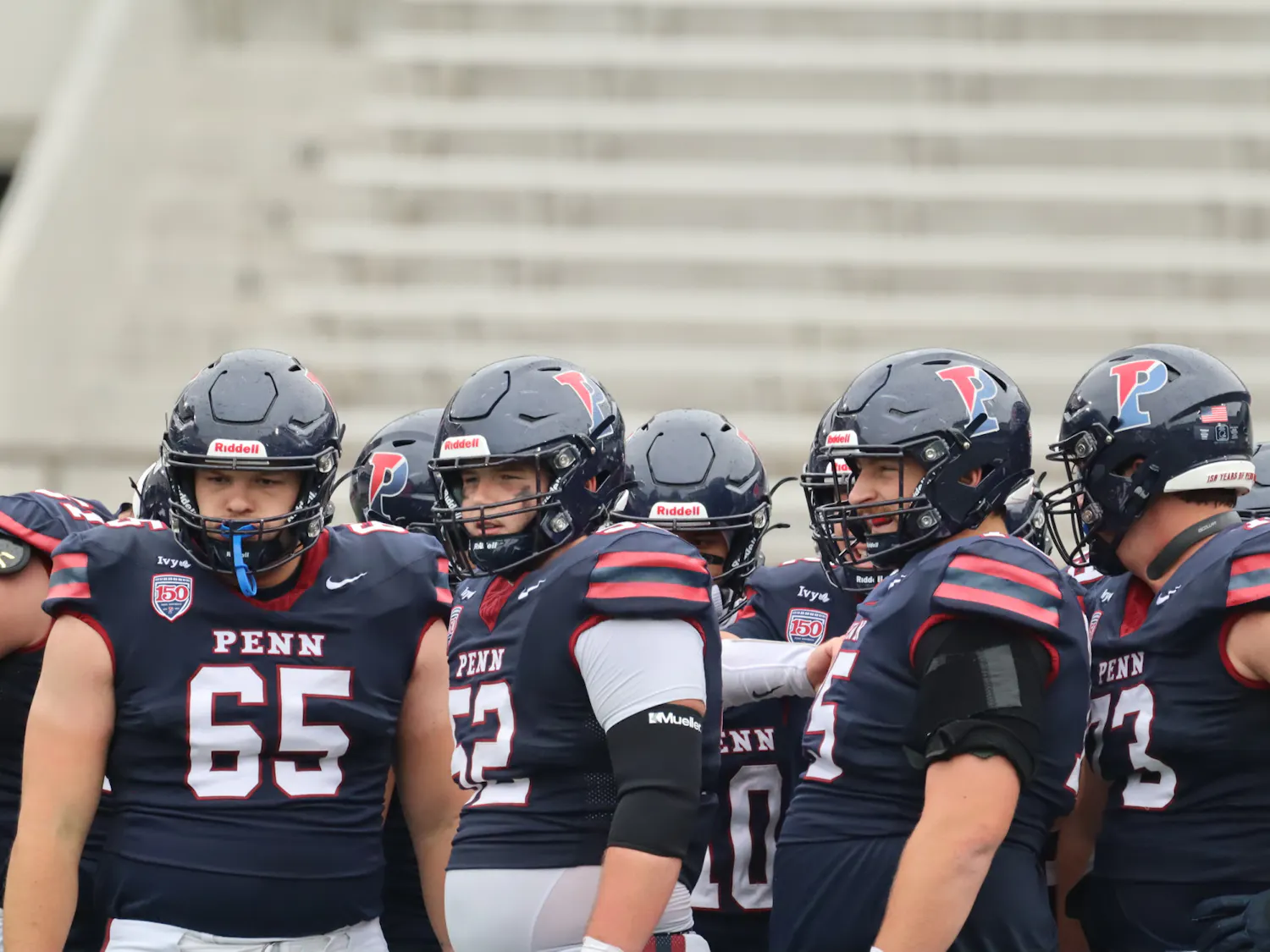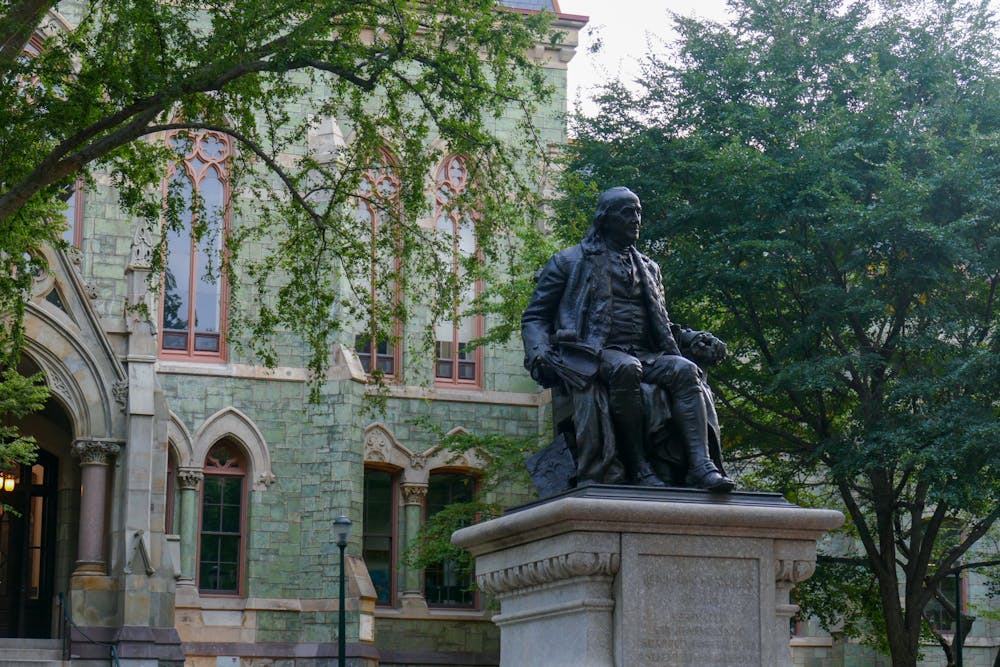
In the Wharton School, first years are baptized not by water but by WH 1010, a course so universal that its complaints echo louder than its 200-person lectures. Think of it as Wharton’s hazing ritual but with PowerPoints, not eating goldfish. Now, make no mistake — I am not a Wharton student here to complain about WH 1010. I’m a student in the College of Arts and Sciences — here to complain about the new College Foundations first-year program.
For decades, the College has been defined by its intellectual openness. The College has separated itself from the more specialized schools — Wharton, the School of Engineering and Applied Science, and the School of Nursing — which have far stricter requirements and standardized curricula. The College offers something far different and deeply valuable: freedom. The freedom to equip yourself with basic principles of economics while simultaneously exploring the literature of saints and sex demons. This freedom even extends to the current College requirements: You have the freedom to choose from a range of courses to fulfill each sector and foundation — a range that should arguably be expanded, not consolidated.
This openness is the College’s identity — that is what distinguishes it from Penn’s other schools and from Ivy League counterparts where rigid “core” curricula are the norm.
The new College Foundations initiative — a package of required first-year courses meant to standardize the undergraduate experience — risks losing that identity. By forcing students into a uniform mold, the College is choosing uniformity over exploration, efficiency over curiosity. In other words: The College is turning into Wharton.
Now, it is true that Wharton students may bond through WH 1010, and engineers share the same math and science sequences. Why shouldn’t the College have its own shared academic anchor?
But this argument misses the point. The College should build community not by funneling students into the same few courses, but by allowing them to build unique paths that intersect in surprising ways. A real first-year community is forged through shared dorm life, dining halls, student groups, and, most importantly, choice. Choices like when a friend tells you about the quirky seminar they stumbled into and you also sign up before the course selection period is over. That is the College at its best — an amalgamation of academic adventures that shape a vibrant intellectual community.
If Penn truly wants to shape a distinctive College first-year academic experience, it has the tool of first-year seminars. These small, discussion-driven courses embody what the College should stand for — exploration, experimentation, and a tight-knit community.
I know this firsthand. When I was a first year, I enrolled in a seminar that not only opened my eyes to a new field, but also connected me to a professor who has become a valuable mentor. That relationship has continued throughout my time at Penn — in fact, I now serve as a learning assistant for the very same seminar. Being in a first-year seminar has shaped my academic trajectory far more than any standardized course or large lecture ever could.
These seminars should be mandatory, giving each student the chance to form transformative relationships with peers and work closely with faculty. The seminars also allow students to dip into a subject they otherwise never would have, since many first-year seminars tend to be highly attractive as they fulfill multiple College requirements — often double-counting for a sector and a foundation.
This is not just a Penn issue. The federal government continues and escalates its attacks on higher education, from threatening students who freely speak with deportation to budget cuts targeting liberal arts programs. At such a moment, the College should stand as a beacon for academic freedom and intellectual diversity and not cave to the pressure of becoming more standardized and “efficient.”
While this may be useful in the realm of business or finance, it’s not what College students signed up for. And Penn should remember: The institutions that produce “the greats” — the thinkers, writers, and change-makers whose names outlast their diplomas — are not the ones that prize efficiency, but the ones that prize imagination.
This model silently signals to students that they should be part of a cookie-cutter model, which we already see enough of on Penn’s campus. From the parade of people attending Morgan Stanley coffee chats to the endless Longchamp purses carried on Locust Walk, too much of Penn produces uniformity. The College is, and should continue to be, a refuge from that.
My pre-major advisor always reminded me that the first year of college should be about exploration — not rushing to efficiency or checking off boxes, but stumbling into unexpected passions. That advice is exactly what the College should protect, not abandon. If the College wants to reform the first-year experience, it should listen to its own advisors and students — make more space for freedom of exploration, not restrictive uniformity.
HARMAN CHAHAL is a College sophomore from Modesto, Calif. His email is harmanc@sas.upenn.edu.