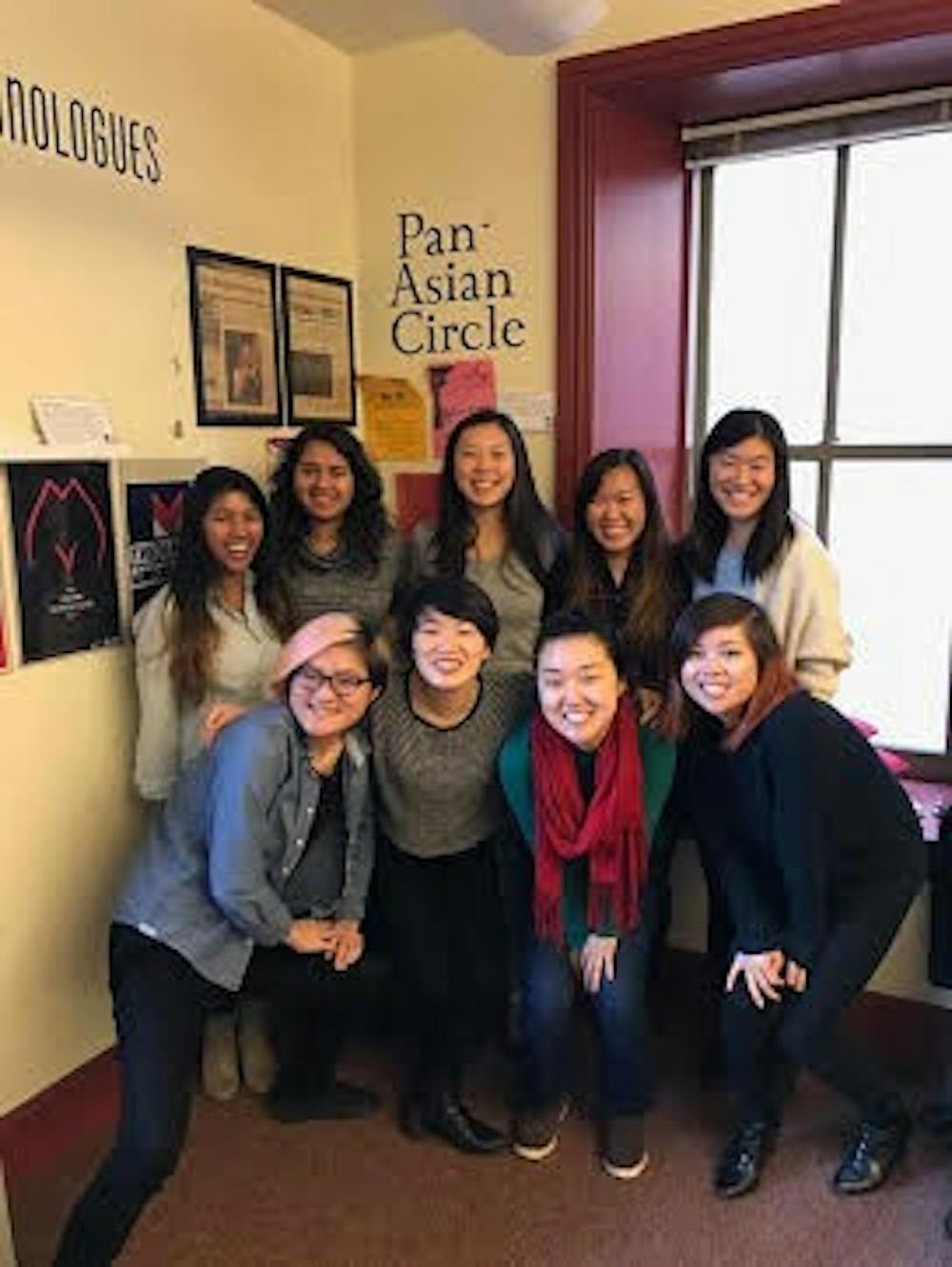
Aiming to fill a gap in the community of Penn cultural groups, two College juniors started the Spice Collective, which focuses on the intersection of gender and race in the Asian-American women’s community.
Previously named About APA Women, the Spice Collective provides a forum for women of Asian descent to discuss social, academic, political and economic issues. The group recently became a part of the branch organization Pan-Asian American Community House (PAACH) , and is currently working on constructing a policy agenda inspired by the one set forth by the Black Lives Matter movement.
Co-founders Miru Osuga and Meghana Nallajerla-Yellapragada established Spice Collective to empower Asian-Pacific American women at Penn and to provide a space for them to explore their gender and ethnic identity.
“We both felt like there was misogyny in different APA spaces and we wanted to build a femme-centered APA space where that could be addressed and processed,” Nallajerla-Yellapragada said.
Through bi-monthly meetings, the organization focuses primarily on group discussion to explore topics within the Asian-American community such as sexuality and feminism.
“The Spice Collective is about creating a space for participants to really shape the discussion and come to their own conclusions about topics they presented,” Osuga said. “It is about the reclamation of identities from being societally imposed to collectively created.”
College sophomore and Spice Collective member Soomin Shin said the discourse that took place between the members encouraged them to also consider adding an activist role to the group by developing a policy agenda.
“When we reflect [on] what it means to be an Asian-American and a woman in this country it’s not hard to see that there is a lot of oppression,” Shin said. “We all felt very energized to take action.”
Nursing junior Valerie Bai, another member of the Spice Collective, said the group’s development of a policy agenda was an attempt to further empower and celebrate their ethnic and gender identities.
“It was all about how we see ourselves and how we approach asserting ourselves within our communities,” Bai said.
The agenda will include topics that the group feels are significant for the Asian-American women’s community. Topics in discussion for the agenda include sensitivity training, diverse representation in faculty and increased accessibility to mental health resources.
Osuga said the agenda is targeted towards both the immediate Asian-American community at Penn as well as higher level figures such as the University’s board of trustees and administration.
“We wanted to see how we can organize ourselves to mobilize the fuel that we’ve got going,” she said. “I hope that this will be a space from which we can all come out thinking critically of what our position is within Penn, America, and the world.”