

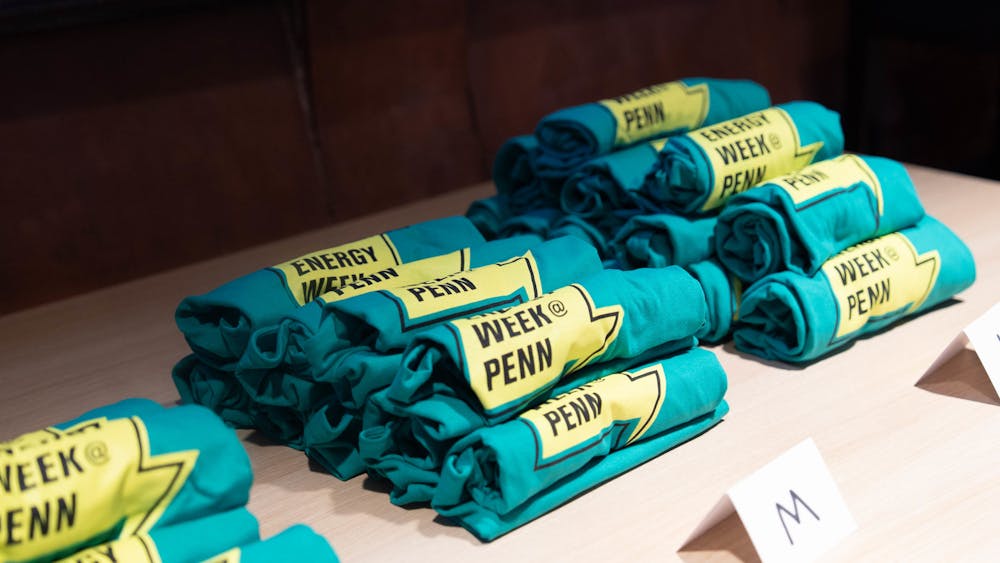
The Kleinman Center for Energy Policy hosted a four-day electronic waste drive as a part of Penn’s annual Energy Week initiative.
The drive — which ran daily from 9 a.m. to midnight — featured drop-off bins in the lobby of Fisher Fine Arts Library, where the general public could donate old and unused electronic devices. The event was held from Feb. 24 to 27, and event coordinators planned to properly recycle the collected materials at the end of the week.
In an interview with The Daily Pennsylvanian, Kleinman Center Associate Director of Operations, Programming, and Data Analytics Bill Cohen explained that this initiative is a “very small opportunity” for the Penn community to “responsibly and sustainably” dispose of their old electronics.
Cohen shared that as of 2021, only 15% of e-waste around the world was “properly” recycled. The total annual global e-waste is expected to reach 81 million tons in the next four years, he added, citing the book “Waste Wars: The Wild Afterlife of Your Trash” by Alexander Clapp.
Given this “significant impact” on the environment, Cohen explained that the drive offers an opportunity for recycling “critical” metals and minerals.
Eligible items for the drive included old cell phones and chargers, laptops and computer peripherals, small household electronics, and batteries — all of which “may have some copper in them or some other components that may have a useful second life.”
Penn partnered with Elemental, Inc. — a Pennsylvania-based corporation providing electronic recycling services — to properly repurpose e-waste. The company supplied bins to collect the donations, which were picked up at the end of the week.
“It’s been fantastic — two giant blue carts have been filled with electronics,” Cohen said on Friday afternoon.
RELATED:
Events at Penn’s sixth annual Energy Week highlight data center growth, sustainable AI
Wharton Impact hosts panel on sustainable computing, AI resource usage
While the “most responsible” thing people could do with an electronic is use it until the “end of its life,” according to Cohen, the drive provides those who want to dispose of their devices with a way to do so.
“I wouldn’t say that just dropping off your lightly used electronics is the best way to go,” Cohen added. “But, if it’s [an electronic] that has really stopped working, then we’d love to continue doing this at future Energy Weeks.”
Kleinman Center Communications Director Lindsey Samahon told the DP that the drive “is a great way for people to engage in Energy Week.”
“It helps remind us that energy is a part of our daily life, and we can also improve the energy in the space around us by just clearing out, cleaning up, and knowing that we’re making space in our lives for other things,” Samahon said.
The Energy Week E-Waste Drive was initially scheduled to start on Feb. 23. However, when the University suspended normal operations after inclement weather, the week-long event was postponed to begin the following day.


