Rarely during a presidential election do voters get a chance to see a candidate speak in a casual forum, joking with a host, and giving in-depth answers to questions posed not by reporters, but by voters themselves. But this is precisely the opportunity that students got as they watched Democratic Presidential candidate Bill Clinton and running mate Al Gore address the concerns of college students across the nation via satellelite hookup at the Nursing Education Building Auditorium last week. Approximately 100 University students and guests of College Democrats and Vote For A Change watched the telecast, which originated at the University of Wisconsin, Madison, where Clinton and Gore were appearing on a special "Rock the Vote" segment of the weekly radio call-in show "Rockline." The casual atmosphere of the broadcast was set from the very beginning. "I always knew Al would desert me at some point in this campaign," Clinton joked with "Rockline" host Bob Colberg as he entered the studio and failed to see Gore enter behind him. During the telecast Clinton and Gore answered questions on a wide array of topics posed by both Colberg and callers from college campuses across the country. Comparing the efforts made by young people in the sweeping democratic changes in Eastern Europe to the need for youthful leadership in this country, Clinton and Gore urged young Americans to register to vote. "I think it's very important that those who have the greatest stake in the future of this country -- the young people -- register to vote," Clinton said. Gore criticized the Bush campaign for what he said were efforts to keep young people from voting. Gore also accused the Bush administration of demonstrating a lack of leadership on the issues of AIDS and the environment, and said that young people's support was needed to change the situation. "One of my goals in this election is to dramatically increase the number of people under the age of 25 voting," Clinton added. Both Gore and Clinton said they were eager to debate their Republican rivals and criticized Bush for refusing Clinton's proposed debate format. "I wanted to get to [the debates] out of the realm of the political," Clinton said. "But George Bush said he wouldn't do it that way." Some of those watching applauded when Clinton said he was not worried about the outcome of any possible debates. " he Republicans'] ideas have failed and no debate can change that," he said. During the program, Colberg extended an open invitation to President Bush and Vice President Quayle to also appear on his show and answer students questions. Many of the questions which were phoned into the program concerned the cost of higher education. Clinton and Gore explained their proposed National Service Trust Fund, whereby loans would be granted regardless of financial need and would be paid back as either a percentage out of one's post-graduation earnings or through two years of public service which could be completed before entering college or after graduation. The candidates added that the loans would apply to graduate degrees as well as undergraduate studies and stressed the need to create specialized public service programs such as a National Health Service Corps composed of both doctors and nurses. "Just as the Peace Corps made sense in the 1960's, the National Service Trust Fund makes sense now in the 1990's," Gore said. Both candidates criticized the Republicans for their record on women's rights and called for an end to the so-called "glass-ceiling," which refers to barriers against women advancing in the workplace. "We are fully committed to having women be full partners in every segment of society," Clinton said. Clinton and Gore said it was too early tell what effect Ross Perot's re-entry into the race would have on the election, but Gore criticized Perot's tax plan which he said would hurt the middle class. The candidates also answered questions on gun control, race relations, military spending, environmental policy, the homeless situation and AIDS research. The audience in the Nursing Education Building auditorium decreased in size significantly as the telecast continued past an hour. Those who remained said they were impressed by what they had heard. "I've gotten more out of this [telecast] tonight than any of the other speeches of his I've seen," said Sheryl George-Macalpine, 27th Ward Democratic leader. Students also said they liked the format of the program. "I think it's great for them to address students and go after young votes," Wharton freshman Amar Lalvani said. "I don't see any of the other candidates doing it." The University was supposed to be guaranteed one question to Clinton on the program, said Sher. The audience argued over several proposed questions, but once one was decided on, the phone lines were busy and no question from a University student was aired on the program.
The Daily Pennsylvanian is an independent, student-run newspaper. Please consider making a donation to support the coverage that shapes the University. Your generosity ensures a future of strong journalism at Penn.
DonateMore Like This

A history of the Penn presidency
By
Aidan Shaughnessy
·
11 hours ago

No — AI will not wipe out humanity by 2030, Penn experts say
By
Addison Saji
·
11 hours ago

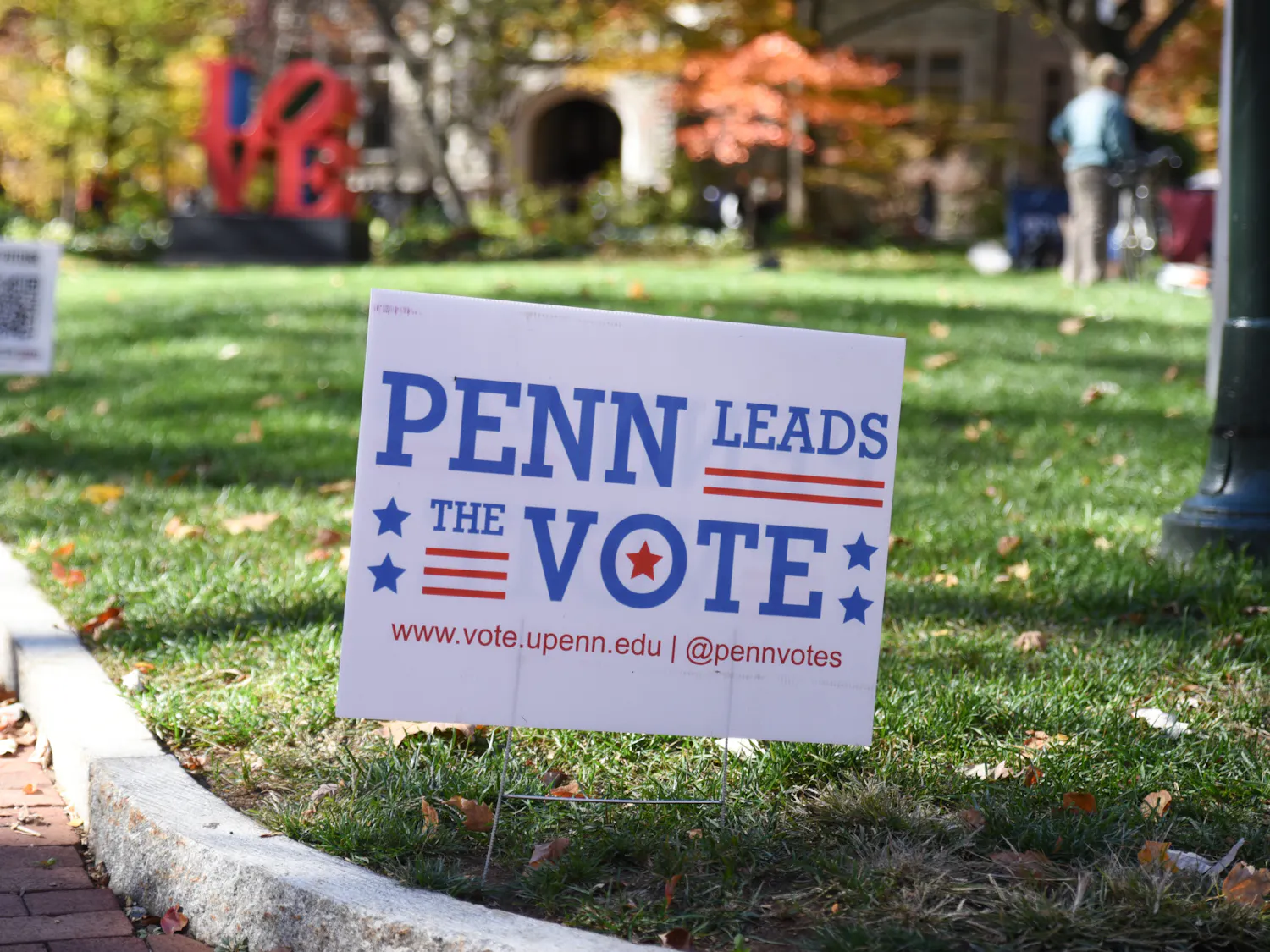
Penn student groups promote voter registration on Locust Walk
By
Mara Flores
·
12 hours ago