A group of about 200 students proved Friday that one is never too old to learn. Political Science professor Alvin Rubinstein delivered a speech about the upcoming presidential election's impact on U.S. foreign policy to an untraditional audience -- almost all students in attendance were over 60-years-old. The speech was part of the Senior Associates lecture series -- the newest part of the University's Institute on Aging. For the past 10 years the Institute, which is part of the College of General Studies, has provided the opportunity for senior citizens to audit undergraduate courses. Due to the program's continuing growth, lectures featuring some of the University's most popular speakers have been added to the senior citizens' program schedule, according to Nathan Marder, the Institute's coordinator of special events. "I audit political science, and I'm very pleased that Dr. Rubinstein is here," Jamie Jamison, an Institute member said last week. "He is sensational and extraordinarily good." Rubinstein said he was equally enthusiastic about the audience. "To most of the students in my classes, the Vietnam War is ancient," Rubinstein said. "Here there is much more historical experience." Rubinstein added that at times he has been frustrated by younger students' lack of historical understanding. He said that one of his teaching assistants recently overheard two students debating which World War Hitler was involved in. But according to Rubinstein, such historical ignorance was absent from Friday's lecture. During the hour-long lecture, Rubinstein said "we are at a critical juncture in our history," because of the opportunities and challenges presented by the fall of Communism. He outlined four choices the U.S. faces for the foreign policy road ahead -- analyzing each one for feasibility and wisdom. But said that the upcoming election will not have substantial effect on foreign policy. "No candidate is talking about these hard issues," he said. "With no real [communist] threat left, politicians just can't get mileage out of foreign policy issues," he added. Toward the close of his lecture Rubinstein suggested that the U.S. will not be able to impose a Pax Americana in the future, as it did during the Gulf War. The lecture was followed by a brief question-and-answer session, and one audience member asked Rubinstein to predict the next U.S. president. Rubinstein said he believed Gov. Bill Clinton, the Democratic presidential nominee, will "sweep" the election. Many in attendance said they were looking forward to more speeches from the Institute.
The Daily Pennsylvanian is an independent, student-run newspaper. Please consider making a donation to support the coverage that shapes the University. Your generosity ensures a future of strong journalism at Penn.
DonateMore Like This

A history of the Penn presidency
By
Aidan Shaughnessy
·
5 hours ago

No — AI will not wipe out humanity by 2030, Penn experts say
By
Addison Saji
·
5 hours ago

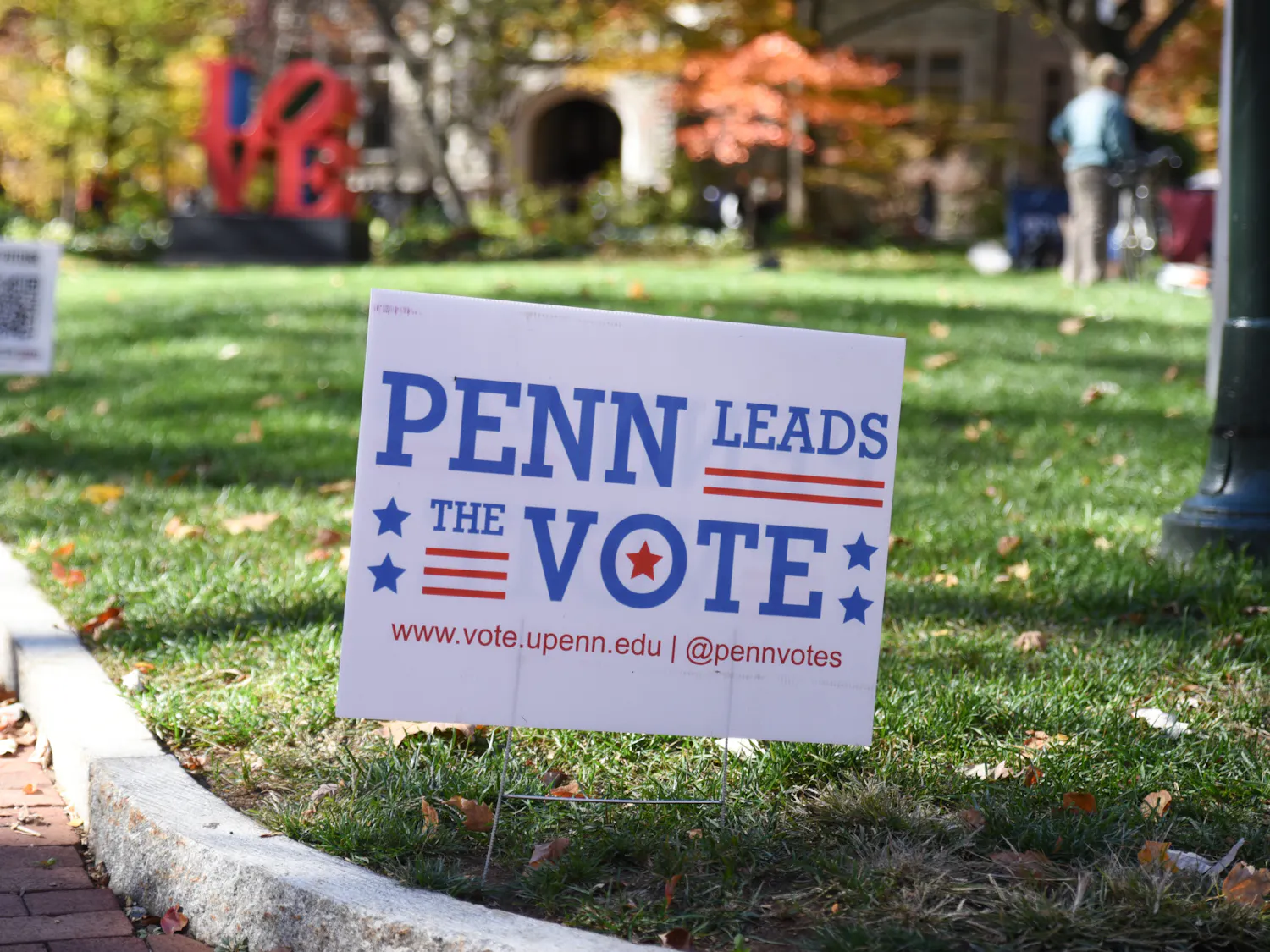
Penn student groups promote voter registration on Locust Walk
By
Mara Flores
·
5 hours ago