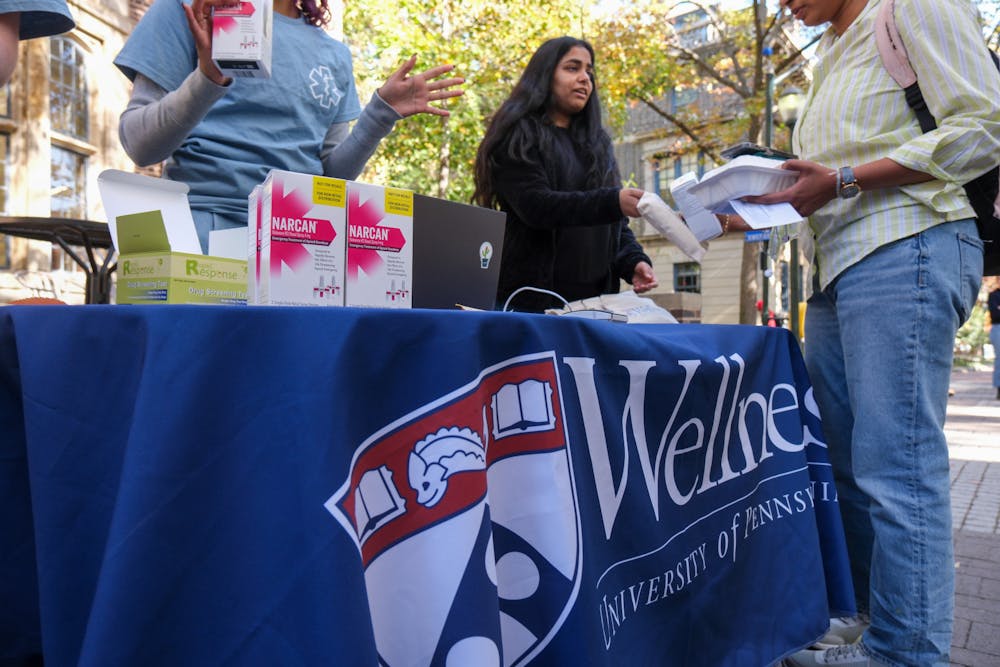
Wellness at Penn launched Vibe this Monday, an asynchronous sexual health education program meant to promote accessibility and informed decisions in sexual wellbeing.
The program is email-based and is sent out to interested students weekly. In addition to covering traditional sex education topics like STI identification and prevention, Vibe focuses on explaining healthy relationships, digital sexual health literacy, and media.
According to Associate Director of Wellbeing Initiatives Lauren Cordova, Vibe is meant to “make sex education more accessible.”
“We understand that everyone comes with different levels of sex education, different backgrounds,” Cordova told The Daily Pennsylvanian.
She added that Wellness at Penn wanted to create an offering that “didn't necessarily require students to come in person” but would allow students to access “that information directly.”
Vibe is an updated relaunch of Penn's Declassified Sex Survival Guide, a program originally piloted in 2020 to educate students on how to improve their relationships and sexual health. As a part of its relaunch, Vibe has added two lessons, including a digital sexual health literacy lesson and a lesson on “exploring the sexual self.”
Within the latter lesson, Cordova explained that it includes “a lot of different questions you can ask to reflect on … it talks a little bit about our perceptions of sex and sexuality that we might carry just based on our experiences, and really, really encourages the reader to think about and reflect on their own, their own feelings and beliefs on things.”
In addition, sections of the guide were updated to support a wider array of students at Penn, including graduate and professional students.
RELATED:
Wellness at Penn launches new ‘be aware’ program focused on mental health, student guidance
Wellness at Penn to offer free flu vaccinations at annual Pottruck clinic
For example, a newly updated family planning section now “outlines family planning for those who want to prevent pregnancy, for those who want to get pregnant and are trying to get pregnant, and then those who are pregnant and seeking support,” Cordova said.
Part of these updates were generated from student feedback; Wellness at Penn aimed to consider which topics are important to students today.
“We have specific student feedback from our Student Wellness Advisory Group, who were very much involved in reviewing the old and new [versions]," Wellness at Penn Director of Communications Mary Kate Coghlan explained.
Cordova explained that other updates to the guide in the communication section were informed by both student feedback and college health trends.
An important consideration of Vibe was to be data-driven and data-informed in both its development and impact, according to Cordova.
“We collect the data, and if it's not effective in the ways we're looking for, we'll go back and we'll fix it,” she said. “If [the program] is not increasing the amount people [who] are communicating about sex with others, what can we change? We'll go back to students. We'll go back to our partners and say, what can we adjust to have [Vibe] better achieve its goals?”
RELATED:
Wellness at Penn launches new ‘be aware’ program focused on mental health, student guidance
Wellness at Penn to offer free flu vaccinations at annual Pottruck clinic
Staff reporter Ashley Wang covers student health and wellness and can be reached at wang@thedp.com. At Penn, she studies philosophy, politics, and economics.