Executive Director of the Philadelphia Commission on Human Relations and Fair Housing Renee Chenault-Fattah sat down with The Daily Pennsylvanian to discuss her role at the agency.
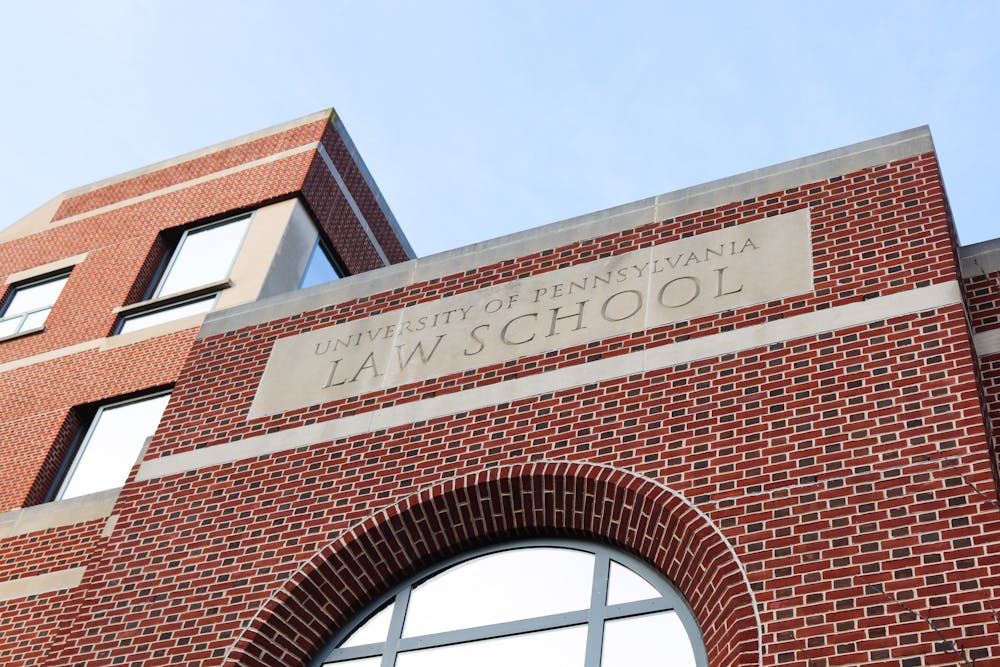
Philadelphia Mayor Cherelle Parker appointed Chenault-Fattah — who graduated from University of Pennsylvania Carey Law School in 1982 — to the position on June 30. Her responsibilities include enforcing laws that prevent discrimination, promoting equality, and educating the public on their rights.
A former news anchor and practicing attorney, Chenault-Fattah said her interest in civil rights law began long before her time at Penn.
“I grew up in the heyday of the civil rights movement, and I saw from a very young age that the way you made a difference in people’s lives was through the law,” she told the DP.
After earning her undergraduate degree from Johns Hopkins University, Chenault-Fattah enrolled at Penn Carey Law with the intention of pursuing civil rights work. She said the academic environment and faculty mentorship at Penn shaped her early-career decisions.
Ralph Smith, a Penn professor at the time, advised Chenault-Fattah to take a leave from her Wall Street law job to clerk for Judge Damon Keith of the U.S. Court of Appeals for the Sixth Circuit. Chenault-Fattah described the clerkship as the “most rewarding job” she ever had.
Chenault-Fattah said that the relationships she formed at Penn have remained central throughout her career.
“The friends that I made in law school are friends that I to this day get on the phone [with] and either seek their advice or guidance or just, let’s get together and have a meal,” she said.
RELATED:
Penn Carey Law students matriculate from small pool of schools and majors, DP analysis finds
Local lawmakers, advocacy groups host West Philadelphia town hall on SEPTA service cuts
Before accepting her position on the Philadelphia Commission, Chenault-Fattah led Philadelphia Lawyers for Social Equity, a nonprofit focused on expungements and pardons.
While Chenault-Fattah did not expect to return to full-time public work after retiring from the organization, she told the DP that Parker’s appointment aligned with her interest in giving back to a city which she “owed a debt of gratitude to” for shaping her personal and professional life.
Chenault-Fattah emphasized that she views her new role as connected to national conversations on civil rights.
“On the federal level, we’re seeing all of these rights being rolled back,” she said. “This was a way to let people know that certainly on a local level … we have laws in place that protect your civil rights.”
A central part of her first year in the role will focus on public awareness and telling the public “what their rights are and what their responsibilities are,” Chenault-Fattah stated.
“You can’t fight for your rights if you don’t know what those rights are,” she said.
Chenault-Fattah also noted her agency’s historical connection to Penn. 1927 Penn Carey Law graduate Sadie Alexander — the first Black woman to graduate from Penn Carey Law — served on Philadelphia’s Commission on Human Relations for 16 years. In addition to her law degree, Alexander also graduated from the School of Education at Penn in 1918 and later studied economics at Penn, becoming one of the first three Black women in the U.S. to obtain a Ph.D.
Chenault-Fattah said that Alexander was her “inspiration” and described her own position as “carrying on [Alexander’s] legacy.”
“It’s really important that we know our history, especially at a time when there’s an effort and an attempt to erase it or to diminish it,” Chenault-Fattah said in an interview with the DP. “You have to know the sacrifices that people made, and that times right now seem challenging and tough, but we’re only here because of all of the challenges that people who came before us had to endure.”