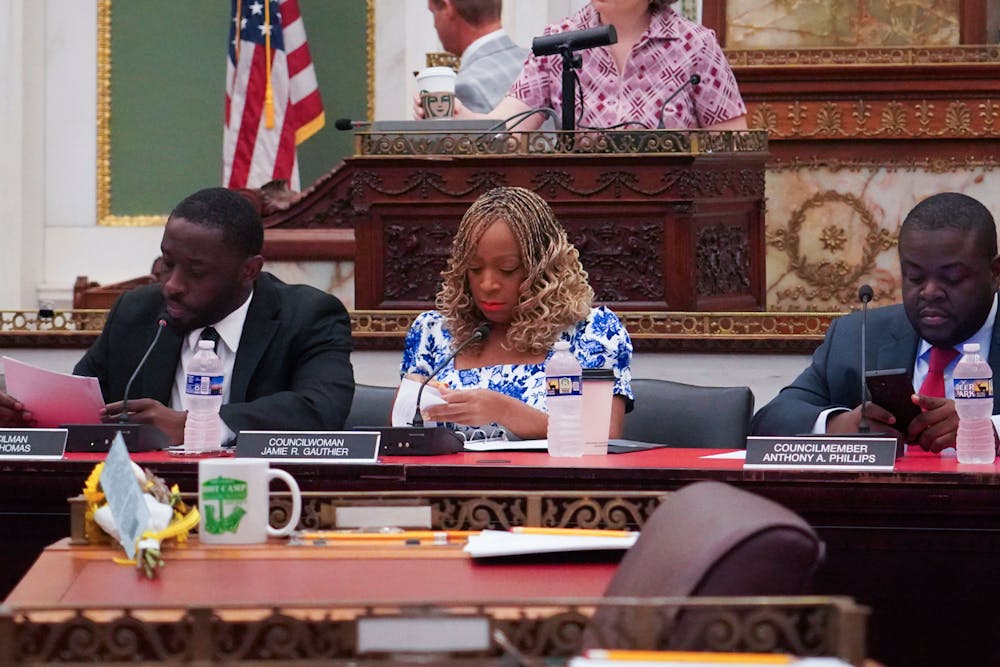
Philadelphia City Councilmember Jamie Gauthier introduced legislation on Sept. 25 aimed at helping to protect University City residents from mergers and closures negotiated by higher education institutions.
Gauthier’s bill comes in the wake of Saint Joseph’s University’s recent sale of 15 former University of the Sciences buildings to a local nonprofit. The zoning overlay bill will apply only to areas of University City within her district — including Penn — and would require the Philadelphia City Planning Commission to review proposals for land sold by colleges and universities before construction begins.
The bill does not apply to projects on properties that remain under continuous college or university ownership.
“Philadelphia has stood by and watched colleges and universities downsize, merge, close, and even file for bankruptcy,” Gauthier wrote in a statement to The Daily Pennsylvanian. “The merger between the University of the Sciences and St. Joseph’s University and subsequent campus sale is the first major example in my council district, but national trends indicate that it won’t be the last.”
Gauthier expressed concerns after the details of the purchase were made public. She said that the final contracts did not incorporate community requests that were made in neighborhood discussions with St. Joe’s.
The bill was announced less than two weeks after the sale — and requires city and community oversight on any land sold by higher educational institutions that exceeds 5,000 square feet.
“[The overlay] sets clear criteria to design thoughtfully with adjacent communities in mind, and mandates broader community involvement beyond what the Code already requires for larger proposals,” Gauthier wrote. “This way, neighbors will no longer sit in the dark while institutions plan for us, without us."
Aside from ensuring that proposals align with city plans for the area, the bill lists six other criteria that possible mergers will have to meet. These include preservation of existing campus buildings, as well as public access to open spaces and courtyards.
RELATED:
'Blatantly unconstitutional': Penn faculty warn proposed Trump compact threatens academic freedom
Michael Mann resigns from role as vice provost for climate science, policy, and action
The legislation also requires project developers to meet with community representatives from at least five different groups.
Gauthier’s bill is yet to pass, and her team is anticipating legal challenges surrounding the basic precepts of an institution’s right to sell. However, a spokesperson for Gauthier expressed confidence that the “overlay is necessary and within Council’s authority” in an interview with the Philadelphia Inquirer.
Ultimately, Gauthier hopes that the bill will be a step towards community engagement that protects the interests of University City residents.
“I introduced the University-Community Overlay to ensure West and Southwest Philly grow with its longtime neighbors, not at their expense,” Gauthier wrote. “My constituents deserve a real voice in shaping the future of the place they call home, and I intend to ensure they have it.”
RELATED:
'Blatantly unconstitutional': Penn faculty warn proposed Trump compact threatens academic freedom
Michael Mann resigns from role as vice provost for climate science, policy, and action
Staff reporter Ishani Modi covers state and local politics and can be reached at modi@thedp.com. At Penn, she studies biochemistry.