

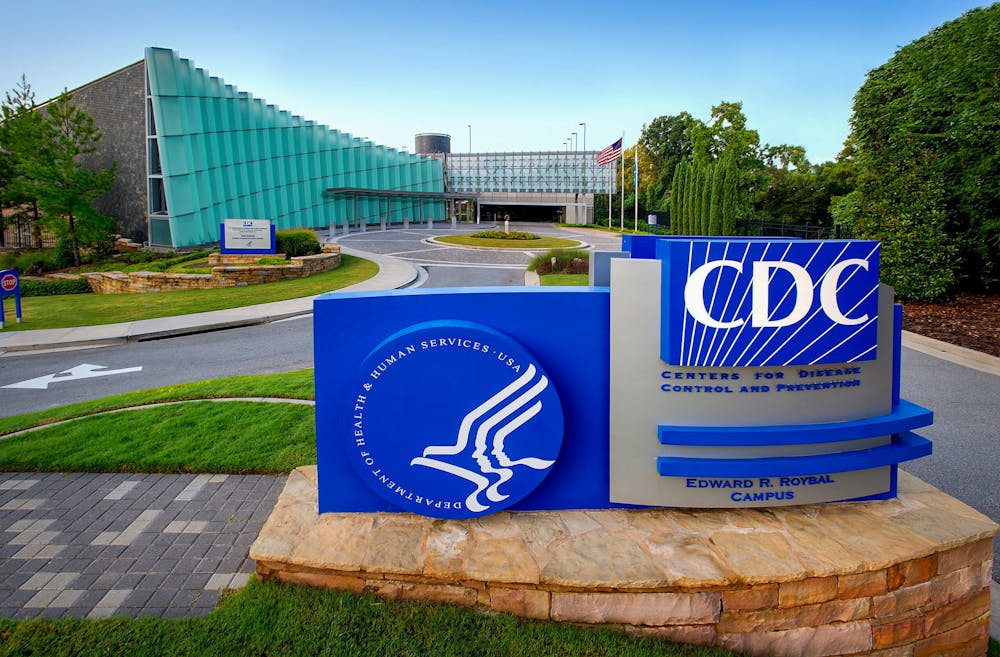
Despite the Centers for Disease Control and Prevention’s recategorization of recommended childhood vaccines earlier this month, Penn will not be changing vaccine requirements at this time.
The revised guideline — which had previously recommended vaccines including rotavirus, COVID-19, and flu for all children — now only recommends them for high-risk groups and for children who determine need through “shared clinical decision making.” Childhood immunizations are still recommended for diseases the CDC argued have “international consensus.”
Wellness at Penn wrote to The Daily Pennsylvanian that “Penn’s immunization requirements remain unchanged.”
“Our vaccination policy is based on state requirements and scientific evidence that vaccines prevent outbreaks and protect the health and wellbeing of our entire campus community — especially those who are under vaccinated, cannot be vaccinated, or who are immuno-compromised,” the statement read.
Wellness at Penn added that its immunization recommendations will “rely on information and guidance” from medical experts that “may include” the CDC, the American Academy of Pediatrics, and other organizations.
Penn Medicine professor Paul Offit — who serves as the director of the Vaccine Education Center at the Children’s Hospital of Philadelphia — voiced concerns over the CDC’s reclassification.
“The term ‘decision making’ makes it sound like you can reasonably decide not to get this vaccine,” Offit said.
According to the Advisory Committee on Immunization Practices, shared clinical decision making is done on a case-by-case basis, “informed by a decision process” between doctors and patients or their parent or guardian.
RELATED:
Penn Medicine, CHOP to begin testing specialized gene therapy after working on new FDA protocol
Penn Med professor Paul Offit discusses dismissal from FDA vaccine advisory committee in DP interview
“The decision about whether or not to vaccinate may be informed by the best available evidence of who may benefit from vaccination; the individual’s characteristics, values, and preferences; the health care provider’s clinical discretion; and the characteristics of the vaccine being considered,” a CDC webpage read.
Offit — who was removed from the Trump Food and Drug Administration’s vaccine advisory committee in September 2025 — explained that rotavirus, COVID-19, and the flu are short-incubation-period mucosal infections — meaning there is a shortened time period between exposure and disease onset.
“A choice not to get one of those vaccines is a real choice to get one of those infections,” Offit said.
In addition to immunizations based on shared clinical decision making, the revised CDC guidelines include recommendations for “high-risk groups or populations,” including hepatitis A and B, dengue, respiratory syncytial virus, meningococcal ACWY, and meningococcal B.
Offit argued, however, that the term “high-risk” downplays the fact that these diseases pose a risk to all individuals.
“A high-risk group for respiratory syncytial virus is anybody who breathes, because everybody will be exposed to respiratory syncytial virus by the time they're a few years old,” Offit said. “And that’s why we have an RSV vaccine.”
American Academy of Pediatrics President Andrew Racine responded to the agency’s revised policy in a January statement, writing that the AAP will continue to publish its own childhood vaccine recommendations. He credited vaccines with helping reduce pediatric hospitalizations and health challenges for children.
“At a time when parents, pediatricians and the public are looking for clear guidance and accurate information, this ill-considered decision will sow further chaos and confusion and erode confidence in immunizations,” Racine stated. “This is no way to make our country healthier.”
RELATED:
Penn Medicine, CHOP to begin testing specialized gene therapy after working on new FDA protocol
Penn Med professor Paul Offit discusses dismissal from FDA vaccine advisory committee in DP interview
Staff reporter Ashley Wang covers science and health and can be reached at wang@thedp.com. At Penn, she studies economics.


