Editor’s note: The election results listed in this article are accurate as of the time of publication at 11:51 p.m. on May 20, 2025.
Pennsylvania residents, including those in Philadelphia, headed to the polls on Tuesday for the 2025 primary election, casting their ballots in several significant city and statewide races expected to influence the direction of the November general election.
The polls were open from 7 a.m. to 8 p.m. on May 20, with residents voting under Pennsylvania’s closed primary system. Philadelphians voted in the Democratic primary for district attorney, city controller, and judicial seats on the Court of Common Pleas and the Municipal Court, and both parties selected nominees for vacancies on the Superior Court and Commonwealth Court across the state.
Pennsylvania operates as a closed primary state, meaning voters must be registered with a political party to vote in the primary election.
In Philadelphia, the Democratic primary for district attorney was the most closely contested race. Incumbent Larry Krasner — a two-term district attorney known for championing criminal justice reform — received 63.0% of votes to defeat challenger Patrick Dugan, a Municipal Court judge and military veteran who campaigned on public safety and a tough-on-crime stance. The Philadelphia Inquirer called the race for Krasner.
On Monday, Penn Democrats publicly endorsed Krasner for the 2025 primary through a post on their Instagram page.
“We celebrate District Attorney Krasner’s reelection and believe that he will continue to be a strong force in criminal justice reform and public safety,” Penn Dems wrote in a statement to The Daily Pennsylvanian after the results were called. “During his last term, Krasner significantly reduced violent crime in Philadelphia, while supporting victims of domestic violence and holding police forces accountable. We are confident that Krasner will build a safer and more equitable Philadelphia for all of its residents.”
Last year, the student political organization voiced opposition to Act 40, joining those who critiqued the state law, saying that it reduced Krasner’s ability to prosecute crime in the city.
With Republican candidate in the general election, Krasner’s primary victory effectively secures him another term in office.
In statewide election results, the Democratic race for Pittsburgh mayor was also a high-stakes race that garnered significant attention. Corey O’Connor — the Allegheny County controller and son of former Pittsburgh Mayor Bob O’Connor — defeated incumbent Ed Gainey, who was elected four years ago as the city’s first Black mayor after previously serving five terms in the Pennsylvania state House.
Given that Pittsburgh has not elected a Republican mayor in almost a century, O’Connor is expected to defeat Republican nominee Tony Moreno in November.
Downingtown voters selected Erica Deuso in the Democratic primary for mayor, putting her one step closer to becoming the first openly transgender person to be elected mayor in Pennsylvania.
Incumbent City Controller Christy Brady won the Democratic primary unopposed and will face Republican Ari Patrinos — who also ran unopposed — in the general election. Several Democratic candidates competed for seats on the Court of Common Pleas and Municipal Court, but no Republican candidates ran for these offices.
Brandon Neuman ran without opposition in the Democratic primary for Superior Court, while Maria Battista — who ran and lost in the 2023 Superior Court general election — earned 54.9% of the vote to defeat Ann Marie Wheatcraft for the Republican nomination.
In the Commonwealth Court race, Democrat Stella Tsai received her party’s nomination unopposed, and Matt Wolford won the Republican contest with 62.0% of the vote.
Philadelphia voters also decided on three ballot questions proposing amendments to the city’s Home Rule Charter, which establishes the city’s government framework. These questions addressed issues relating to homeless services, prison oversight, and affordable housing. The Philadelphia Inquirer reported that all three ballot measures were approved.
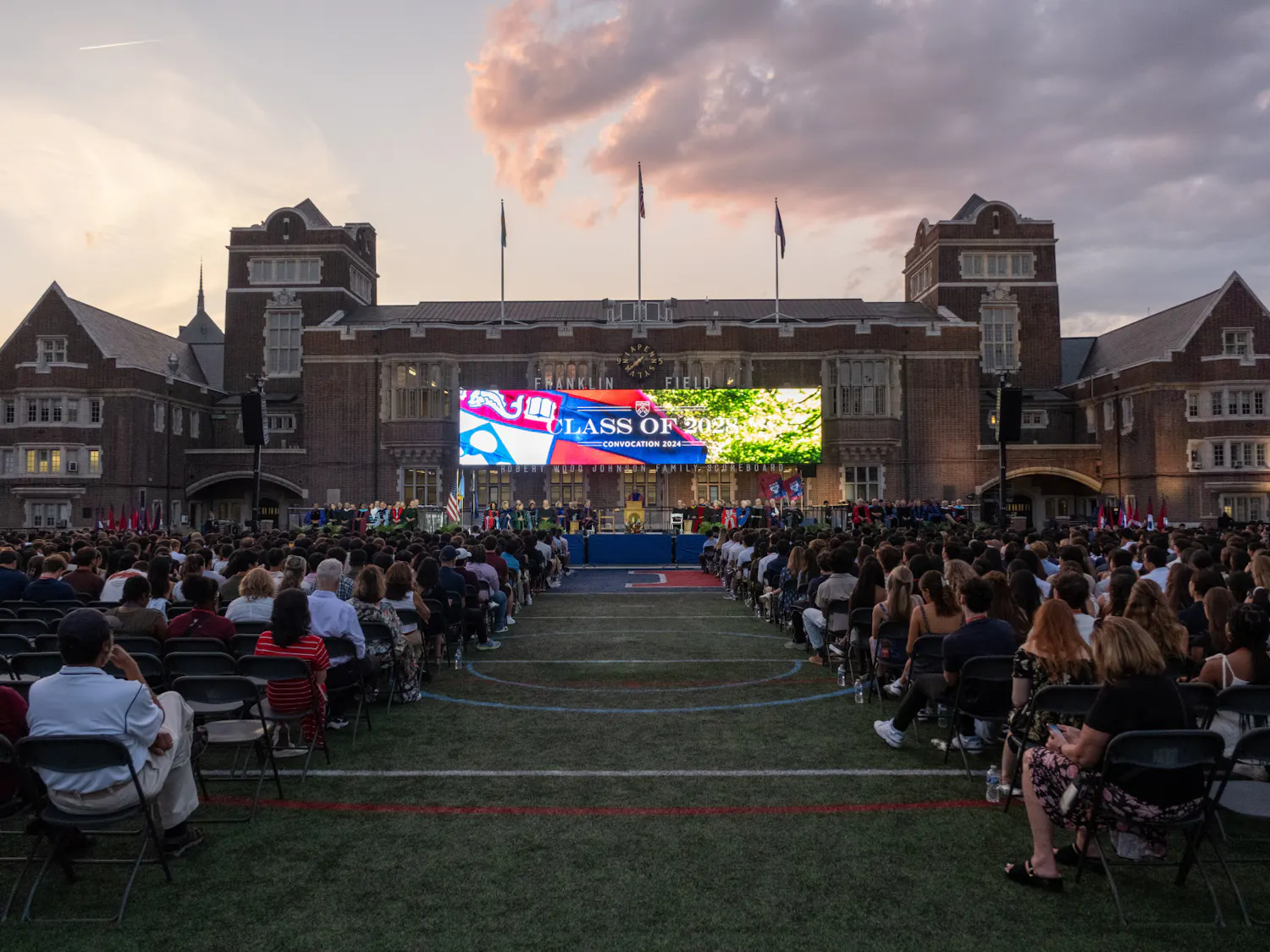
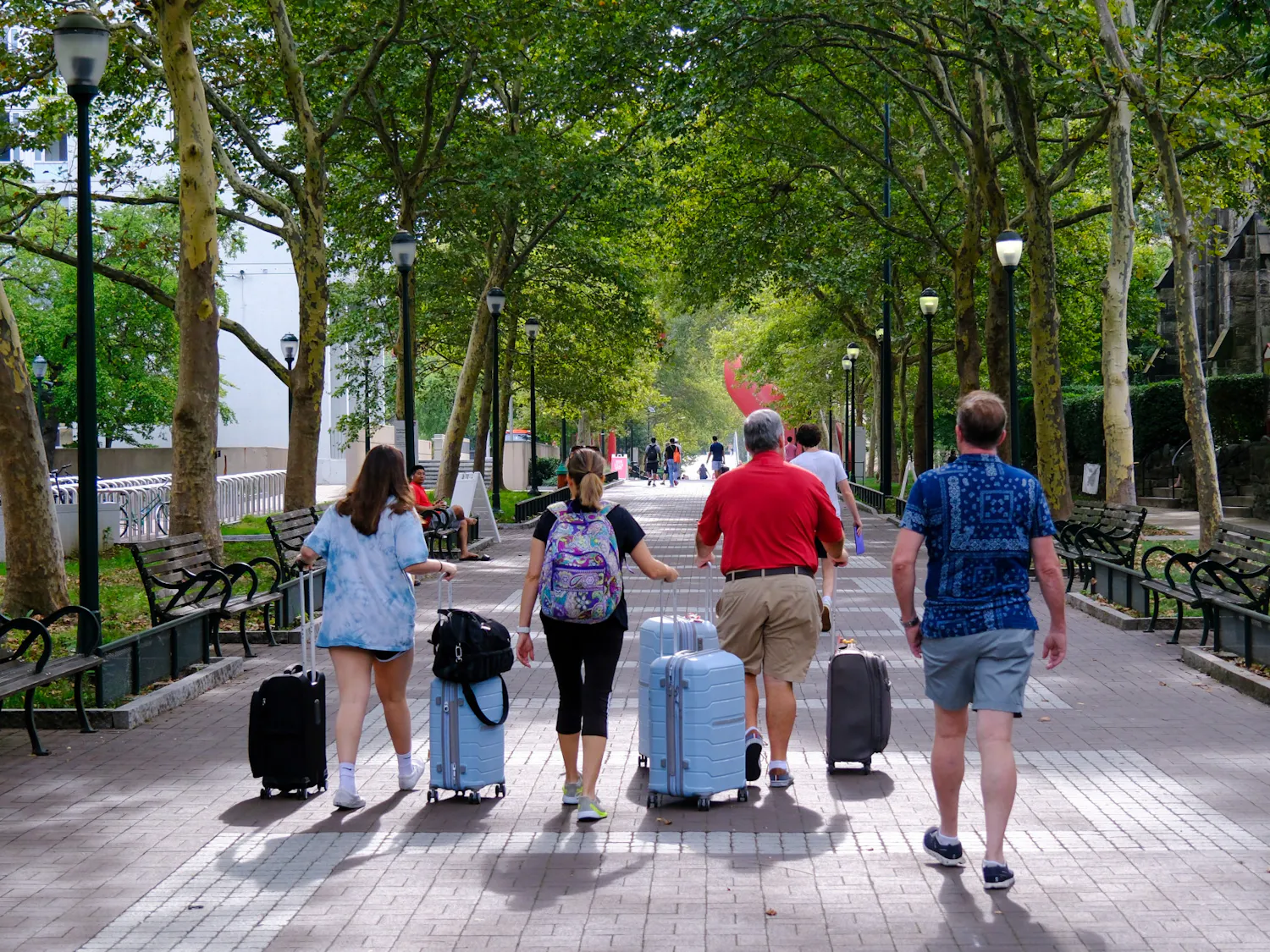
Last year, Pennsylvania’s primary election fell on April 23, before final examinations and when most Penn students left for the summer. As a result, 575 voters within the Penn community cast their ballots at three polling locations across campus. Tuesday’s primary took place one day after Penn’s Commencement ceremony for the Class of 2025 and a week after the conclusion of final examinations. Polling locations around Penn’s campus remained open for voting in the primaries.
In a written statement to the DP, Executive Director of Penn’s Office of Government and Community Affairs Dawn Maglicco Deitch noted the “very low voter turnout” on Penn’s campus in this year’s primaries.
“This is not an indicator of apathy, but of timing,” Deitch said. “The majority of residents of 27-3, 27-11, 27-18, 27-20, 27-21, and 27-22 are students who have moved out of the campus buildings in those divisions where they are registered to vote.”
Deitch continued that the “delayed distribution of mail ballots in Philadelphia County was a further complication to many students who were motivated to vote by mail or in-person at the satellite office before exams and move-out.”
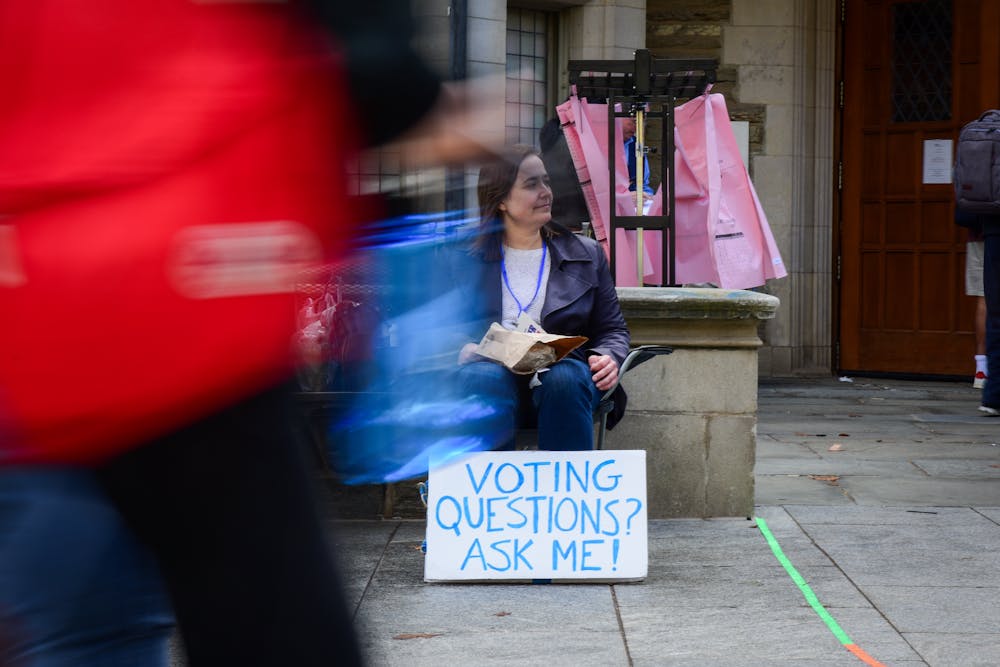
Despite the low voter turnout, Deitch commended the “terrific crew of students, staff, alumni, and neighbors who trained and served as campus polling place workers and volunteers all day.”
The May 20 primary results laid the groundwork for the general election scheduled for Tuesday, Nov. 4.
Staff reporter Riana Mahtani covers national politics and can be reached at mahtani@thedp.com. At Penn, she studies political science. Follow her on X @Riana_Mahtani.