

The 2024-25 academic year at Penn was marked by heightened national scrutiny on the University, fallout from shifts in federal and University policy, and continued student activism.
Student activism
In early September — four months after the Gaza Solidarity Encampment on College Green ended with a police sweep and the arrest of nine Penn students — Penn unveiled several new security measures for the fall.
The Daily Pennsylvanian exclusively obtained a series of negotiation documents between protesters and Penn President Larry Jameson that revealed the breakdown of negotiation efforts around the end of the encampment. One member of the 2023-24 Faculty Senate Executive Committee called the negotiation process an “unwinnable situation.”
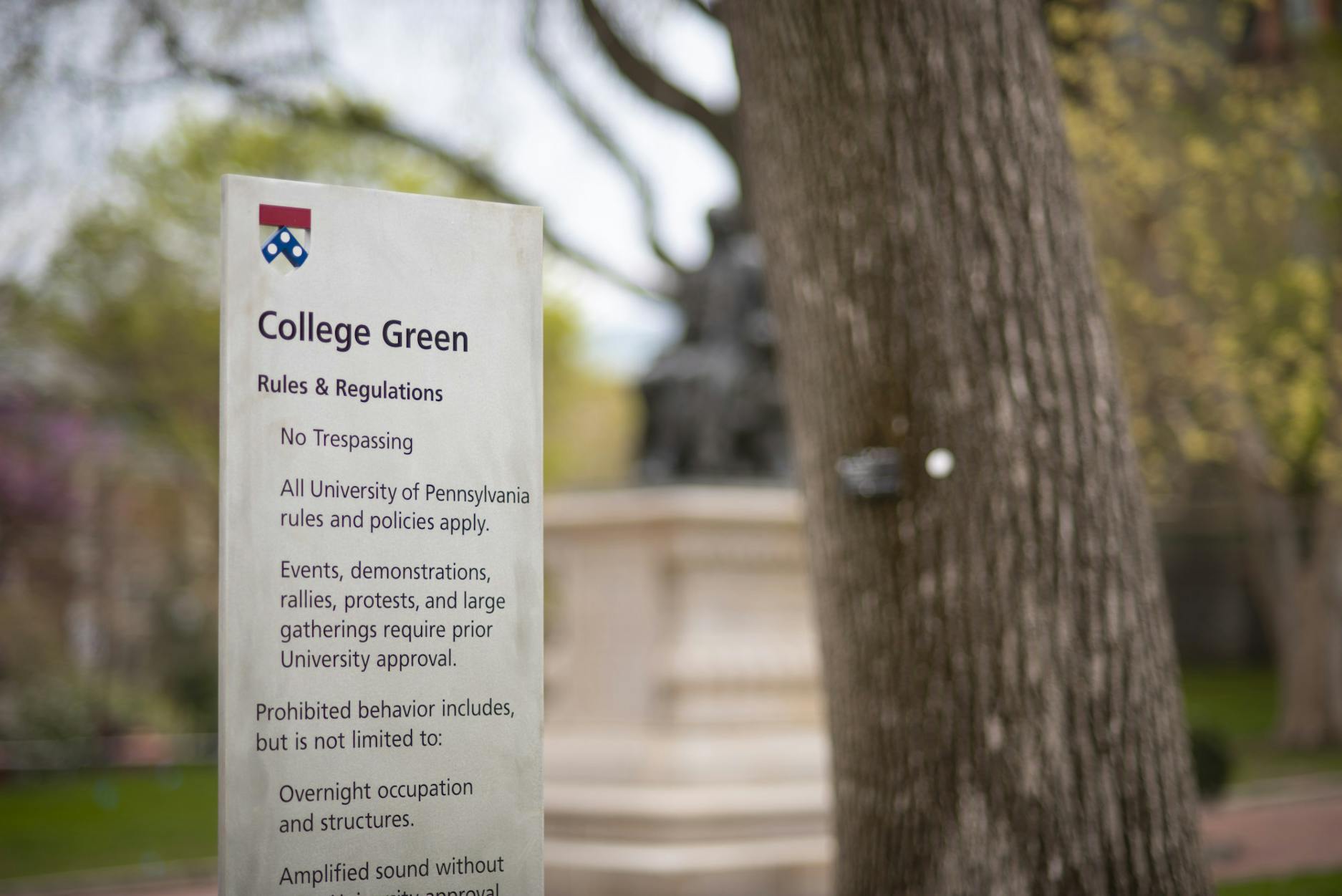
Under a new set of temporary guidelines for campus demonstrations, on-campus activist groups adopted updated protest tactics as the first week of classes began. Advocacy groups — including Penn Students Against the Occupation of Palestine and the Freedom School for Palestine — announced they would share daily “Updates from Gaza” in front of the Ben Franklin Statue.
Penn also installed dozens of barricades around College Green and along Woodland Walk in early fall. While the National Students for Justice in Palestine announced Sept. 12, 2024 as a national day of action, the University attributed its decision to the presidential debate two days earlier.
1968 Wharton graduate and President Donald Trump made his intent to target student activism clear on his campaign trail, during which he made several references to deporting pro-Palestinian protesters.
Penn students were faced with a Jan. 29 executive order directing federal agencies to identify and deport non-citizen participants — including college students — in pro-Palestinian protests.
In mid-April, eight Penn affiliates had their visas revoked by the Department of State. Although the DP subsequently reported that the federal government had reinstated the immigration status of three — and later seven — of those students, uncertainty surrounding visa revocations persisted.
2024 presidential election
On the night of Sept. 10, 2024, Penn students gathered across campus to watch the high-stakes presidential debate between then-Vice President Kamala Harris and Trump — which was held only a few miles away from Penn at Philadelphia’s National Constitution Center.
While Trump invoked his Ivy League credentials and affiliation with Penn during the debate, he began to distance himself from the University as his third presidential campaign came to a close.
Still, Penn continued to receive national attention during the election cycle. In October, 1999 College graduate John Legend visited Penn alongside model Chrissy Teigen and author Jack Schlossberg to advocate for youth voter participation and stump for the Harris-Walz campaign.
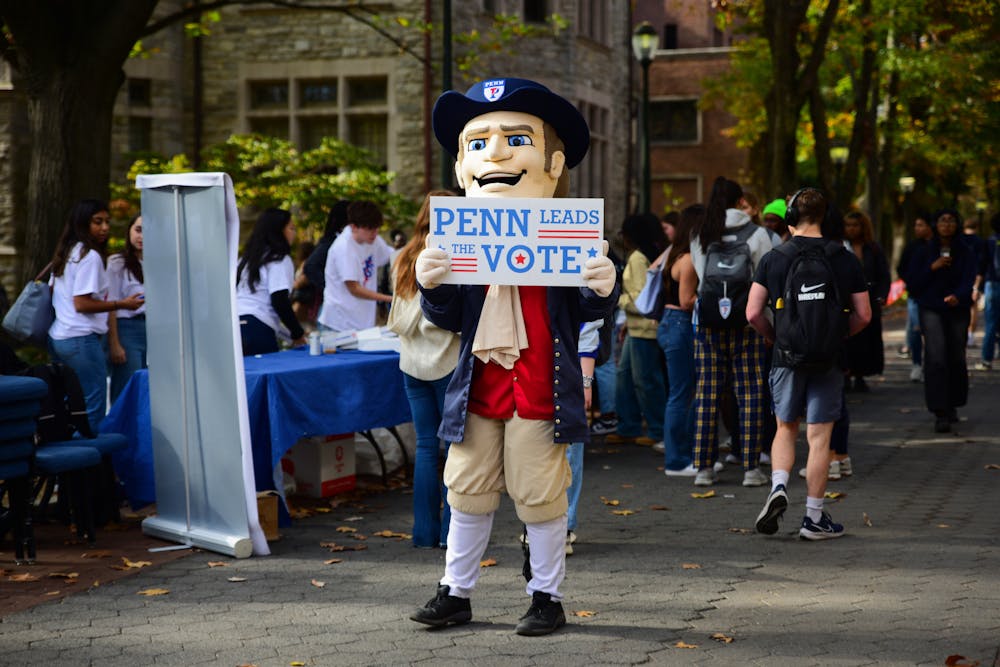
On Nov. 5, 2024 — as polls opened around Penn’s campus — Pennsylvania continued to emerge as the epicenter of a contentious and unprecedented election cycle. Student organizations — such as Penn Leads the Vote — encouraged voting through tabling events across campus.
First called by Fox News around 1:50 a.m. on Nov. 6, 2024, the 2024 presidential election resulted in Trump’s victory to be the 47th president of the United States — though Penn overwhelmingly cast its ballots for Harris. At the four primary voting locations for Penn students, Harris won 81.6% of the in-person votes from the Penn community relative to Trump’s 16.3%.
Criticism of central administration
An October 2024 report by the Republican-led House Committee on Education and Workforce revealed the extent of Penn’s response to allegations of antisemitism on campus, calls for former Penn President Liz Magill’s resignation, and pro-Palestinian campus protests.
December 2024 marked one year since Magill testified in front of Congress — which sparked a nationwide response and her resignation just four days later. Penn continued to face congressional scrutiny even as the University’s administration shifted.
On Dec. 6, 2024, the New York Police Department named 2020 Engineering graduate Luigi Mangione as a “strong person of interest” in the ongoing investigation of the murder of UnitedHealthcare CEO Brian Thompson. The resulting national firestorm picked up speed on Penn’s campus when English and Cinema and Media Studies professor Julia Alekseyeva announced her support for Mangione on multiple social media platforms.
U.S. Rep. Dan Meuser (R-Pa.) — who represents Pennsylvania’s ninth district — demanded that Penn fire Alekseyeva, writing in a letter to Jameson that “[This] forces Congress to question whether safeguards are in place to ensure that faculty conduct reflects the ethical and professional standards in line with the University’s reputation as a center of excellence and thought leadership.”
In April, Mangione was indicted on two counts of stalking, a firearms offense, and murder through the use of a firearm — the last of which makes him eligible for the death penalty if convicted.
Amid dissection by the federal government, Jameson was appointed to serve as Penn’s 10th president following an interim tenure of 15 months.
Penn responds to federal scrutiny
Trump’s victory marked the second time the Penn graduate has held the country's highest political office. As the new administration entered the White House, Penn exemplified the nation’s political landscape.
In January, Trump also began rolling out a series of executive orders targeting institutions of higher education, prompting Jameson to address uncertainty among students and faculty.
Jameson initially assured the Penn community that the University’s “financial outlook is sound” — despite Trump’s Jan. 28 freeze on federal funding and grants. His messaging changed in February after the National Institutes of Health implemented a funding cut that had the potential to cost Penn $240 million.
Although a judge temporarily halted the changes following a lawsuit brought by Penn and 12 other universities against the NIH, Jameson wrote in a Feb. 11 email that the “sudden and major change” to research funding would “severely harm our highly impactful research mission.”
Days after the announcement, Penn directed its department chairs to significantly reduce admissions rates across graduate programs in the face of threatened federal research opportunities. Faculty at the Perelman School of Medicine were instructed to reduce admissions for the fall 2025 Ph.D. cohort by approximately 35%.
In addition to reduced admissions rates, Penn imposed several “proactive financial measures” in March — including a hiring freeze and a review of capital spending — in response to the cuts.
The Trump administration also called on institutions of higher education, including Penn, to eliminate diversity, equity, and inclusion practices. A Jan. 20 executive order required universities that receive federal funding to terminate any DEI programs that could be in violation of federal civil rights laws.
Penn immediately scrubbed DEI references from its websites. All mentions of diversity and affirmative action were wiped from Penn’s nondiscrimination and equal opportunity policies on Feb. 11, and Penn’s central DEI website was scrubbed three days later. The Wharton School renamed its DEI major and concentration to “leading across differences” in March.
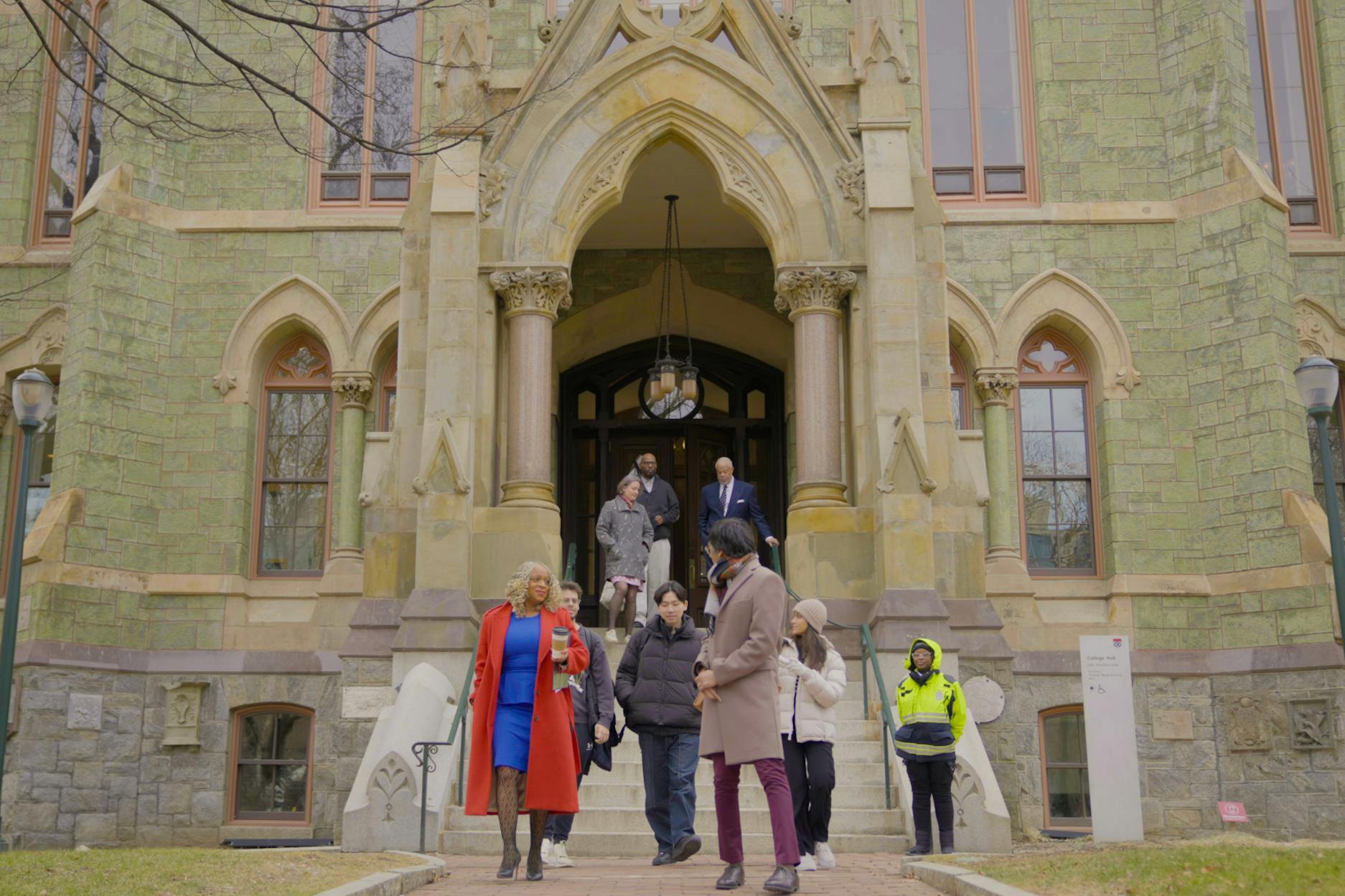
On Feb. 25, local lawmakers met with Jameson, Provost John Jackson Jr., and members of Penn’s Office of General Counsel and Office of Government and Community Affairs at College Hall to discuss the University’s rollback of DEI initiatives.
Title IX investigation
Within a week of Jameson’s permanent appointment on March 13, the Trump administration announced that it would be freezing over $175 million in federal funding to Penn, citing the University’s failure to bar transgender athletes from women’s sports.
Trump noted Penn’s failure to comply with a Feb. 5 executive order that promised to “rescind all funds from educational programs that deprive women and girls of fair athletic opportunities, which results in the endangerment, humiliation, and silencing of women and girls and deprives them of privacy.”
On Feb. 6, the United States Department of Education launched an investigation into Penn for Title IX violations for allowing 2022 College graduate and transgender woman Lia Thomas to represent Penn women’s swimming and diving during the 2021-22 NCAA swimming and diving season. Shortly after, the NCAA changed its policy to align with the order.
Three former Penn women’s swimmers who competed with Thomas during that season also filed a separate lawsuit for Title IX violations. Despite Penn’s subsequent motion to dismiss the case, the Education Department announced that Penn violated Title IX on April 28.
The Education Department’s Office for Civil Rights also included a “Resolution Agreement,” allowing Penn 10 days to “voluntarily” respond to three demands: issuing a statement affirming compliance with Title IX, restoring accolades to “female athletes … misappropriated” by transgender athletes, and sending individual letters to the affected athletes.
Finn Ryan is the Summer Editor-in-Chief at The Daily Pennsylvanian and can be reached at ryan@thedp.com. At Penn, he studies political science and Russian. Follow him on X @FinnRyan_.


