

Penn began piloting an electronic-key system in Gregory College House in 2002 - but there are still no plans to expand the program, despite attention on dorm safety following a rash of burglaries in Harnwell College House over Thanksgiving break.
In Gregory's Class of 1925 building, residents must swipe their PennCards and punch in their PIN in order to enter individual rooms, not just the main building. In all other College Houses, students must swipe their cards to enter the building, but use keys to enter individual rooms.
The main reason the electronic-key system has remained a pilot program is based on a simple cost-benefit analysis, officials said.
"Technology is still evolving" Business Services spokeswoman Barbara Lea-Kruger said. The current system of patented keys, in addition to other layers of security like AlliedBarton guards at College House entrances, are working effectively, she added.
The University is reluctant to heavily invest in a system that may not be the most innovative, Lea-Kruger said.
"We need to budget for it," she said. However, no further expansion of the electronic system is in progress.
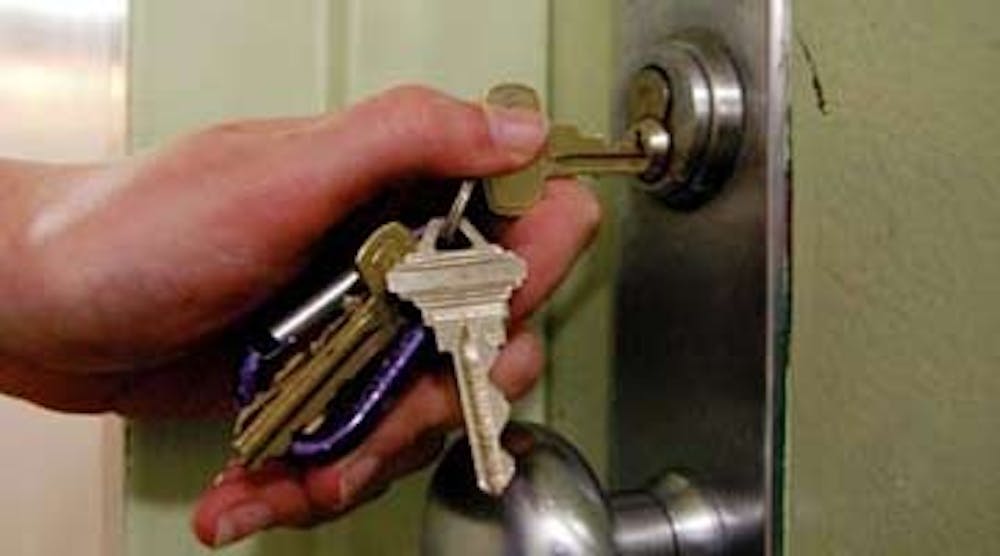
But over the past two to three years, Penn has developed changes in its dorm keys.
The keys are part of a patented system in which the key blanks are only available to subscribers and members of a specific manufacturer.
The keys are also coded on the back, and this code is recorded in a computer system that allows every key to be tracked to the person who last had official possession.
But as the Harnwell burglaries showed, any security technology is only effective if it is used.
"My understanding is that most rooms from where items were taken were left unlocked," Harnwell House Dean Suhnne Ahn said.
The patented-key system explains the $130 fine that the Residential Handbook imposes on lost or stolen keys. While the money goes to subset the cost of replacements, the expense also acts as a deterrent for those who would otherwise be lax with their keys.
Gregory's system was originally aimed at reducing the costs incurred by replacing keys, rather than improving safety, said Gregory House Dean Christopher Donovan.
Recalling the conversations with Housing Services before the start of the pilot program, he said, "heightened security wasn't something they stressed to us."
And with a PennCard that doubles as a key, Gregorians only have to pay $20 for a replacement.
Vice President for Public Safety Maureen Rush stressed that securing the outside of buildings - which is done through the swipe-card entryways and security officers stationed at them - is one of the most important components of dorm safety, adding that residents must take care to lock their doors.
"Safety and security is a shared responsibility," Rush said in an e-mailed statement. "Together all of us can make the residences safer for all residents."

