Another suicide bomber blows up American soldiers. Another foreign country turns against the USA. Another damning report released from the U.N. Just another day in the news.
With American foreign relations suffering from a low point, it seems that (as long as Bush is at the helm) no one outside the U.S. understands the diversity of opinion inside.
Sure, some people want to convert the world to some sort of pan-Americana, but most Americans disagree. The problem is, though, that people outside of the U.S. may not know that.
But what if the world could see the U.S. as more than just Washington? What if the world met American citizens, and not just American soldiers? What if the world knew each American's feelings, and not just the result of each American's tax dollars?
This could make a difference.
Luckily, the State Department addresses this exact issue. Through the auspices of the International Visitor Leadership Program, thousands of "emerging leaders" from foreign countries visit the United States each year.
It can get complicated, so I'll break it down for you. Let's say that the U.S. Embassy in India notices an "emerging leader" in the journalism industry, a gal who is an innovative and creative force in her field.
The U.S. Embassy then offers an all-expense paid trip to the United States. After landing in Washington, little-miss-India receives a briefing from State Department officials and sets off on a four city, whirlwind tour of the United States.
In each city, she will meet with her American counterparts, experience American hospitality and share Indian culture with Americans.
If State Department officials decide that our Indian correspondent needs to go to Los Angeles, the Council for International Visitors there will create a program for her.
The CIV can arrange meetings with communications scholars at UCLA, documentary filmmakers in Hollywood and home visits with ordinary citizens.
But IVLP doesn't just operate in India, and it doesn't just deal with journalism. Religious scholars from the Vatican, female activists from South Africa, university administrators from Iraq and more experience the real American people every year.
And with 93 CIVs from Hawaii to New York, the visitors can really see the USA.
Philadelphia has its own CIV, the International Visitors Council of Philadelphia, which competes against 92 other CIVs to host visitors.
And IVC fights hard. The motivation is huge: Hosting visitors means raising Philadelphia's international profile. It means bringing federal funds to Philadelphia. It means bringing global understanding to Philadelphia.
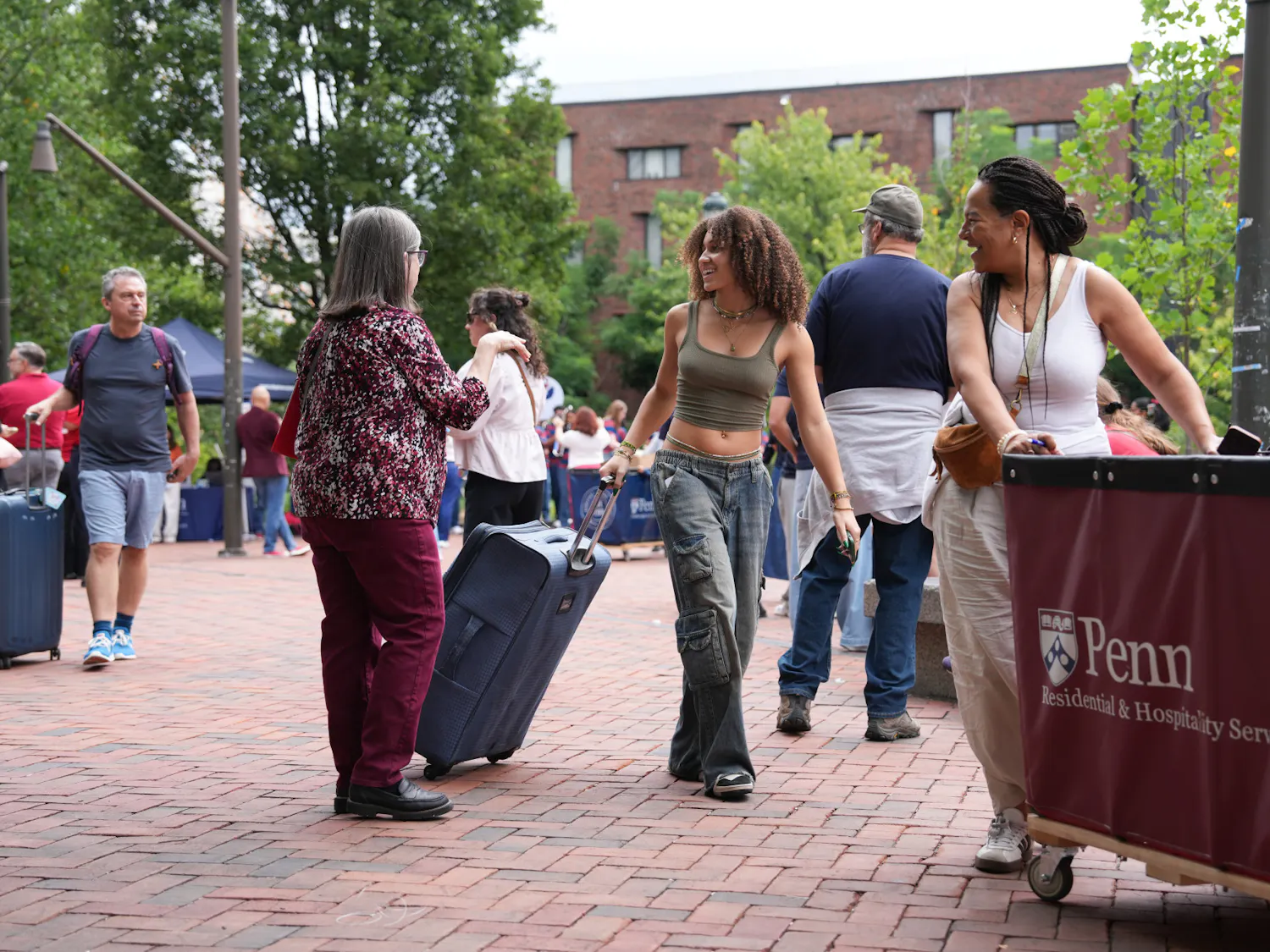
And having the University of Pennsylvania on the itinerary helps bring in visitors.
The CIV in Boston "gets visitors because of the universities there. But Penn in the last few years is right up there," says IVC President Nancy Gilboy. "Wharton and Penn are hot."
Whether the visitors meet with Penn professors to talk about publishing books or students pushing Penn to "Lead the Vote," Penn plays its role in hosting international visitors from around the world.
"We try to include it on all education [related] programs," said Ron D'Alonzo, Program Officer for IVC.
And more than just Philly and IVC benefit, as these visitors help Penn, too. "These visitors really help to link the University around the world," Gilboy said. "You can't survive today without having international contacts or an understanding of the outside world."
Not to mention the international network the hosts are building. Gilboy even mentioned host professors being invited to speak at foreign universities because of their involvement in IVLP.
But the relationships aren't always strong enough. People are busy and can't meet with visitors every time. IVC is a non-profit and can't constantly focus on building up contacts at Penn.
"Professors should be reaching out to us," Gilboy says. "Their careers can be truly enhanced from IVC sending visitors to them."
This cause of "citizen diplomacy" is clearly one that can benefit everyone at Penn - not to mention the international visitors, the city of Philadelphia or the notion of world peace and understanding.
But while Penn continues to rest the burden on IVC, the University of Michigan and Harvard University have gone so far as to hire their own IVLP liaisons.
At the end of our interview, I took the opportunity to pass along my name and address. Hopefully, if Penn plays its cards right, that Indian journalist might pay me a visit when she stops in Philadelphia.
Dan Brickley is a College sophomore from Waterford, Mich. who works at the CIV in Detroit. His e-mail address is brickley@sas.upenn.edu.