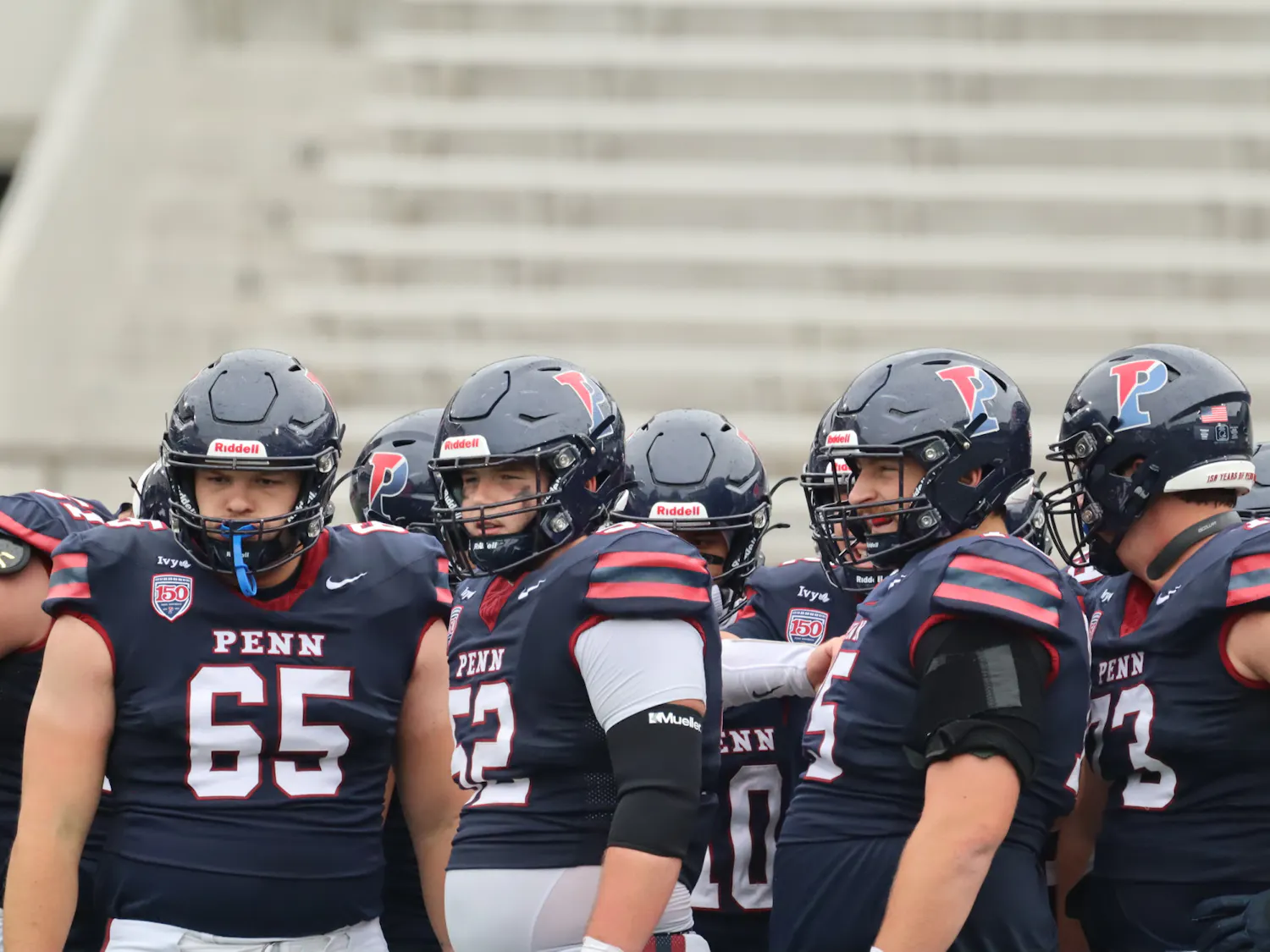
Last week, it was reported that the Ivy League is reconsidering its current policy towards the role of athletics in the admissions process and in recruitment.
The eight Ivy League presidents have called upon their respective athletics directors to review the recruitment process and the time commitment that athletes face at college.
Football, which draws the greatest amount of recruits every year, is currently the sport being focused upon, according to Penn athletics director Steve Bilsky.
Last week, Yale president Richard Levin said that a reduction in the number of football recruits admitted at Yale could bring the number closer to that of the NCAA, as reported in the Yale Daily News.
"The NCAA schools have way fewer [football recruits per year]," Levin told the Yale newspaper. "Our request to the athletics directors is that they consider reducing the number of recruited football players."
As of now, Ivy League schools recruit 35 football players per year, although they are not allowed to offer athletic scholarships. Each college's football team can recruit no more than 140 players over four years.
Although the consequences of this new policy are taking shape on Yale's campus, Bilsky is hesitant to comment on what a possible policy would mean for Penn athletics.
"This is so early on in the process," Bilsky said. "There really isn't much to say about this. Really, no decision has been made."
As of now, Ivy League athletics directors are still in the preliminary stages of reviewing the current recruitment policy, according to Bilsky.
The decision "won't be made until our official meeting in May," he said.
This reassessment comes after the 2001 release of The Game of Life, a book co-written by former Princeton University president William G. Bowen and James Shulman, which uses empirical data to highlight the relationships between athletics and admissions.
The book has stimulated much debate across the nation, prompting criticism that elite colleges, such as those of the Ivy and Patriot Leagues, admit athletes solely because of their athletic ability.
Bowen and Shulman's book notes that student-athletes who participate in high-profile sports -- such as football -- tend to not perform as well as their non-athletic counterparts.
According to Bilsky, the Ivy League presidents are not necessarily concerned with the academic underperformance of athletes. Instead, the presidents are more concerned with the number of athletes being recruited every year.
"The presidents want to find the appropriate number of football players to have in the program," Bilsky said. "It's not an anti-football statement or a reflection of the academic qualifications of the players."
The athletics directors are also reviewing the possibility that players spend too much time on the playing field, and not enough time studying in the library.
Due to rising competition in collegiate sports, Division I teams have been forced to increase practice time, causing the implementation of year-round practice sessions.
"A number of presidents have felt for some time that the kind of year-round activity regimen that Division I has let itself create over the past 10 years is an issue," Jeffrey Orleans, director of Ivy League sports told The Chronicle of Higher Education.
However, Bilksy was quick to add that the purpose of this recommendation is not to promote the downsizing of football or athletics as a whole in the Ivy League.
Bilsky said that this request from the presidents is normal and to be expected.
"The presidents regularly ask AD's to look at issues like this. These are normal requests," he commented. "Ultimately, the presidents do make the decision."